
Inspect Leaf Undersides Before Treating Scale Insects
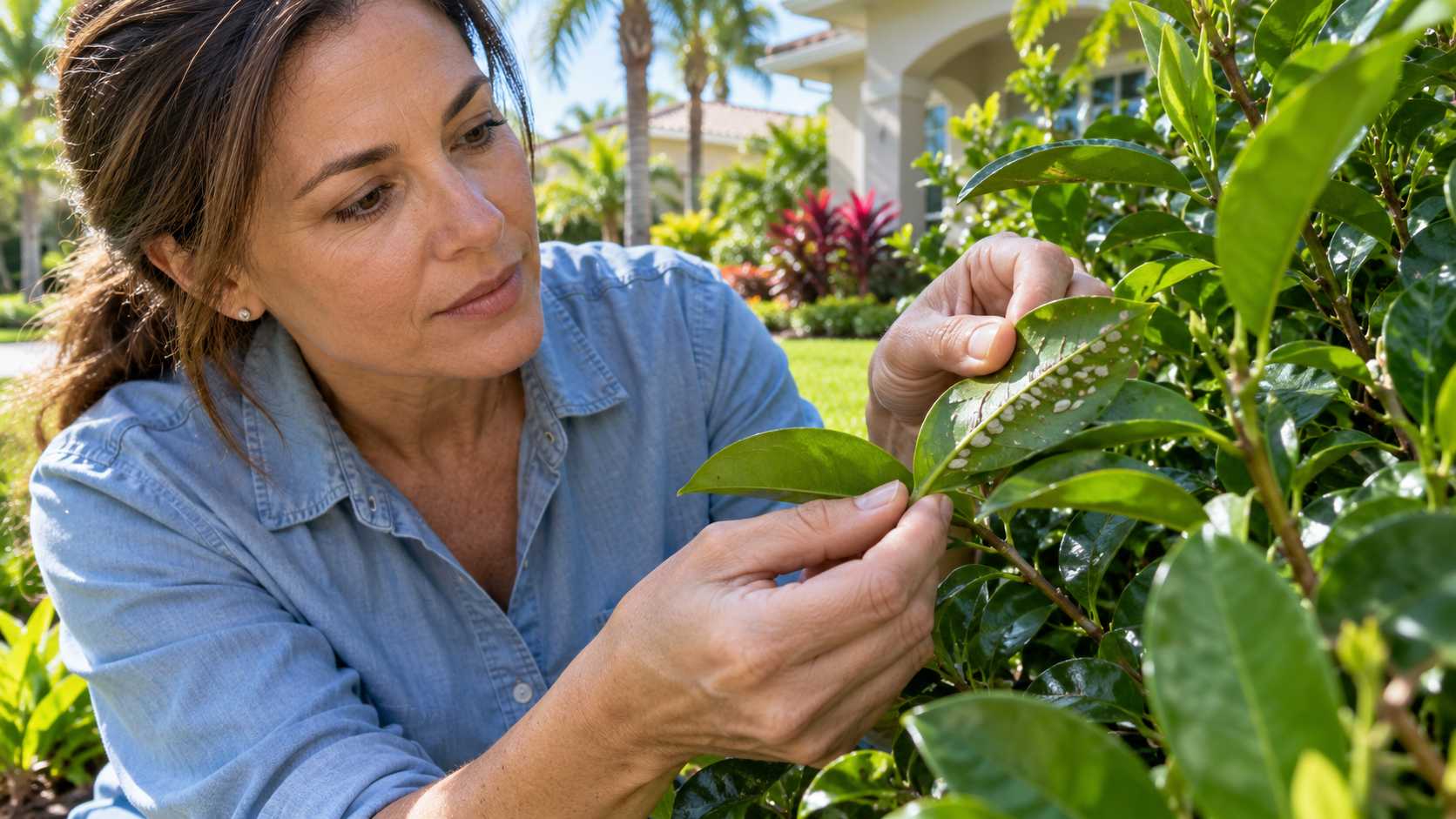
Look Beyond the Top Surface
Scale insects often hide along leaf undersides, stems, veins, and protected branch joints. From above, the plant might show only yellowing, dull color, sticky residue, or reduced growth. Turn leaves over and inspect several parts of the shrub. Small white, brown, gray, or black bumps that remain attached might be armored or soft scale.
Separate Scale From Normal Features
Not every spot is an insect. Leaf scars, lenticels, mineral deposits, fungal growth, and plant texture can look similar. Use a hand lens and compare affected tissue with healthy growth. Scale usually appears in clusters or along veins. Some types produce honeydew, which attracts ants and supports black sooty mold on leaves and surfaces below.
Check the Entire Plant
Inspect new growth, older interior stems, nearby plants, and branches touching walls or other shrubs. Ant trails often lead to honeydew-producing pests. Dense canopies hide infestations and stay humid. Record which plant species and locations show symptoms. This information helps a licensed treatment provider identify the pest and choose timing based on its vulnerable crawler stage.
Improve Plant Conditions
Reduce avoidable stress before assuming chemicals are the only answer. Correct irrigation coverage, drainage, excessive mulch, root burial, and chronic shearing. Selective pruning improves access and airflow, though removing too much foliage weakens the plant. Dispose of heavily infested trimmings appropriately and clean tools before moving to healthy plants.
Use Treatments Carefully
Horticultural oils and other labeled products work for certain scale species and life stages, yet coverage and timing determine results. Applying the wrong product, concentration, or temperature range can injure foliage and harm beneficial insects. Follow the label. For commercial application or uncertain identification, use a properly licensed pest-control or lawn-treatment professional.
Monitor Instead of Assuming Success
Dead scale shells sometimes remain attached after treatment. Check for new crawlers, fresh honeydew, expanding yellow areas, and continued ant activity. Reinspect on a regular schedule because one application might not reach protected insects or later generations. Avoid repeated spraying without confirming live activity. Unnecessary treatment wastes money and disrupts helpful predators.
Coordinate Plant Care and Diagnosis
Ecoscape Outdoor Services helps South Tampa homeowners spot pest warning signs during landscape maintenance and correct physical conditions affecting plant health. We handle pruning, irrigation, drainage, mulch, and replacement planning, then coordinate with licensed treatment professionals when pesticide work is required. Early observation protects surrounding plants and prevents a small infestation from becoming widespread decline.
