Inspect New Plants Before They Enter the Landscape
Every Delivery Deserves Inspection
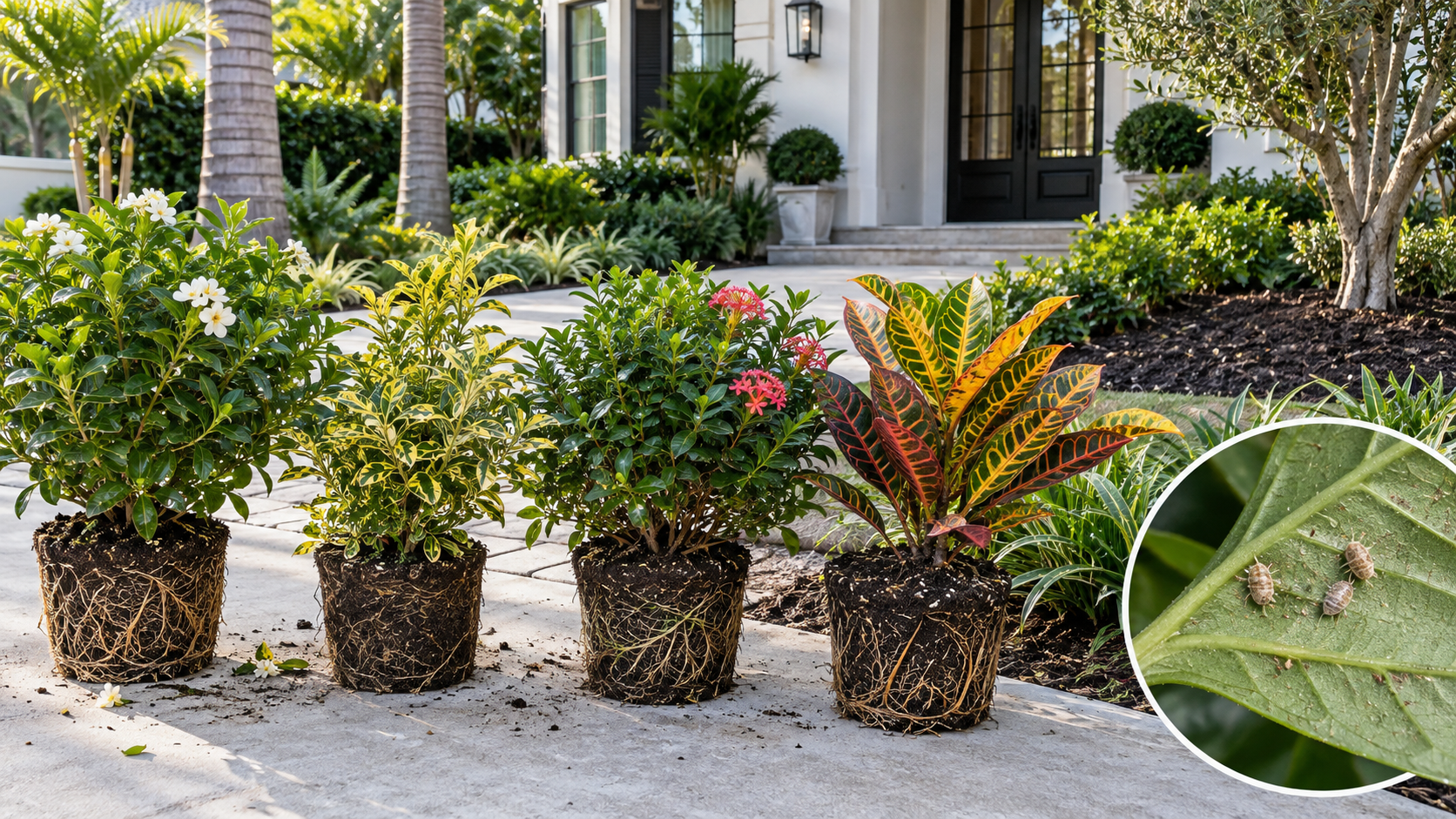
New plants can carry scale, mealybugs, whiteflies, mites, weeds, root defects, or disease symptoms into a finished landscape. A quick check before unloading into the bed protects existing plants and avoids installing weak material that needs immediate replacement. South Tampa’s warm climate allows many pests to remain active through much of the year. Inspect nursery stock in a clean staging area where leaves, stems, and root balls are easy to see.
Start With the Foliage
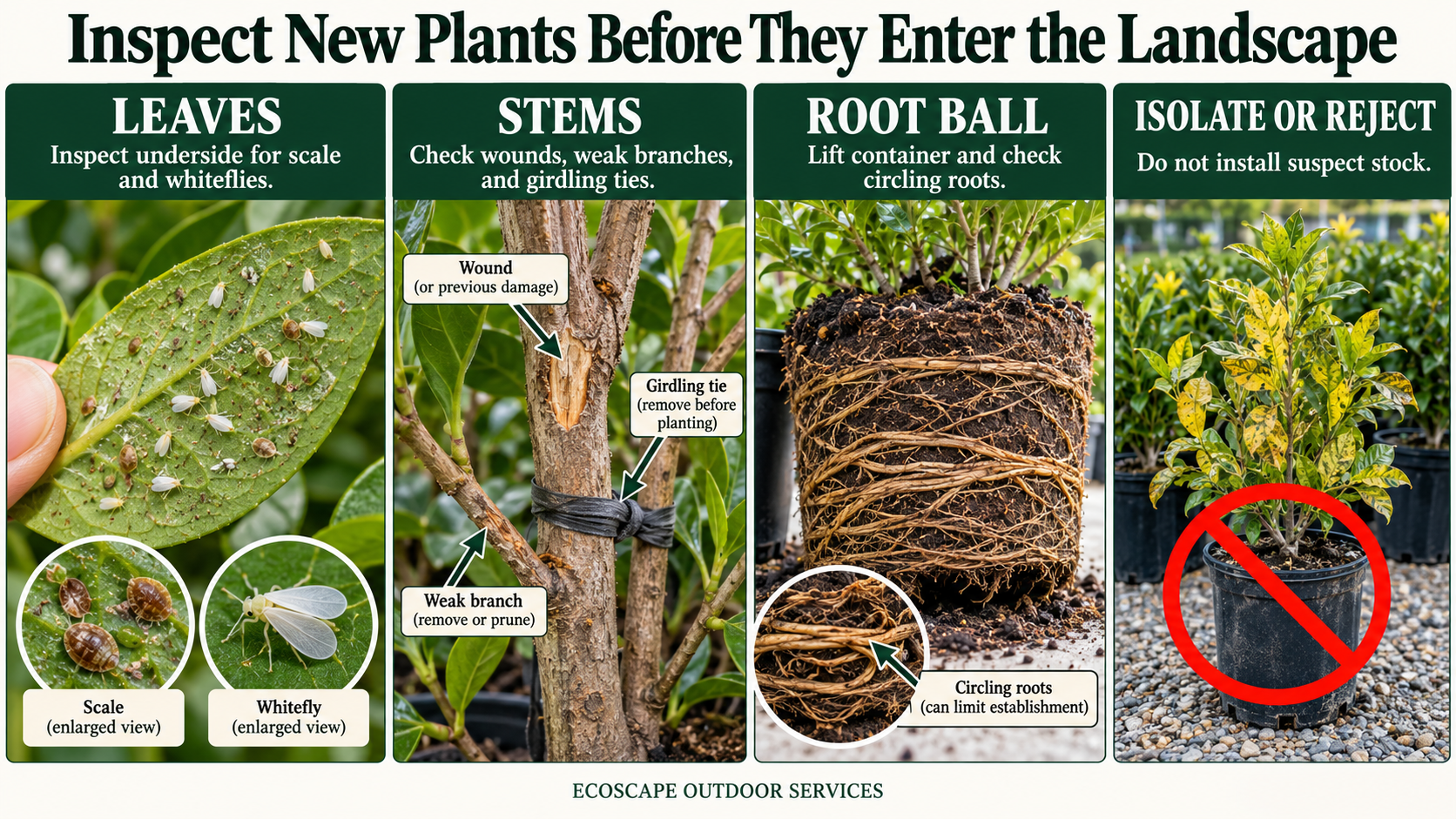
Examine both sides of leaves, tender new growth, branch joints, and protected interior foliage. Look for sticky honeydew, black sooty mold, cottony clusters, webbing, raised scale, chewing, distorted growth, and unusual spotting. Gently tap foliage over a white sheet or pavement to reveal small moving insects. Compare plants of the same species. One plant with dull color or sparse growth among healthy companions deserves closer attention before installation.
Check Stems and Plant Structure
Follow each main stem from the soil line to the canopy. Reject material with major cracks, girdling ties, severe rubbing, fresh trunk wounds, or poorly attached branches. Confirm the plant has a balanced structure suited to its intended use. A shrub sheared tightly at the nursery can hide dead interior growth. Spread branches gently and inspect the center. Do not accept a full outer shell of foliage as proof of a healthy plant.
Inspect the Root Ball
Slide the container off when practical and permitted. Healthy roots should hold the soil together without forming a dense circling mass. Look for black soft roots, sour odor, severe pot binding, buried trunk flare, unstable soil, and roots escaping through clogged drain holes. Check for ants, weeds, and hitchhiking plants. Keep the root ball moist and shaded during inspection. Do not tear roots apart merely to see deeper into otherwise sound material.
Separate Questionable Plants
Keep suspicious plants away from the installation area and existing landscape. Photograph the symptoms, label the plant, and contact the supplier. Do not mix rejected containers with approved stock or dump their soil into the bed. Clean tools and staging surfaces before continuing. A short delay costs less than distributing a pest across multiple beds. For large deliveries, inspect representative groups during unloading and perform a final check before each plant enters its hole.
Avoid Random Treatment
Do not spray every new plant as a precaution. Unidentified products can injure foliage, conflict with labels, harm beneficial insects, and hide symptoms without solving the cause. Professional pesticide applications require proper licensing and site-specific decisions. Ecoscape Outdoor Services does not provide pesticide spraying. When treatment is warranted, use a qualified provider and confirm the plant species, pest, environmental conditions, and approved product before any application.
Document Quality From the Start
Record supplier, plant size, delivery date, bed location, and photographs. Reinspect new material after one week and again after thirty days. Ecoscape Outdoor Services stages and reviews plant deliveries for South Tampa installations, corrects planting depth, protects root balls, and tracks early establishment. Careful receiving supports warranty decisions and healthier landscapes. The best time to stop a pest or structural defect is before the plant joins the property.