
Install a French Drain Only When It Has a Safe Outlet
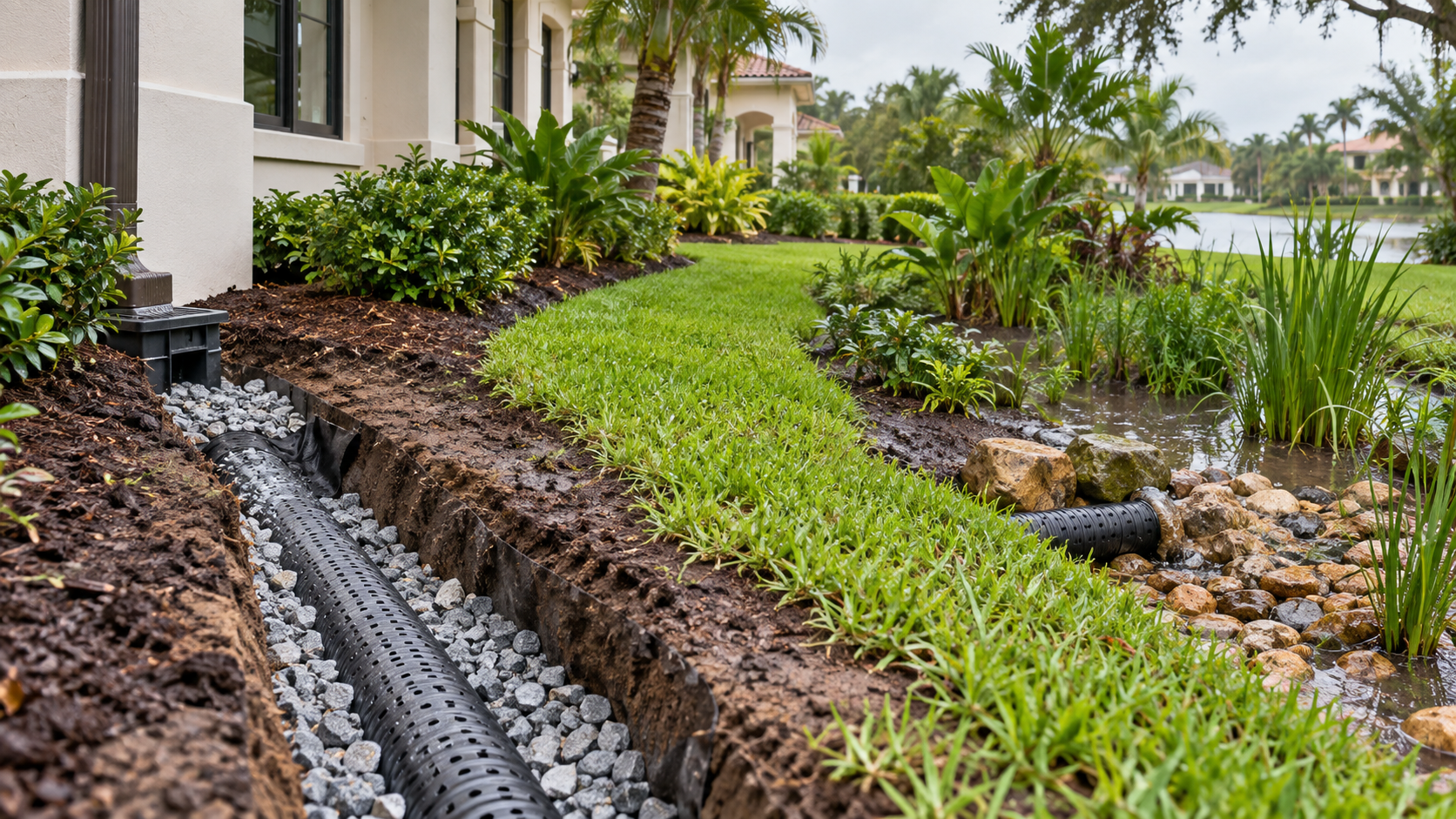
Understand What a French Drain Does
A French drain collects water moving through saturated soil and carries it through a gravel-filled trench. It works well beside low lawn areas, soggy planting beds, and locations where water follows a predictable path. It does not remove water by itself. The pipe needs positive slope and a legal, dependable discharge point. Without both, the trench becomes an expensive underground reservoir.
Choose the Outlet Before Digging
Start at the destination, then work backward toward the wet area. A useful outlet sits lower than the collection point and releases water without flooding a neighbor, sidewalk, street, seawall, building foundation, or another part of your property. Confirm local drainage rules before sending runoff toward public areas. If gravity flow is unavailable, a catch basin, dry well, or pump system needs separate evaluation.
Build the Trench Correctly
Mark utilities before excavation. Establish steady fall with a laser level or string line. Use washed angular stone around perforated drainage pipe and wrap the stone zone with suitable filter fabric when soil migration poses a risk. Keep sediment, mulch, and sandy spoil out of the pipe. Install accessible cleanouts on longer runs or where turns create likely blockage points.
Plan for South Tampa Conditions
South Tampa properties often combine flat grades, sandy fill, high seasonal groundwater, heavy summer rain, mature roots, and limited side-yard access. A deep trench does not guarantee better drainage when groundwater already sits high. Tide influence also affects some neighborhoods. Observe the site during rain, locate downspout flow, review irrigation output, and separate groundwater issues from simple surface runoff.
Avoid the Most Expensive Mistakes
Common failures include using solid pipe where collection is needed, placing perforations incorrectly, skipping slope measurements, filling the trench with dirty limestone fines, and ending the line in another low spot. Do not connect every downspout and yard drain to one undersized pipe. Root intrusion, crushed pipe, poor fittings, and buried outlets also shorten system life and make repairs harder.
Inspect After Heavy Rain
Watch the first several storms after installation. Water should enter the collection area, move through the line, and leave the outlet without erosion or backup. Check cleanouts and outlet protection after major storms. Remove leaves, mulch, and sediment before buildup blocks flow. If standing water remains, record where it forms and how long it lasts so the next adjustment addresses the true source.
Let Ecoscape Plan the Full Drainage Path
Ecoscape Outdoor Services evaluates grade, runoff sources, irrigation, planting beds, access, and the final discharge point before recommending a drain. Our team builds drainage improvements around the property as a complete system instead of treating one puddle in isolation. For South Tampa landscapes, careful layout protects turf, planting beds, hardscapes, and the home while reducing repeat excavation and unnecessary repair work.
