Keep Climbing Vines Off Stucco, Screens, and Rooflines
Why Building Clearance Matters
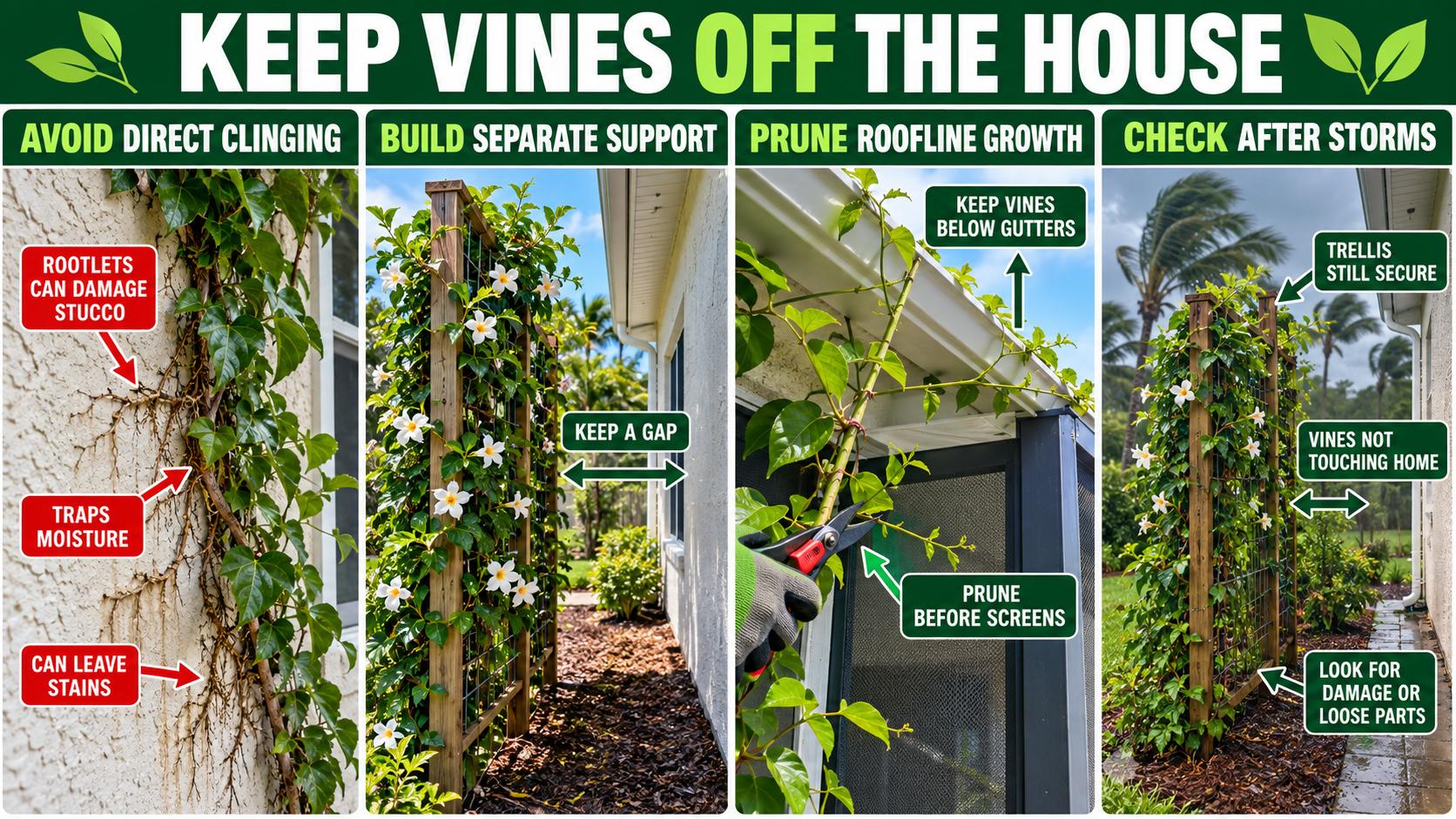
Climbing vines add color, shade, and vertical interest, but they can quickly reach places that are difficult to inspect or maintain. Twining stems may enter screen seams and gutters. Clinging roots or adhesive pads can attach firmly to textured stucco and painted surfaces. Dense foliage can also hide cracks, pests, moisture, and damaged trim. Florida’s long growing season allows vigorous vines to move from a decorative feature to a building-maintenance problem surprisingly quickly.
Understand How the Vine Climbs
Some vines wrap around wires or trellises, some use tendrils, and others cling directly to a surface. The climbing method determines the right support and the amount of control required. A twining vine may be easy to train on a freestanding frame, while a self-clinging species can be difficult to remove from stucco without leaving marks. Confirm the plant’s mature size and growth habit before placing it near a wall, enclosure, or roof edge.
Create a Separate Support
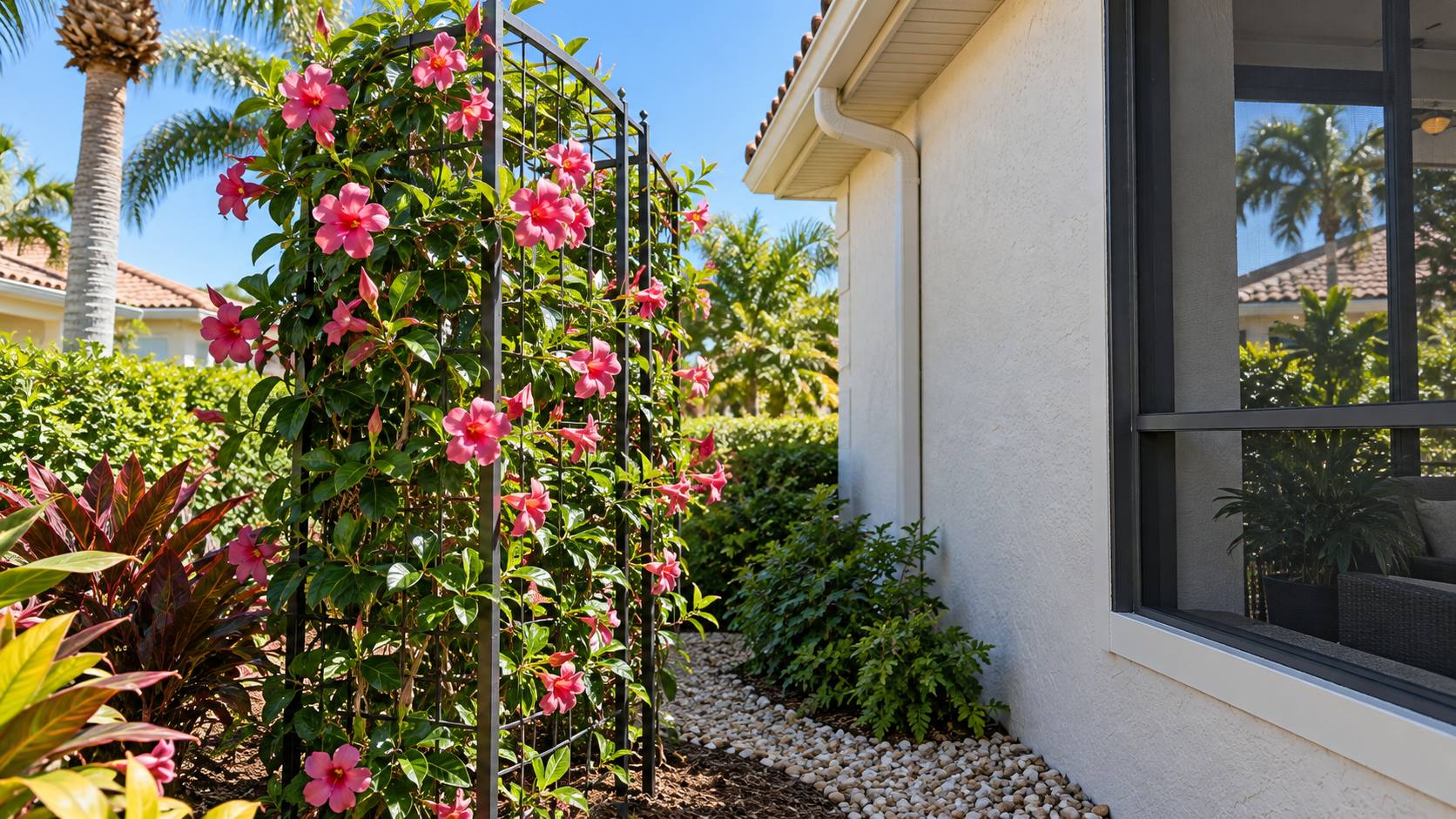
Use a sturdy trellis, cable system, or fence that keeps growth away from the building and allows air to move behind the plant. Leave enough space for pruning, painting, pest inspection, and repairs. Anchor supports safely without damaging waterproofing or hidden utilities. Keep the base clear of vents, drains, meters, and irrigation components. The support should handle the mature weight of wet foliage, not only the light growth present at planting.
Prune Before Growth Becomes Woody
Inspect vines regularly during the warm season and redirect flexible shoots while they are easy to handle. Remove stems approaching rooflines, gutters, screens, windows, air-conditioning equipment, and utility lines. Make clean cuts with sanitized tools and avoid tearing attached growth from delicate surfaces. If a vine has rooted or adhered to stucco, cut and allow the attachment points to release gradually rather than pulling hard and damaging the finish.
Common Mistakes
Do not plant a vigorous vine beside a small decorative trellis and expect the support to contain it permanently. Avoid letting growth bridge from a fence to the house. Do not conceal termite inspection areas, weep points, or cracks with foliage. Another mistake is waiting until the vine reaches the roof before pruning. Large removal cuts can leave a bare, stressed plant and a heavy mass that is unsafe to pull down without proper access equipment.
When Professional Help Makes Sense
Professional pruning is appropriate when vines have reached a roof, second story, power area, fragile screen enclosure, or damaged wall surface. Ecoscape Outdoor Services can assess the plant and support, restore safe clearance, shape remaining growth, and recommend replacement when the species is poorly matched to the location. Routine maintenance visits keep the vine attractive without sacrificing access to the home and surrounding landscape equipment.
Follow-Up and Ongoing Training
Check attachment points, supports, and new shoots every month during active growth. After storms, look for shifted trellises and heavy wet stems leaning toward the building. Keep fallen leaves out of gutters and drainage openings. Photograph the trained shape so future pruning follows the same plan. If repeated cutting is needed every few weeks, consider moving the plant or selecting a slower, smaller vine that better fits the available space. Book Ecoscape Outdoor Services to assess vines reaching your stucco, screens, roofline, or gutters and plan a safe pruning schedule.