Keep Decorative Rock Clear of Sprinkler Heads and Valve Boxes
Why Moving Rock Creates Irrigation Problems
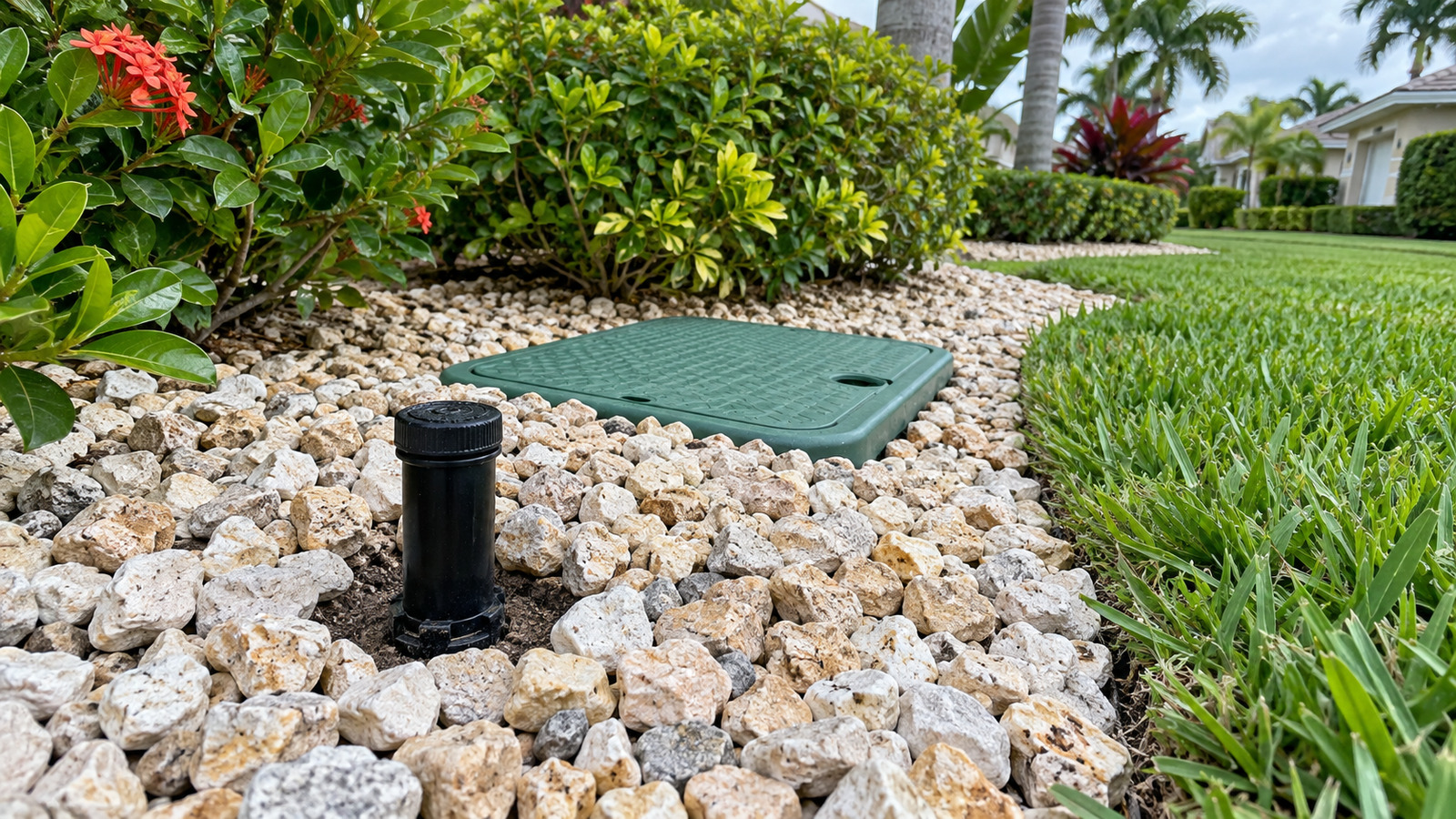
Decorative gravel and landscape rock do not stay perfectly arranged. Foot traffic, edging work, leaf blowing, animals, and heavy Florida rain can move pieces over sprinkler caps or valve-box lids. A buried cap may not pop up or rotate freely, while a hidden lid delays shutoffs and repairs. Keeping these components visible also prevents someone from striking them with a rake, mower, shovel, or vehicle during routine property work.
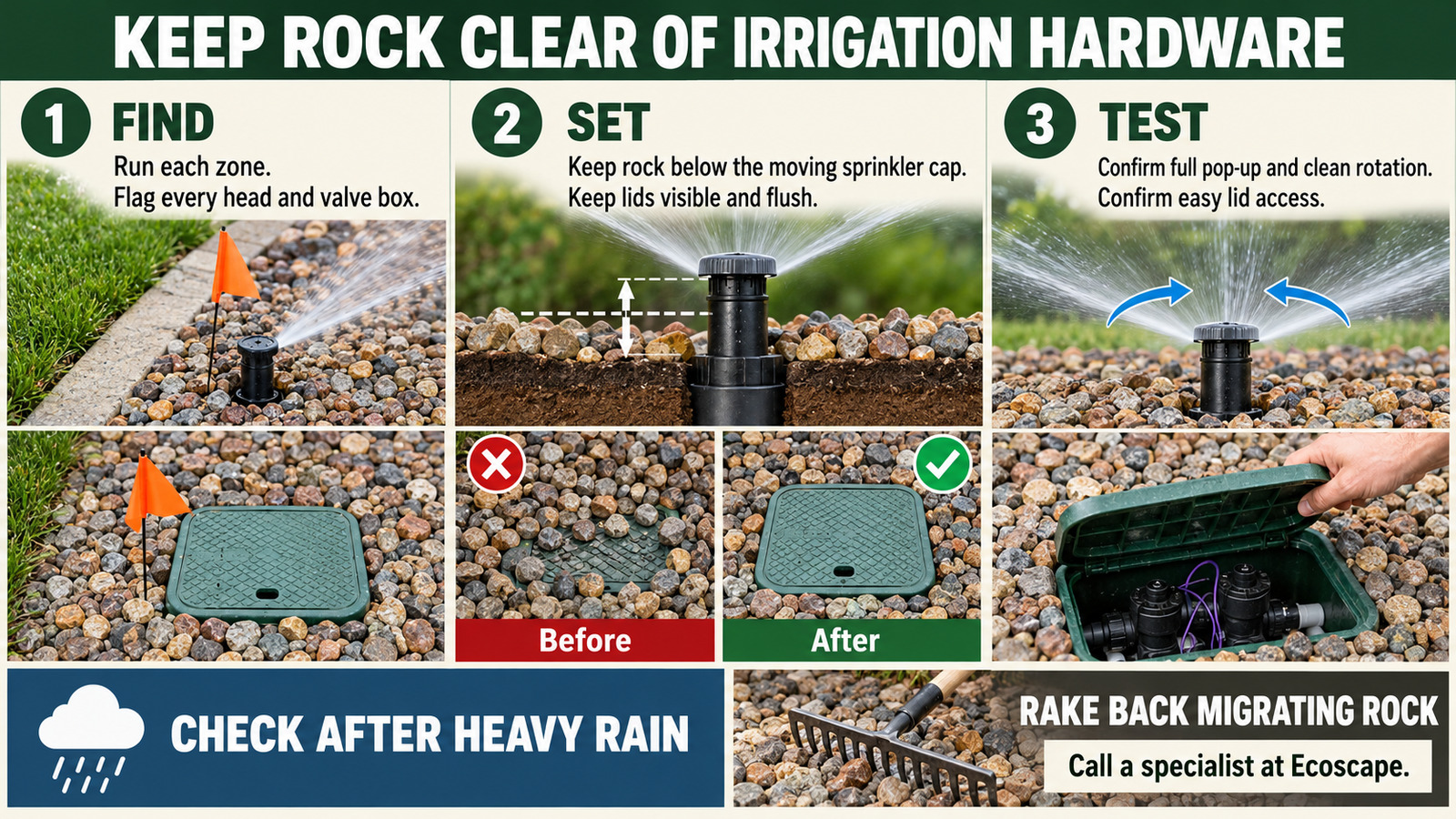
Find Every Head and Valve Box First
Run each irrigation zone manually and walk the rock beds while the system operates. Mark every spray head, rotor, bubbler, and drip access point with a temporary flag. Locate each valve box without probing blindly; use existing plans, visible lids, wiring routes, and the zones themselves as clues. Turn the system off before touching components. Record the locations with photos so future rock refreshes or plant installations do not cover them again.
Set a Clean Working Edge
Rake rock back by hand until the moving cap and stem have unobstructed travel. The rock surface should remain below the part that rises, and loose pieces should not fall into the opening when the head retracts. Keep the full valve-box lid visible and roughly flush with the surrounding finished surface. A defined edge or stable transition around the hardware helps rock stay contained while preserving a neat, intentional appearance.
Test Movement and Coverage
Restart one zone at a time. Confirm that each head rises fully, rotates or sprays cleanly, retracts without catching, and is not tilted by surrounding material. Watch for blocked nozzles, distorted spray, pooling, or rock being thrown by the water stream. Open and close each valve-box lid to confirm easy access, but avoid pulling wires or forcing valves. Correcting rock placement will not repair a broken riser, leaking fitting, or sunken box.
Plan for Florida Rain and Maintenance
Inspect the area after intense rain because runoff can carry smaller stone toward low points and hardware openings. Check again after pressure washing, pruning, bed edging, or a new rock delivery. Leaves and grass clippings trapped between stones can hide the cap even when the rock level is correct. A short recurring inspection is especially useful near downspout discharge, sloped beds, walkways, and places where lawn crews turn equipment.
Avoid Common Rock-Bed Mistakes
Do not pile rock higher to hide a leaning sprinkler, and do not use adhesive around moving irrigation parts or removable lids. Never strike a buried lid with a shovel to find its edge. Avoid raising a head with improvised threaded pieces that may leak or place the nozzle at the wrong height. If the surrounding grade has changed, the component may need a proper extension, swing-joint adjustment, or box reset instead of cosmetic coverage.
Get the Hardware Reset Correctly
When heads are low, boxes have sunk, coverage has changed, or rock repeatedly migrates into the same spot, book an Ecoscape Outdoor Services irrigation assessment. We can evaluate the bed grade, component height, coverage, access, and rock containment together. For a larger rock refresh or irrigation correction, schedule a free quote so the finished landscape remains serviceable instead of concealing the next leak or repair.