Keep Drainage Grates Flush and Clear in Finished Lawns
Why Drain-Grate Height Matters
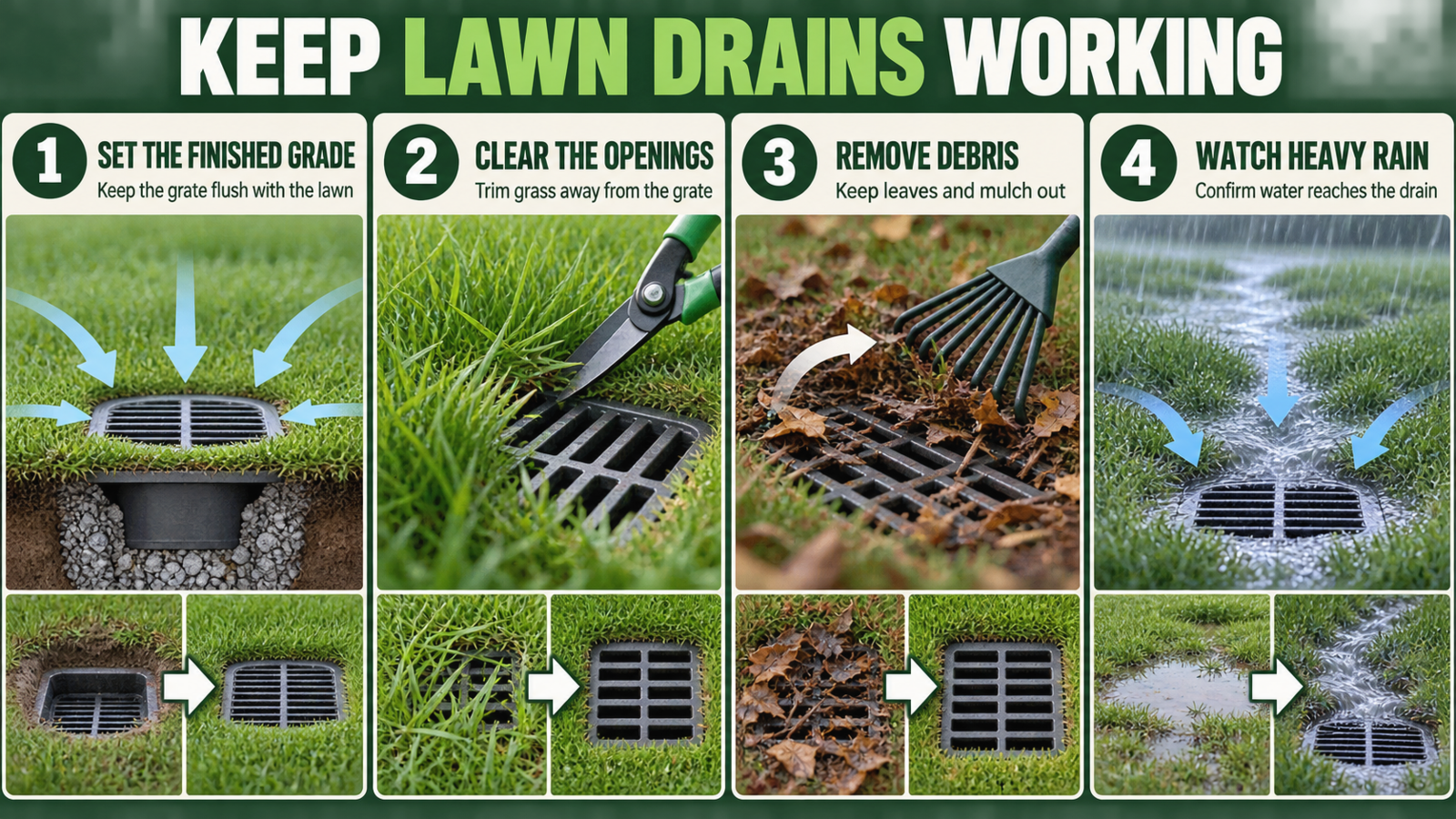
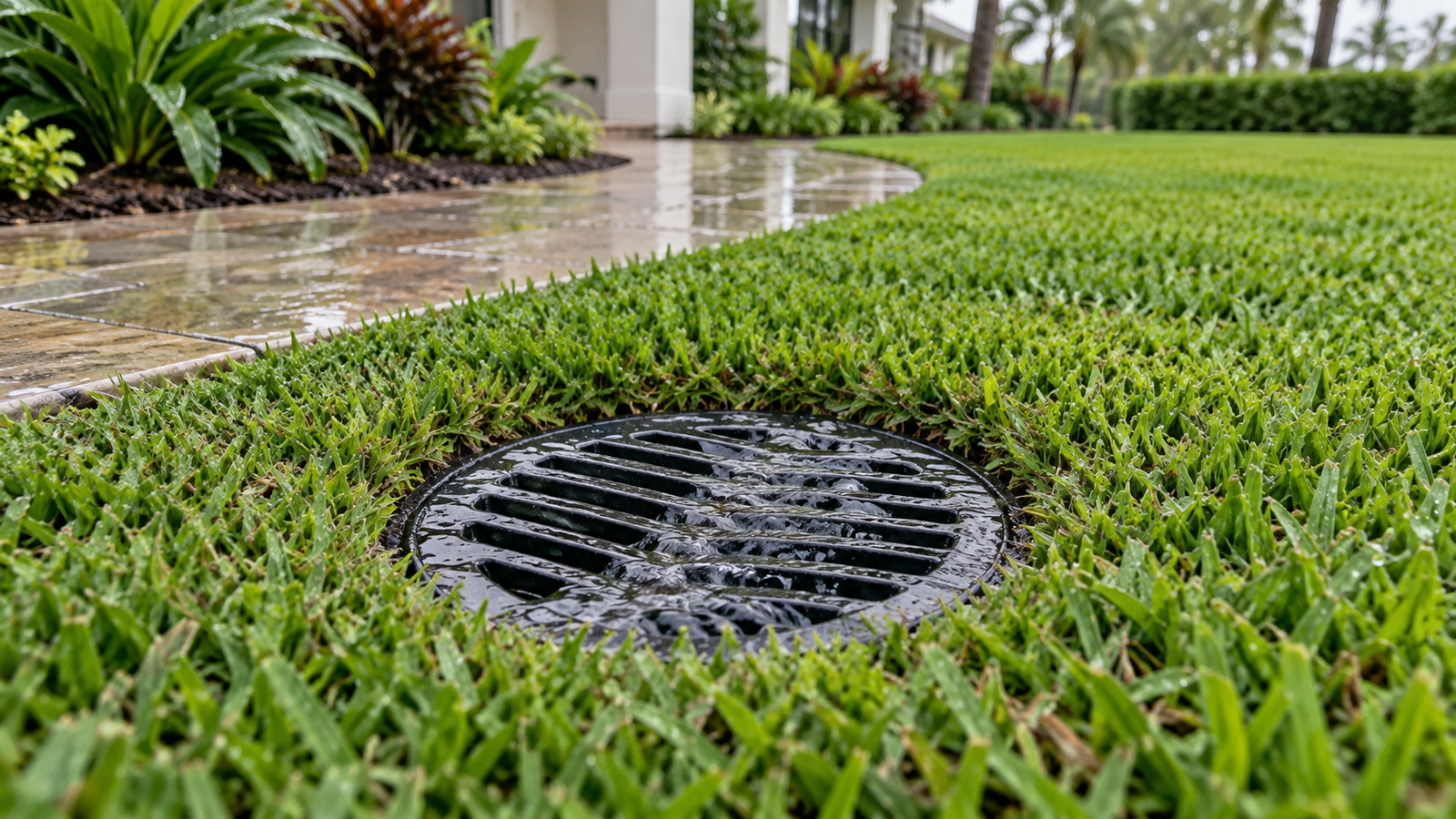
A surface drain can collect runoff only when water can reach its openings. If the grate sits above the surrounding lawn, shallow water may bypass it and remain in low areas. If it sits too low, soil, clippings, mulch, and growing turf can cover the inlet. A raised or sunken grate can also catch mower decks, wheels, or feet. The best position is generally flush with the stable finished grade, with the surrounding soil shaped to guide water toward the inlet without creating a sharp depression.
Inspect the Drain in Dry Weather
Locate every grate, catch basin, cleanout, and discharge point before mowing or landscape work. Remove loose leaves and look through the openings with a flashlight. Check for cracked plastic, missing fasteners, unstable soil, roots, or a grate that rocks when pressed. Trim grass back enough to expose the full inlet while keeping the lawn intact. Note whether recent sod, topdressing, settlement, or erosion has changed the grade. Dry-weather inspection makes it easier to correct small problems before a Florida downpour tests the system.
Keep the Inlet Open
Clear clippings, leaves, pine needles, and mulch by hand while wearing gloves. Do not push debris through the grate, where it can collect in the basin or pipe. Lift removable grates only when you can do so safely and reinstall them securely. Keep fertilizer granules and loose soil out of the drain. During the growing season, St. Augustinegrass runners can cross the openings quickly, so trim them as part of routine lawn care. Never leave an open basin unattended or uncovered around children, pets, or foot traffic.
Reset a Grate That Is Too High or Low
A grate should not be forced into position without checking the connected basin and pipe. Settlement may have shifted the whole assembly, and raising one component with improvised blocks can create leaks or instability. For a minor grade mismatch, carefully adjusting soil and sod around a sound basin may restore a smooth approach. Larger movement, broken fittings, or a loose box needs proper excavation and support. Preserve positive drainage away from structures, and avoid creating a bowl so deep that it stays wet between storms.
Test During Real Runoff
Watch the area during a safe, moderate-to-heavy rain or use a controlled hose test that does not flood the yard. Water should move toward the grate without circling it, backing up for an extended period, or surfacing elsewhere. Check the outlet when accessible and safe. Slow drainage can indicate debris in the basin, a blocked pipe, inadequate slope, or a saturated discharge area. A clear grate does not prove the entire system works, so document where water accumulates and how long it remains after rainfall stops.
Avoid Common Maintenance Mistakes
Do not cover a grate with sod, landscape fabric, rock, or mulch to improve appearance. Avoid striking it with a mower or string trimmer, which can crack plastic and loosen fittings. Do not pour chemicals, fertilizer, oil, or sediment into the drain. Repeatedly adding soil to a wet depression can bury the inlet without correcting the cause. If runoff carries mulch or sand to the grate after every storm, address the erosion or bed edging instead of treating the debris as an isolated cleaning problem.
When to Book a Drainage Assessment
Recheck grates monthly during the wet season and after mowing, storms, or landscape installation. Mark changes in height, recurring debris, soft soil, and standing-water duration. If the basin has settled, the pipe appears blocked, or water threatens a foundation, walkway, or lawn, the system needs more than surface cleaning. Ecoscape Outdoor Services can inspect the inlet, surrounding grade, and visible drainage route, then recommend the appropriate correction. Book an Ecoscape assessment for recurring standing water or a grate that has become unsafe or ineffective.