Keep Fresh Mulch on the Soil Surface
Mulch Belongs Above the Soil
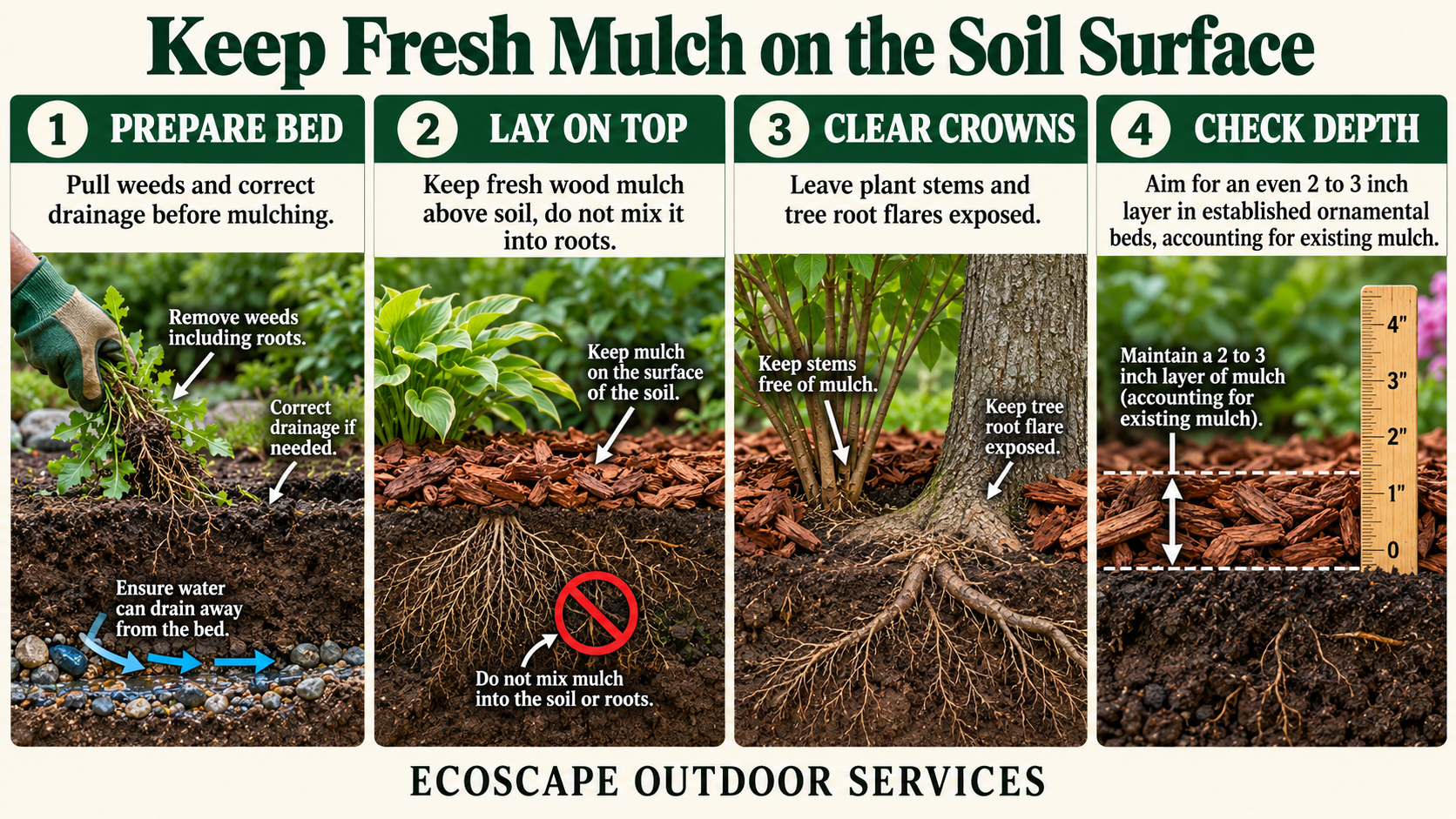
Mulch protects the soil surface by reducing evaporation, softening rain impact, limiting weed germination, and moderating root-zone temperature. Those benefits depend on a breathable layer resting above the soil. Mixing fresh wood mulch through a planting bed changes how the root zone holds air and moisture. As wood decomposes below the surface, it can disrupt planting conditions and make future digging difficult. Keep mulch as a defined top layer rather than treating it like soil amendment.
Prepare the Bed First
Remove weeds, litter, loose debris, and thick mats of undecomposed material before adding fresh mulch. Correct drainage, irrigation leaks, and grade problems while the soil remains visible. Define the finished bed edge and expose plant crowns and tree root flares. Do not till old mulch, landscape fabric, or wood chips into the soil to make them disappear. If the existing layer is already deep, redistribute or remove material before bringing in another load.
Apply an Even Layer
Spread mulch two to three inches deep in most established ornamental beds, adjusting for particle size and existing material. Use a rake and hand work around plants, lighting, irrigation, drains, and utility covers. Maintain a consistent finished depth without burying small groundcovers. Keep mulch below hardscape edges where runoff might carry it onto pavement. Measure several points instead of judging volume by the height of the pile delivered.
Protect Stems and Trunks
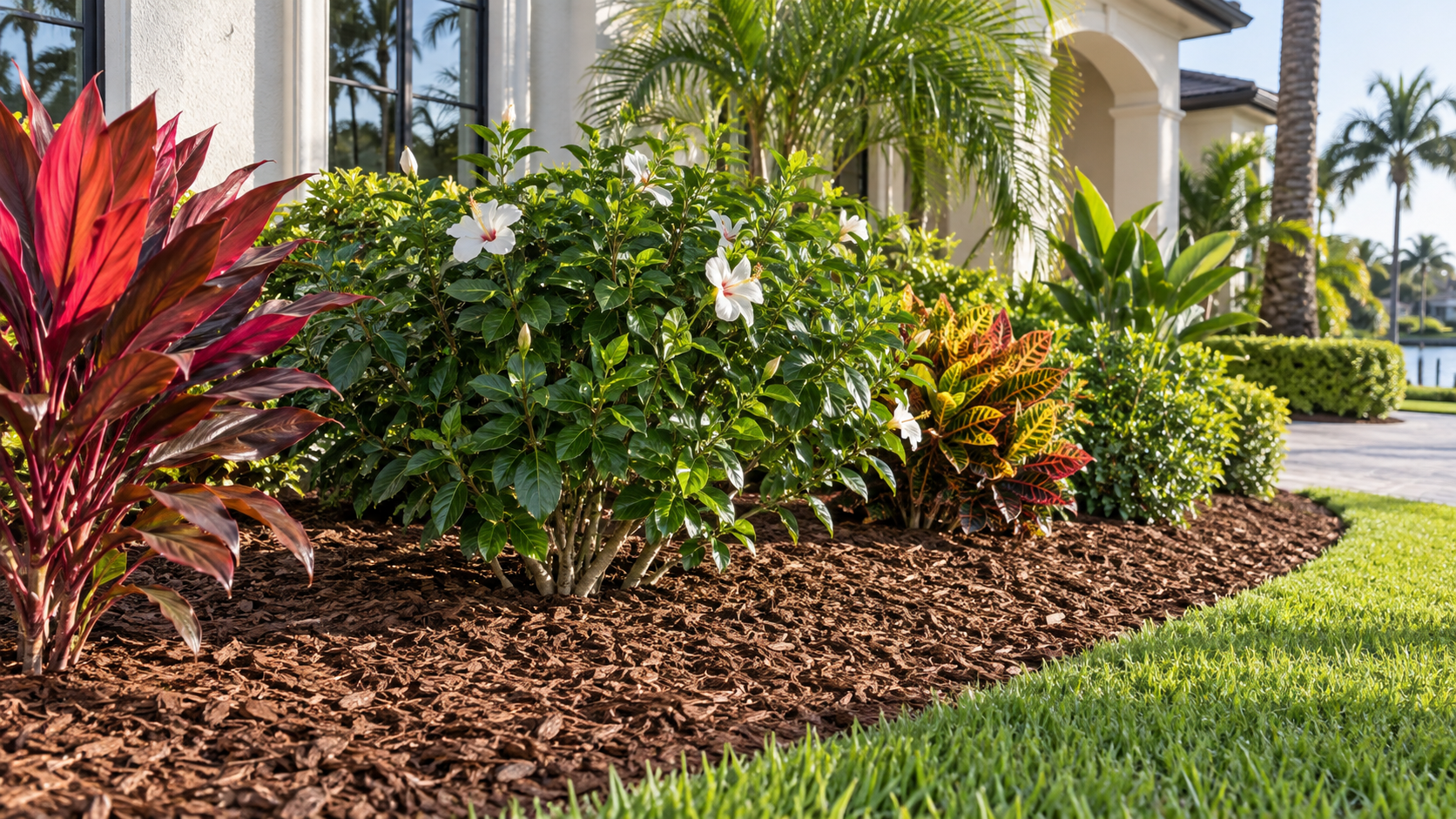
Pull mulch several inches away from shrub stems, palm trunks, and tree root flares. Leave the base visible for inspection and airflow. Mulch piled into a volcano holds moisture against living tissue, hides wounds, and encourages roots to grow in poor locations. Do not fill natural trunk depressions with more material. A clean open ring at each plant base signals correct installation and makes string-trimmer damage, decay, insects, and irrigation problems easier to spot.
Keep Soil and Mulch Separate During Planting
When installing a new plant, dig through the mulch and place it on a tarp or separate section of the bed. Excavate the planting hole in native soil. Backfill with the appropriate soil material, set the plant at correct grade, water it in, then restore mulch over the surface. Do not throw mulch into the planting hole or mix wood chips into the backfill. Keep the root ball top and trunk flare visible.
Avoid Automatic Annual Addition
Fresh color does not mean the bed needs more depth. Check the existing layer before ordering mulch. Florida heat and rain break material down at different rates across sun, shade, and drainage conditions. Add only enough to restore the intended depth. Avoid covering washed-out soil problems with a thicker layer. Do not let mulch block weep screeds, door thresholds, drains, landscape-light lenses, or air-conditioning equipment. Appearance should never override function.
Inspect After Heavy Rain
Walk the beds after the first strong storm. Rake thin areas, clear drains, and recover material that moved onto pavement before it spreads farther. Ecoscape Outdoor Services installs and maintains South Tampa mulch beds with careful depth, clean edges, visible plant crowns, and protected property details. We calculate material based on actual bed conditions and remove excess when needed. Correct surface placement delivers the benefits of mulch without creating hidden root and moisture problems.