Keep Groundcovers From Climbing Shrubs and Trees
Groundcovers Do Not Stop at the Soil
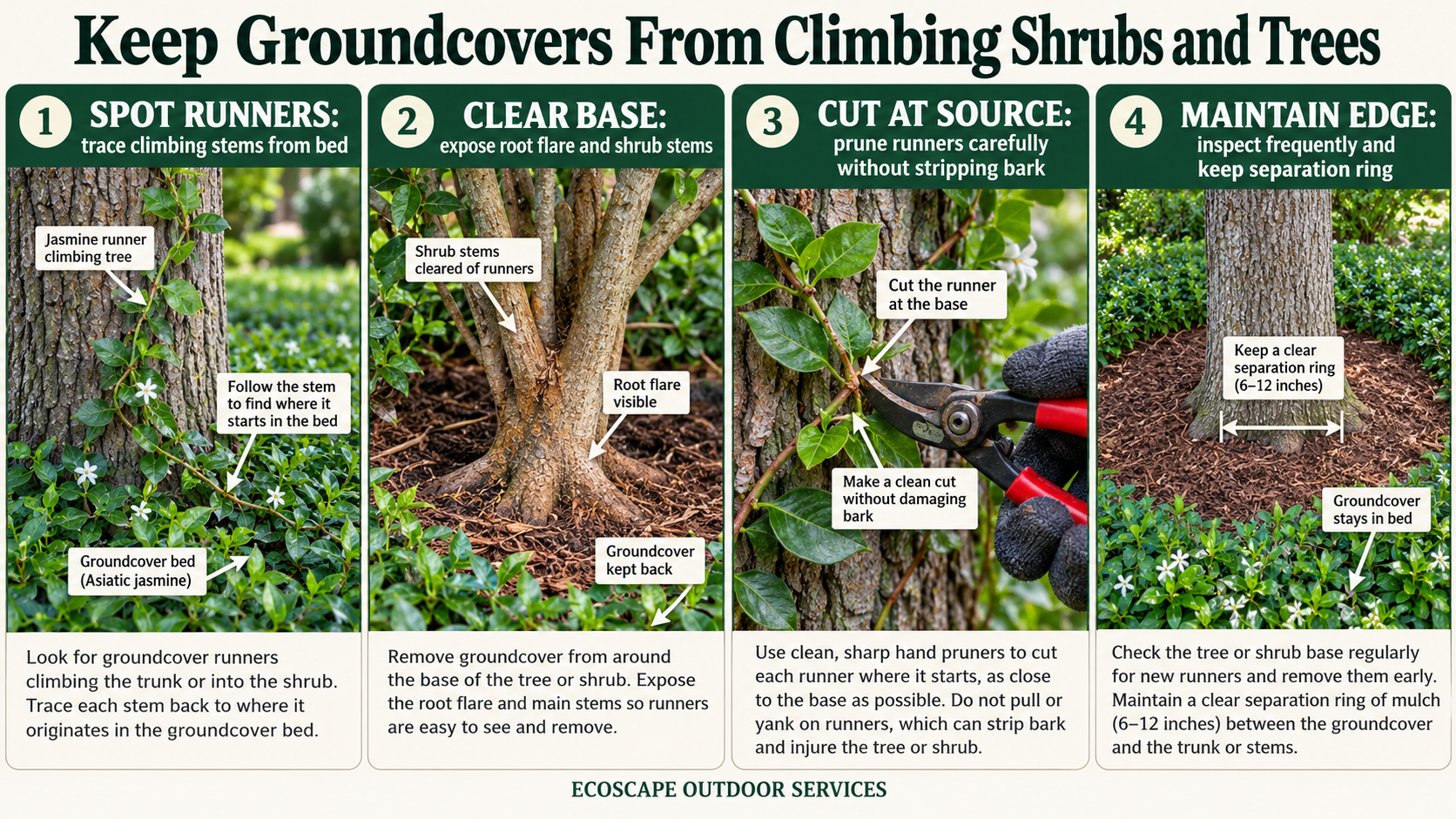
Asiatic jasmine, creeping fig, and other spreading plants follow trunks, stems, fences, and irrigation components when regular edging stops. Growth climbing into shrubs blocks light and airflow near the base. It hides trunk wounds, root flare problems, pests, and damaged irrigation. Runners can also tighten around tender stems or root into accumulated debris. Groundcover should protect and finish the soil surface, not become part of every plant above it.
Create a Visible Separation Ring
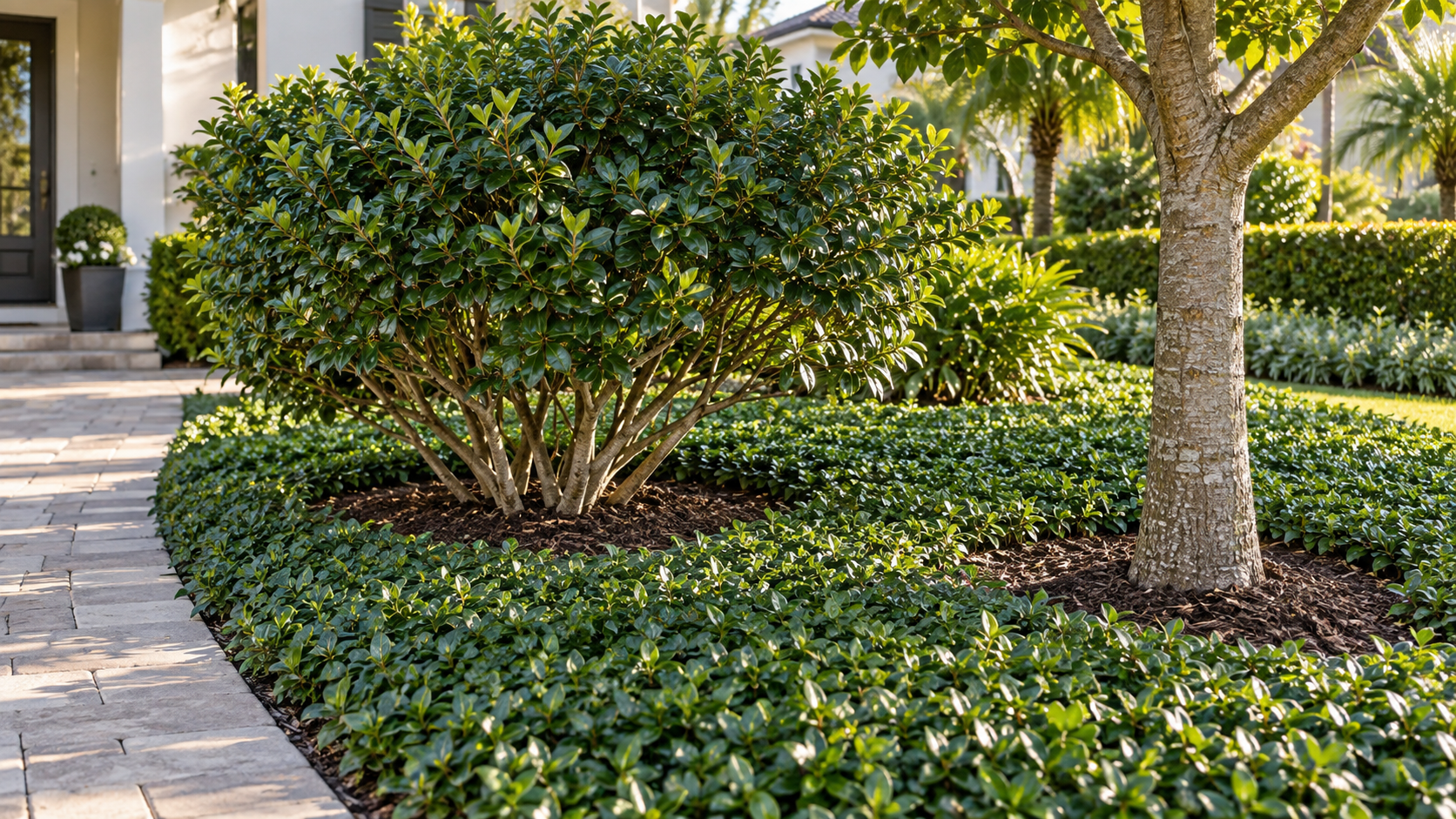
Maintain a clear ring around tree trunks, palm bases, and major shrub stems. The ring should expose the root flare or natural plant base without leaving roots scorched or soil bare across a large area. Size it for the plant and growth rate. A defined separation makes future maintenance faster and keeps string trimmers away from living tissue. Use mulch at a proper depth where appropriate, but never pile it against the stem.
Trace Runners Before Cutting
Lift each climbing runner and follow it back toward the rooted groundcover. Cut near the source with clean hand pruners, then remove the upper growth gently. Do not yank vines from thin bark or delicate branches. Established runners sometimes attach firmly and need to dry before safe removal. Work around irrigation tubes, low-voltage cable, and surface roots by hand. A string trimmer cannot distinguish a runner from a young trunk or wire.
Thin the Edge, Not the Whole Bed
Reduce growth closest to shrubs and trees while preserving healthy coverage across the open soil. Selectively remove thick mats that hold leaves and moisture against plant bases. Avoid scalping the entire groundcover because exposed stems burn, weeds enter, and regrowth becomes uneven. Maintain a consistent height and follow the natural bed contour. Remove cuttings from crowns, drains, walkway joints, and light fixtures before they root again.
Correct Conditions That Encourage Climbing
Groundcovers stretch upward when light is limited or dense surface growth has nowhere else to spread. Review plant spacing, canopy shade, irrigation, and bed boundaries. Redirect water that keeps trunk bases constantly wet. Prune shrubs selectively to improve light and airflow without stripping lower branches. Expand or redefine the bed when the groundcover has filled every available inch. Repeated cutting alone will not solve a design with no space for mature growth.
Avoid Herbicide and Barrier Mistakes
Do not spray around tree trunks or shrub bases without identifying the product, target plant, and label restrictions. Drift and root uptake can injure desirable material. Avoid plastic collars or tight trunk guards that trap moisture and conceal damage. Landscape fabric does not stop established runners from climbing. Do not bury the groundcover edge under repeated mulch layers. Physical separation and scheduled hand maintenance provide the most controlled result near valuable plants.
Check the Bed Every Month
Inspect groundcover edges during active summer growth and after major rain. Ecoscape Outdoor Services maintains South Tampa beds with clean separation around shrubs, trees, palms, lighting, irrigation, and hardscape. We control runners before they enter the canopy and protect the plant bases crews need to inspect. Regular light maintenance costs less than removing a mature tangle and restores the layered landscape design the groundcover was meant to support.