
Keep Heat-Reflecting Rock Away From Plant Crowns
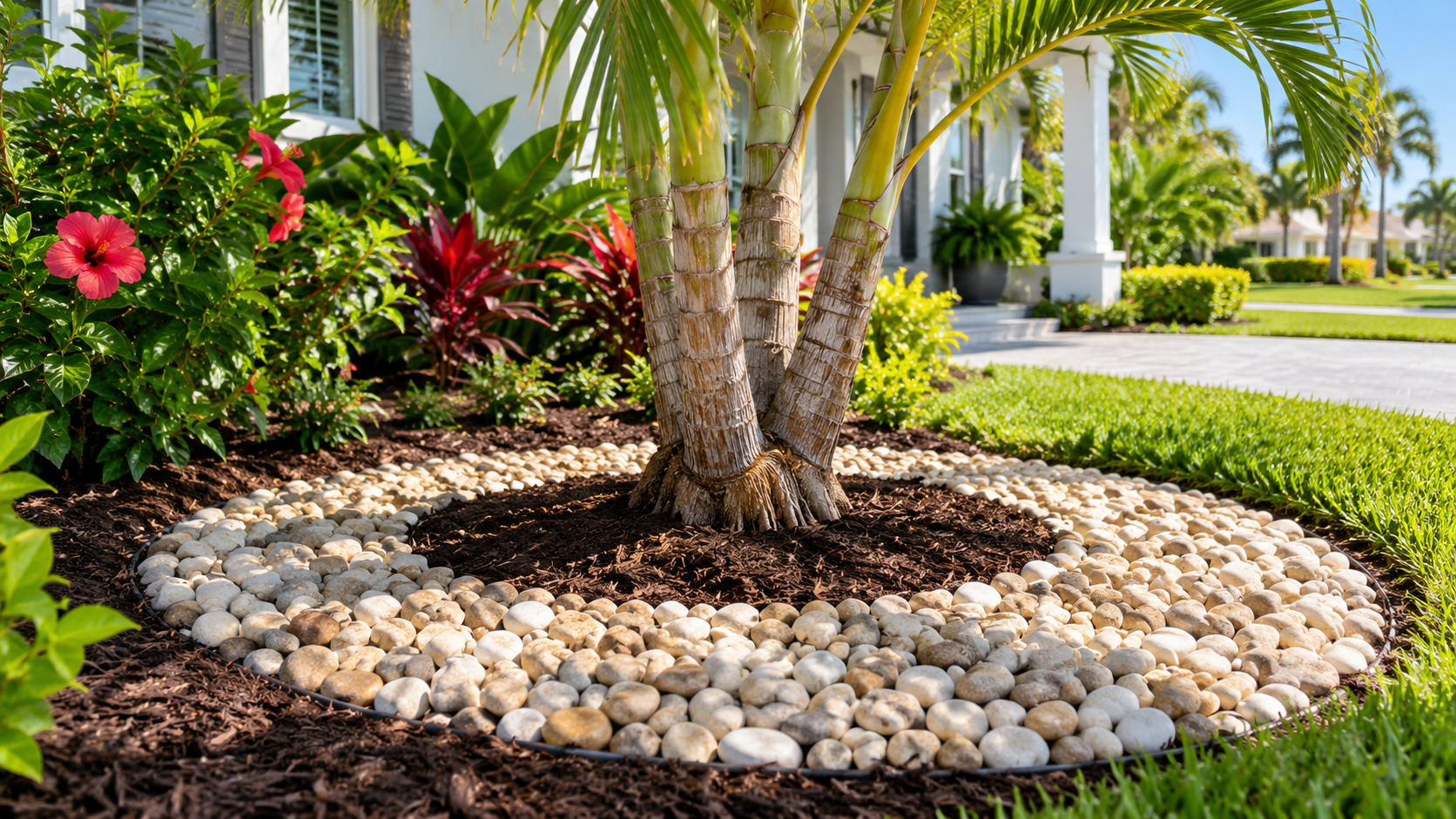
Rock Changes the Root Environment
Decorative rock creates a clean, durable surface, but it absorbs and reflects Florida heat. Stone near trunks and plant crowns raises surface temperature, slows visual detection of irrigation problems, and sometimes traps debris against sensitive tissue. Plan rock as a hard landscape material. Protect the living root zone with correct spacing, drainage, and plant choices rather than spreading stone tightly around every stem.
Create a Protective Opening
Leave a generous open ring around tree trunks, palm bases, shrub crowns, and clustered stems. Keep root flares visible and prevent stone from pressing against bark. Use a thin organic mulch layer within the protected ring when appropriate, stopping mulch several inches from the trunk. Size the opening for mature growth, maintenance access, and future trunk expansion instead of today’s container size.
Select Plants for Hot Beds
Choose species suited to reflected heat, fast drainage, and the site’s sun exposure. West-facing walls, driveways, pool decks, and light-colored stone increase heat load. Plants that thrive in ordinary mulched beds might decline in a rock setting. Group plants by moisture need, provide enough soil volume, and avoid covering shallow roots with a deep layer of heavy stone.
Prepare the Area Correctly
Remove sod and perennial weeds before installation. Correct grade and drainage, then place a suitable permeable weed barrier where the design calls for it. Cut openings wide enough for water and air exchange around plants. Secure seams and edges without blocking drains. Install consistent rock depth, keep material below hardscape edges, and protect irrigation heads, valve boxes, lighting cables, and root flares.
Manage Water and Temperature
Check soil moisture beneath the rock rather than judging the dry-looking surface. Drip tubing and emitters should reach the active root zone and remain accessible for inspection. Adjust irrigation after installation because evaporation and runoff patterns change. During extreme heat, inspect young plants more often. Avoid daily shallow watering, which encourages weak surface roots and hides deeper coverage problems.
Avoid Common Rock-Bed Mistakes
Do not pile rock against foundations, siding, trunks, crowns, drains, or air-conditioning pads. Avoid mixing small stone directly into soil during later renovations. Never assume weed barrier eliminates all weeds, since windblown seed germinates in debris above it. Do not use landscape rock to hide poor drainage. Water flowing beneath stone still erodes soil and threatens roots or structures.
How Ecoscape Outdoor Services Helps
Ecoscape Outdoor Services designs and installs landscape rock with attention to plant health, drainage, grade, irrigation, edging, and long-term maintenance. Our crews remove conflicting turf, prepare the base, protect trunks and crowns, secure barrier material, place stone evenly, and complete a detailed cleanup. South Tampa properties receive a finished rock installation that looks refined without sacrificing the living landscape.
