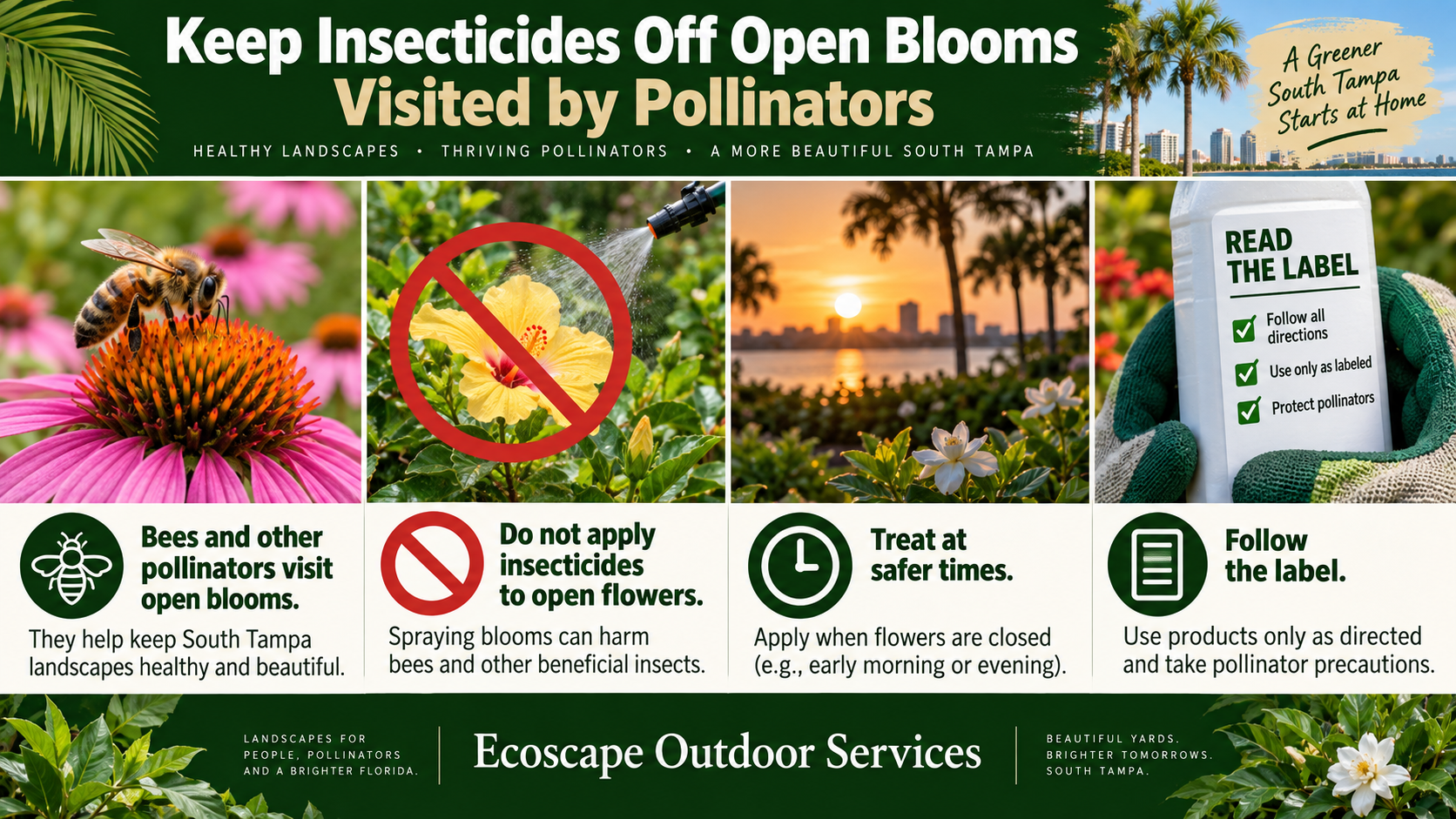
Keep Insecticides Off Open Blooms Visited by Pollinators
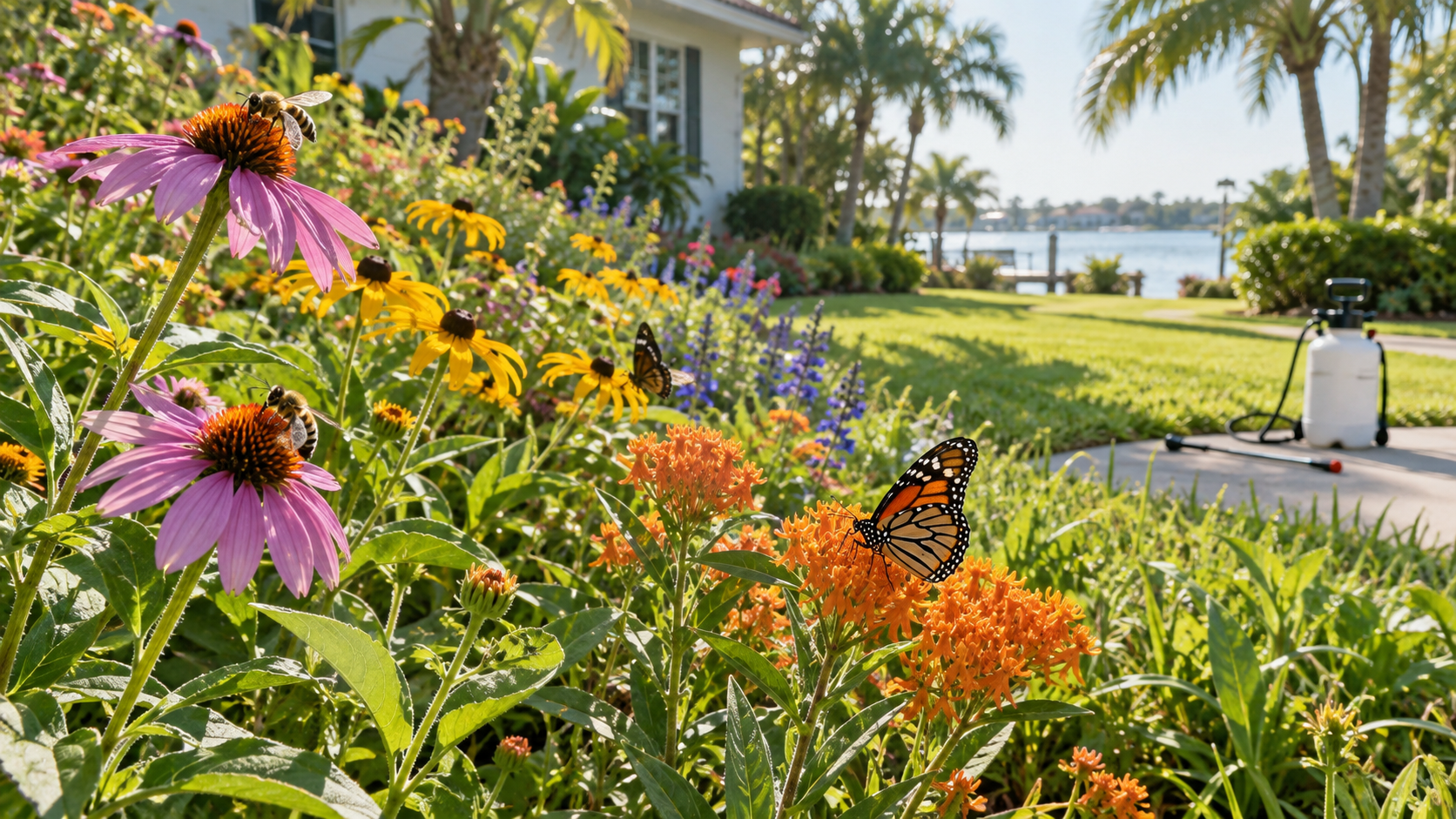
Open Flowers Are Active Feeding Sites
Bees, butterflies, moths, and other beneficial insects visit open blooms for nectar and pollen. Applying an insecticide across those flowers creates avoidable exposure, even when the target pest lives elsewhere on the plant. Florida landscapes may bloom during much of the year, so treatment timing needs deliberate planning. The first step is identifying the pest, the affected plant part, and whether control is necessary.
Confirm the Insect Before Treating
Not every insect on a flower damages the plant. Observe leaves, stems, buds, and the underside of foliage before selecting a response. Photograph the suspected pest and note whether damage is increasing. Beneficial predators may already be present. Treating without identification wastes product and removes helpful insects. Use UF/IFAS or another reliable identification resource when the species is unclear, then follow the product label for the confirmed problem.
Avoid Spraying Flowers in Bloom
Keep spray, dust, and granules away from open blooms used by pollinators. Do not assume a product is harmless because it is sold for home gardens or described as natural. The label determines where, when, and how it may be used. If treatment is necessary, choose a targeted method and product labeled for the site and pest. Never exceed the rate or apply during windy conditions.
Use Timing to Reduce Exposure
Pollinator activity is often highest when flowers are open, dry, and receiving daylight. When a labeled treatment must occur, follow all timing restrictions and avoid periods of active foraging. Do not spray before rain or irrigation that will move material into other plants or drains. Remove spent flowers only when appropriate for the plant. Never create a new off-label timing rule. The product label remains the legal instruction.
Start With Cultural Corrections
Many pest problems increase when plants are stressed by excess water, poor drainage, wrong light, crowding, or heavy fertilizer. Correct those conditions before relying on repeated applications. Prune heavily infested material only when proper pruning will not damage the plant. Use water, hand removal, or other nonchemical methods when suitable for the identified pest. Healthy, correctly placed plants often need fewer interventions.
Coordinate Every Service Provider
Landscape crews, pest-control companies, irrigation technicians, and property owners need to share information. Mark active pollinator beds and tell applicators when important plants are blooming. Keep maintenance schedules from placing pruning, irrigation, and treatment at cross-purposes. Record the product, date, target pest, and treated area. Inspect flowers and foliage afterward, then reassess whether the original problem improved before scheduling another application.
Build a Pollinator-Conscious Landscape
Ecoscape Outdoor Services maintains South Tampa landscapes with attention to plant health, bloom cycles, irrigation, and beneficial wildlife. We do not provide pesticide applications, but we help identify cultural conditions and coordinate clients with qualified treatment professionals when needed. Property owners should protect blooming beds through clear communication and accurate pest identification. A successful landscape controls real damage while preserving the flowers and insects that make the garden active.