Keep Landscape Rock Inside the Bed
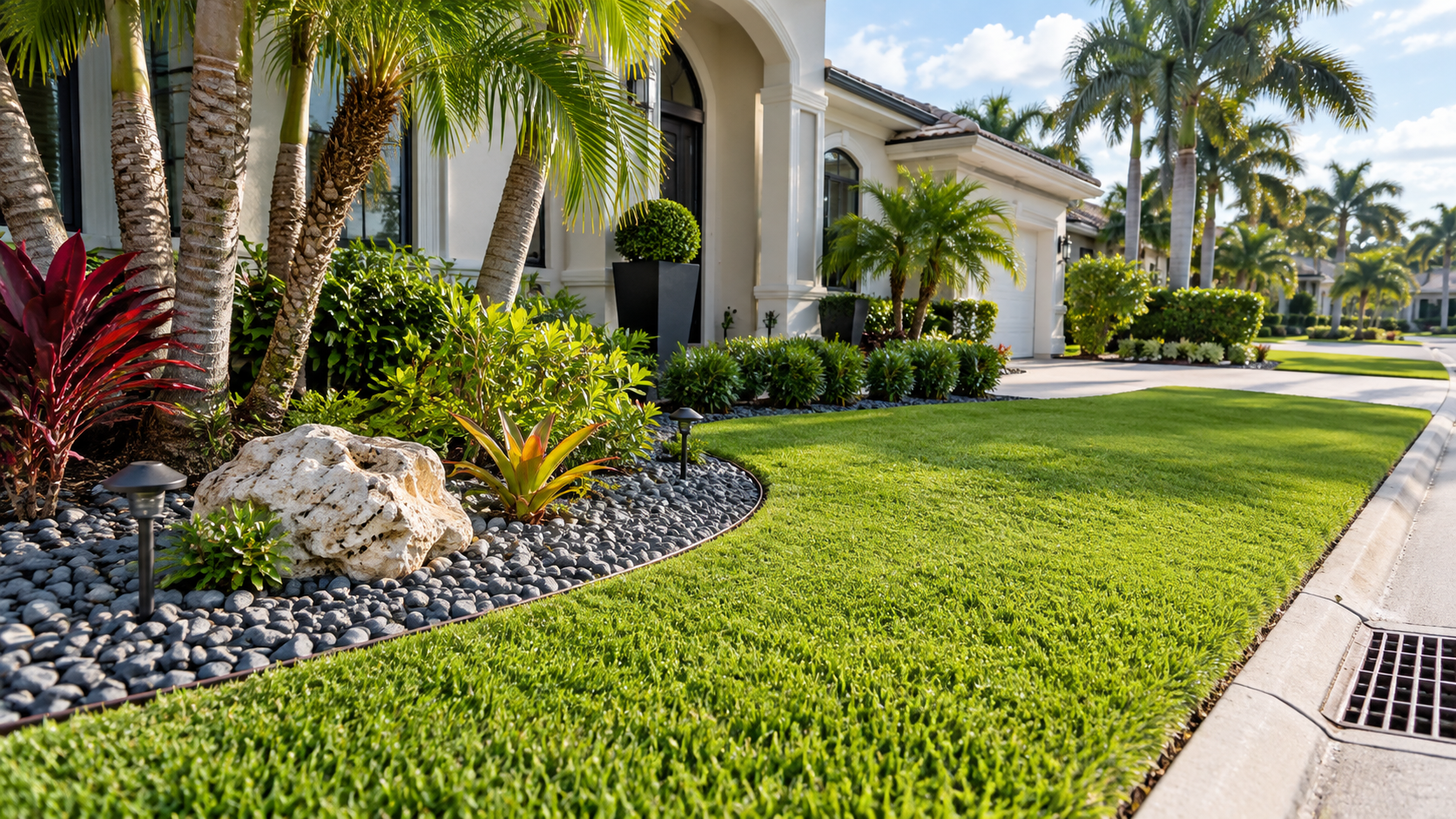
Small Stones Create Larger Problems
Landscape rock looks clean and permanent when it stays inside the planting bed. Once stones move into turf, sidewalks, driveways, or storm drains, they become a maintenance and safety problem. Mower blades can throw loose rock toward windows, vehicles, and people. Scattered pieces also damage edging equipment and make weekly cleanup slower. South Tampa rain, foot traffic, leaf blowers, and shallow installation all increase movement.
Begin With the Correct Bed Depth
Remove loose soil, roots, old mulch, and debris before installing rock. Excavate enough material so the finished rock surface sits below the top of the border. A shallow bed leaves nowhere for stone to settle, so pieces roll over the edge during the first heavy rain. Grade the soil gently away from the house while preserving a safe path for water. Never pile rock over buried drainage problems.
Build a Durable Boundary
Choose edging strong enough for the stone size and expected traffic. Composite, metal, concrete, or properly installed paver borders work when they are anchored and supported. Thin plastic edging often bends under heavy rock or rises as soil moves. Set the border on a stable line, secure it at curves and transitions, and keep joints tight. The edge should guide stone without creating a trip hazard beside a walkway.
Keep Rock Below the Edge
Do not fill decorative rock level with the top of the restraint. Leave visible containment height so displaced pieces remain in the bed. Rake the material into an even layer and avoid mounds around plant crowns, palm trunks, stucco, drains, and landscape lights. Large rock needs a deeper, stronger installation than small gravel. Check the supplier’s coverage and order by measured area and intended depth instead of guessing.
Control Water Before It Moves Stone
Downspouts, roof valleys, irrigation overspray, and concentrated runoff can wash rock across a property. Watch the bed during a hard rain and while each irrigation zone operates. Redirect concentrated water to a safe outlet, repair low spots, and reduce sprinkler impact on the bed. Fabric beneath rock helps separate soil from stone, but it does not stop moving water. Drainage and containment must work together.
Inspect After Service and Storms
Walk the border after mowing, edging, leaf blowing, and severe rain. Return loose pieces before they become hidden in turf. Repair lifted stakes, separated joints, and washed-out soil promptly. Ask maintenance crews to direct blower air along the edge instead of into loose stone. If rock repeatedly escapes from the same location, correct the grade or border rather than continuing to rake the same material back each week.
Use a Complete Installation Plan
Ecoscape Outdoor Services designs South Tampa rock beds around drainage, plant health, edging strength, and future maintenance. We measure the area, select suitable containment, establish the correct depth, and keep stone clear of structures and equipment. After installation, inspect the bed within one week and again after the first major storm. A well-built rock bed should stay crisp without creating extra work throughout the property.