Keep Landscaping Clear of Outdoor Electrical Panels and Meters
Why Landscape Clearance Matters
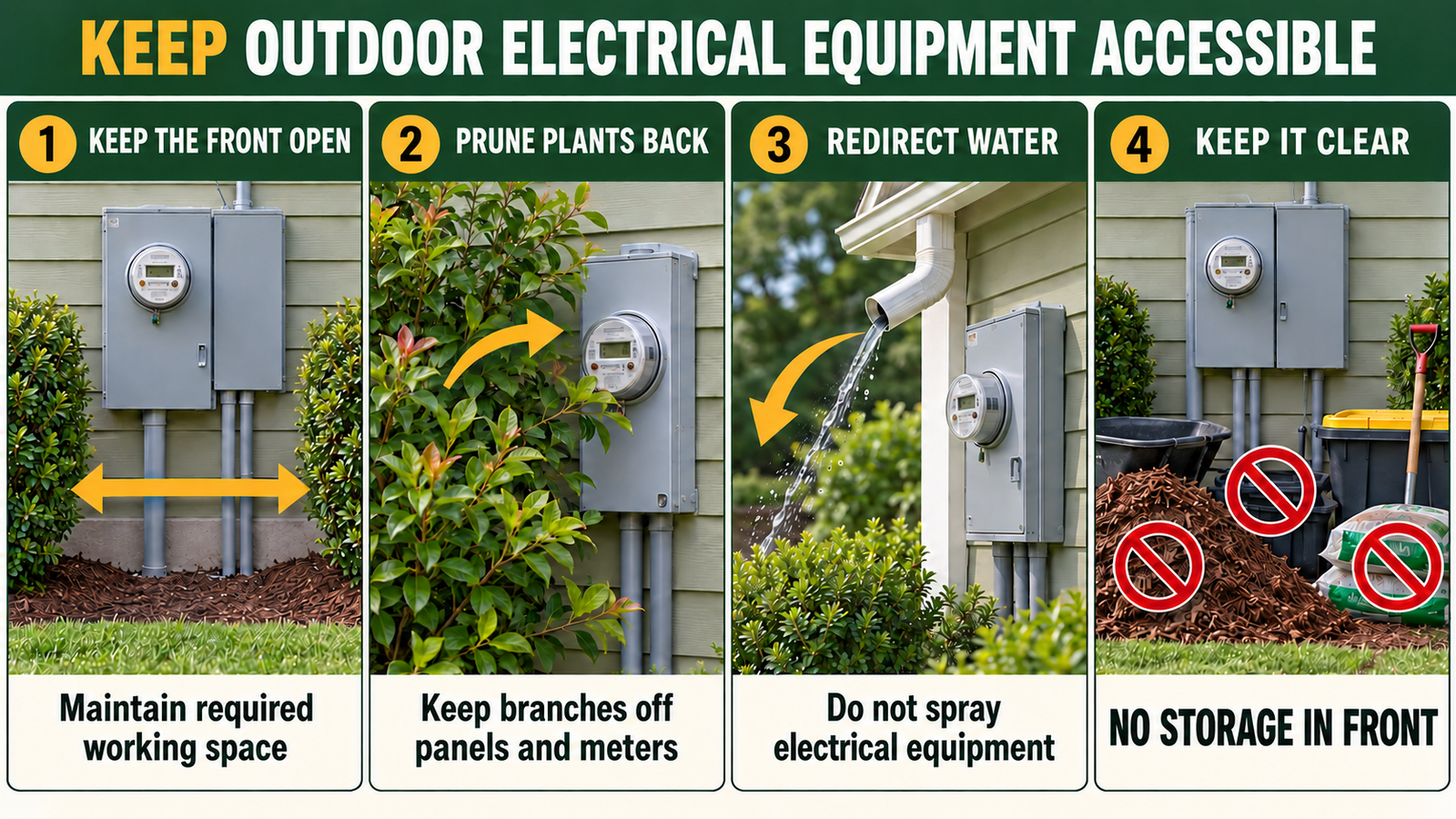
Outdoor electrical panels, service equipment, and utility meters need to remain visible and accessible. Shrubs that looked small at installation can grow across doors, labels, locks, conduits, and the working area in front. Mulch piles, garden tools, pots, and storage bins can create the same obstruction at ground level. Clear access allows the property owner and authorized personnel to reach equipment without forcing through branches or standing in wet soil. It also reduces the chance that routine landscaping damages an enclosure or conduit.
Inspect the Area Without Opening Equipment
Stand back and confirm that the closed panel door and meter are fully visible. Look for branches touching the enclosure, vines wrapping around conduit, soil or mulch against the cabinet, and items stored in front. Check the ground for settlement, standing water, or exposed roots that make access difficult. Never open, move, paint, drill into, or lean tools against electrical equipment during a landscape inspection. If you see a damaged enclosure, exposed conductor, sparking, heat discoloration, or unusual sound, keep away and stop work in the area.
Prune Plants for Lasting Access
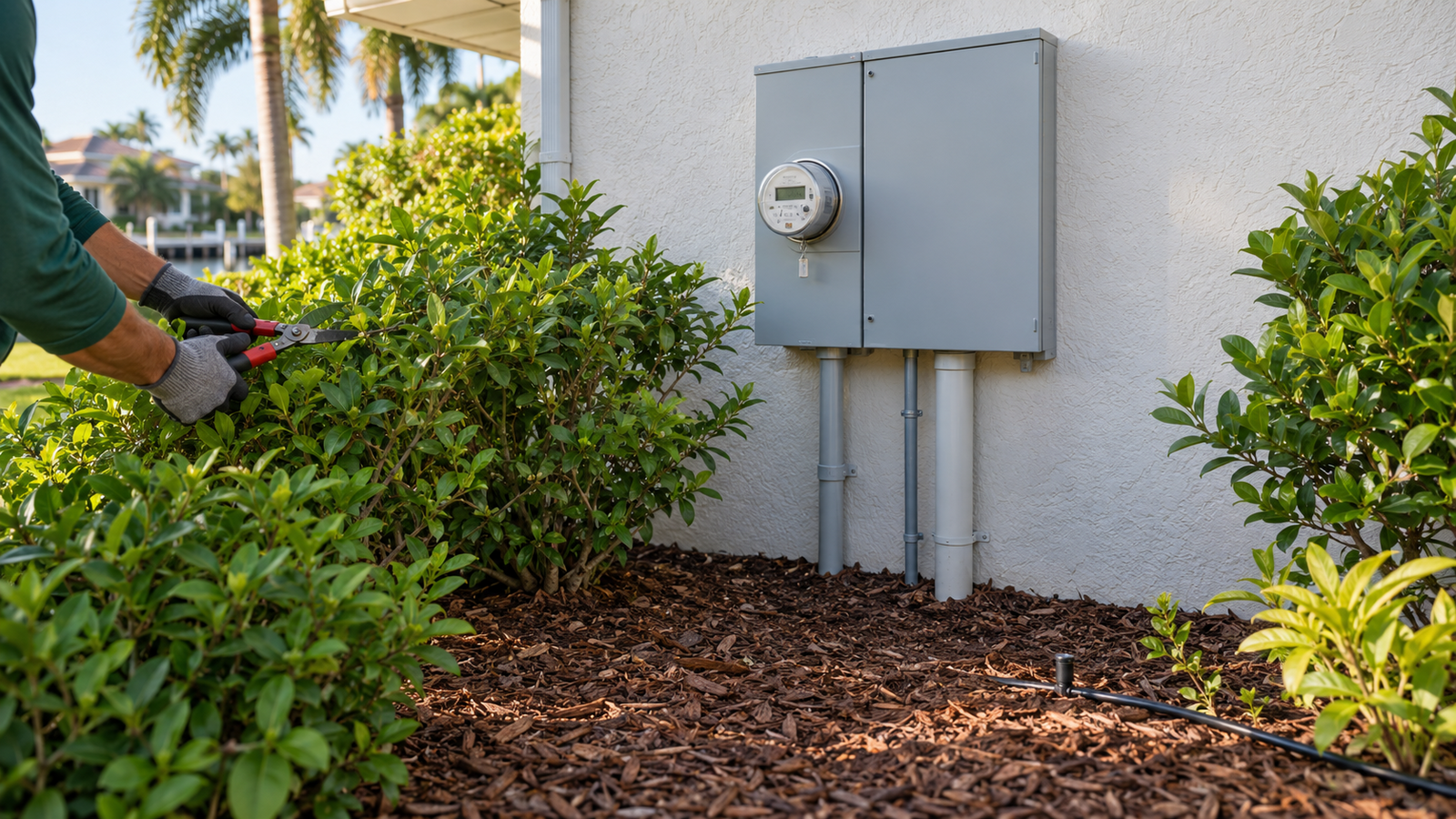
Use selective pruning to move branches away from panels and meters while preserving the plant's natural form. Remove vines before they thread behind equipment or climb conduit. Plan for regrowth instead of cutting only enough for the door to open today. Fast-growing tropical shrubs may need repeated attention through Florida's warm season. Use hand tools carefully and keep metal equipment away from cabinets, cables, and service lines. When a mature shrub cannot be maintained without constant severe pruning, replacement or relocation may be the better landscape solution.
Redirect Irrigation and Roof Water
Run nearby irrigation zones and watch where spray, drip, and runoff travel. Adjust arcs so water reaches the plant root zone without repeatedly striking the panel, meter, wall penetrations, or conduit. Move drip emitters away from the cabinet and correct leaks that keep the access area muddy. Downspouts should discharge where roof water does not splash electrical equipment or erode the soil around its supports. Never use a hose or pressure washer to clean an electrical enclosure. Moisture control should be solved through irrigation and drainage adjustments.
Keep Soil, Mulch, and Storage Away
Do not raise the grade around equipment with soil, rock, or mulch. Material piled against a wall or cabinet can trap moisture, hide damage, and interfere with doors or conduit. Keep bags, wheelbarrows, ladders, trash containers, and portable tools out of the working area. Edging should guide mulch without becoming a trip hazard in the access path. If a bed renovation changes the finished grade, identify every utility component before installation and preserve the clear approach rather than designing around an obstruction later.
Avoid Unsafe Maintenance Shortcuts
Do not reach behind a panel with powered hedge trimmers or use a string trimmer against conduit. Avoid fastening trellises, lighting cable, irrigation tubing, or plant supports to electrical equipment. Never conceal a panel with a removable screen that still restricts working space or encourages storage. Do not assume an enclosure is safe to touch because it appears closed. Landscape work should remain outside the electrical equipment. The goal is to manage plants, water, and surface materials without altering or contacting the electrical system.
Plan a Safer Landscape With Ecoscape
Review the area every few months and after storms, pruning cycles, irrigation repairs, or new plant installation. Photograph the clear space so later growth is easy to compare. If shrubs have engulfed the equipment, irrigation repeatedly wets the wall, or a bed must be redesigned, schedule a free quote with Ecoscape Outdoor Services. We can prune or replace problem plants, adjust the surrounding landscape, and evaluate irrigation coverage while keeping the electrical equipment untouched. A planned correction is safer and more attractive than repeated emergency cutting around blocked access.