
Keep Mulch Below Landscape Light Fixtures
Why Fixtures Get Buried
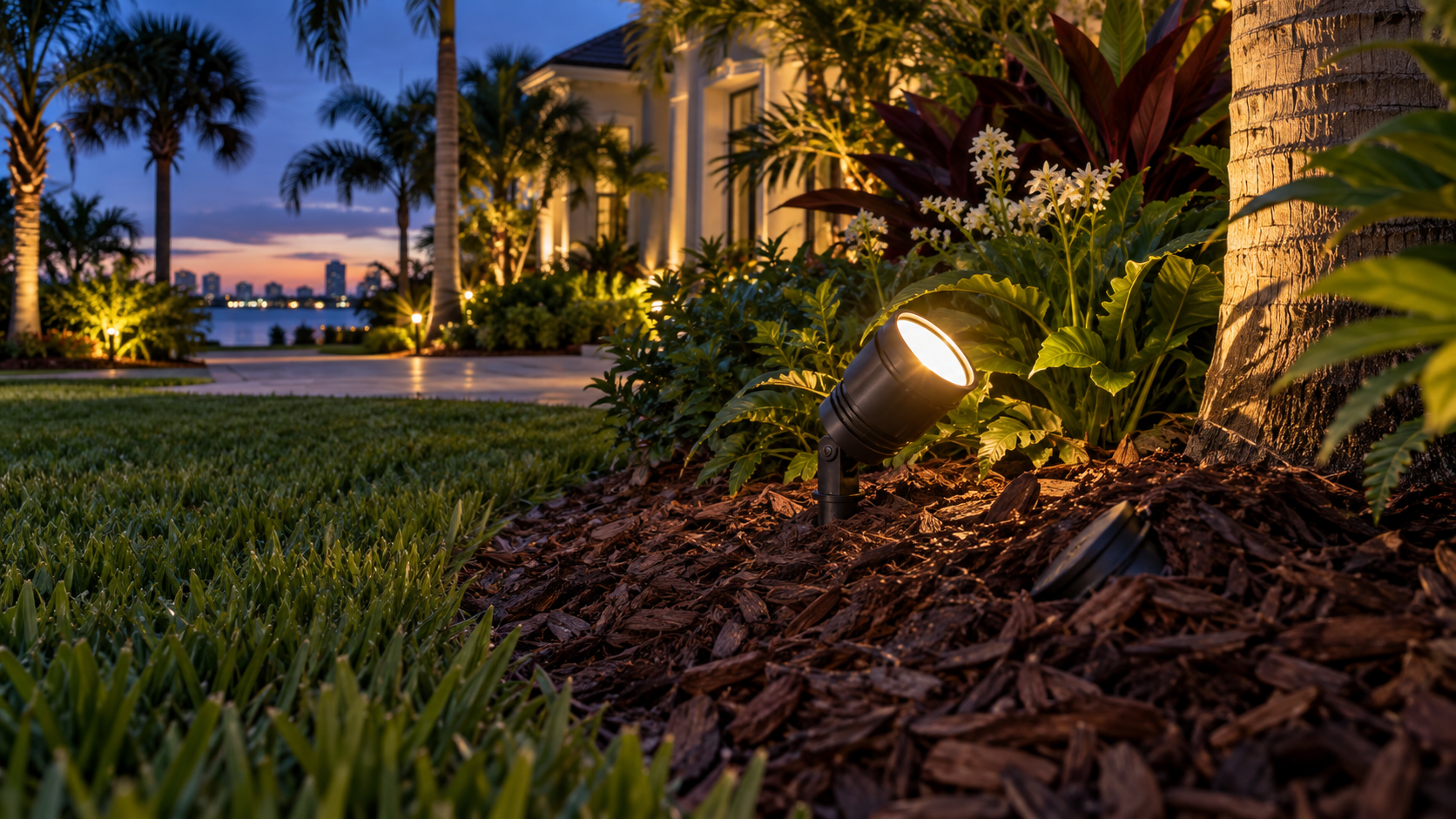
Fresh mulch raises the surface of a planting bed. Repeated applications add layers around low-voltage lights until lenses, adjustment points, stems, and wire connections sit below grade. Plants also grow over fixtures and crews move material during cleanup. A buried light loses output, overheats more easily, traps moisture, and becomes vulnerable to damage from tools.
Expose the Light Properly
Pull mulch away by hand until the fixture body, lens, and adjustment hardware are visible. Do not yank the fixture upward because buried cable or connectors might be under tension. Reposition only after checking wire length and stability. Keep the base supported in firm soil or on the manufacturer’s mounting system so aiming remains consistent after rain and maintenance.
Protect Electrical Connections
Low-voltage systems still depend on secure, weather-resistant connections. Look for exposed copper, cracked insulation, loose connectors, corrosion, or splices lying in standing water. Turn the transformer off before handling damaged components. Do not wrap a failing connection with ordinary household tape and bury it again. Use products and repair methods rated for direct burial and wet landscape conditions.
Control Mulch Depth
Maintain a two-to-three-inch mulch layer in most beds and avoid piling material around fixtures, plant crowns, tree trunks, walls, and drains. Remove decomposed buildup before adding a full new layer. A measured application protects roots and improves appearance without swallowing equipment. Tell installation crews where cable routes and fixtures sit before they rake or edge the bed.
Re-Aim After Bed Maintenance
Test the system after dark following mulching, pruning, planting, or storm cleanup. Fixtures often move even when they remain visible. Aim beams away from windows, drivers, neighboring property, and direct eye level. Use controlled overlap to reveal trees, architecture, and paths. Tighten adjustment points carefully so the fixture stays in position without damaging threads.
Inspect the Complete System
Clean lenses, trim foliage, check timer settings, and verify every fixture operates. Dim lights might indicate dirty glass, voltage drop, a poor connection, an overloaded transformer, or a failing lamp. Repeated breaker or transformer problems need professional diagnosis. Keep notes on dead zones and recurring failures so repairs address the system rather than one symptom.
Maintain Lighting With the Landscape
Ecoscape Outdoor Services coordinates outdoor lighting with planting, pruning, mulch, irrigation, and property access across South Tampa. We keep fixtures visible, protected, and correctly aimed as the landscape changes. Routine nighttime inspections preserve the design, reduce wasted light, and catch connection or placement problems before they become larger repairs.
