Keep Mulch Below Siding, Windows, and Inspection Areas
Why Clearance Matters
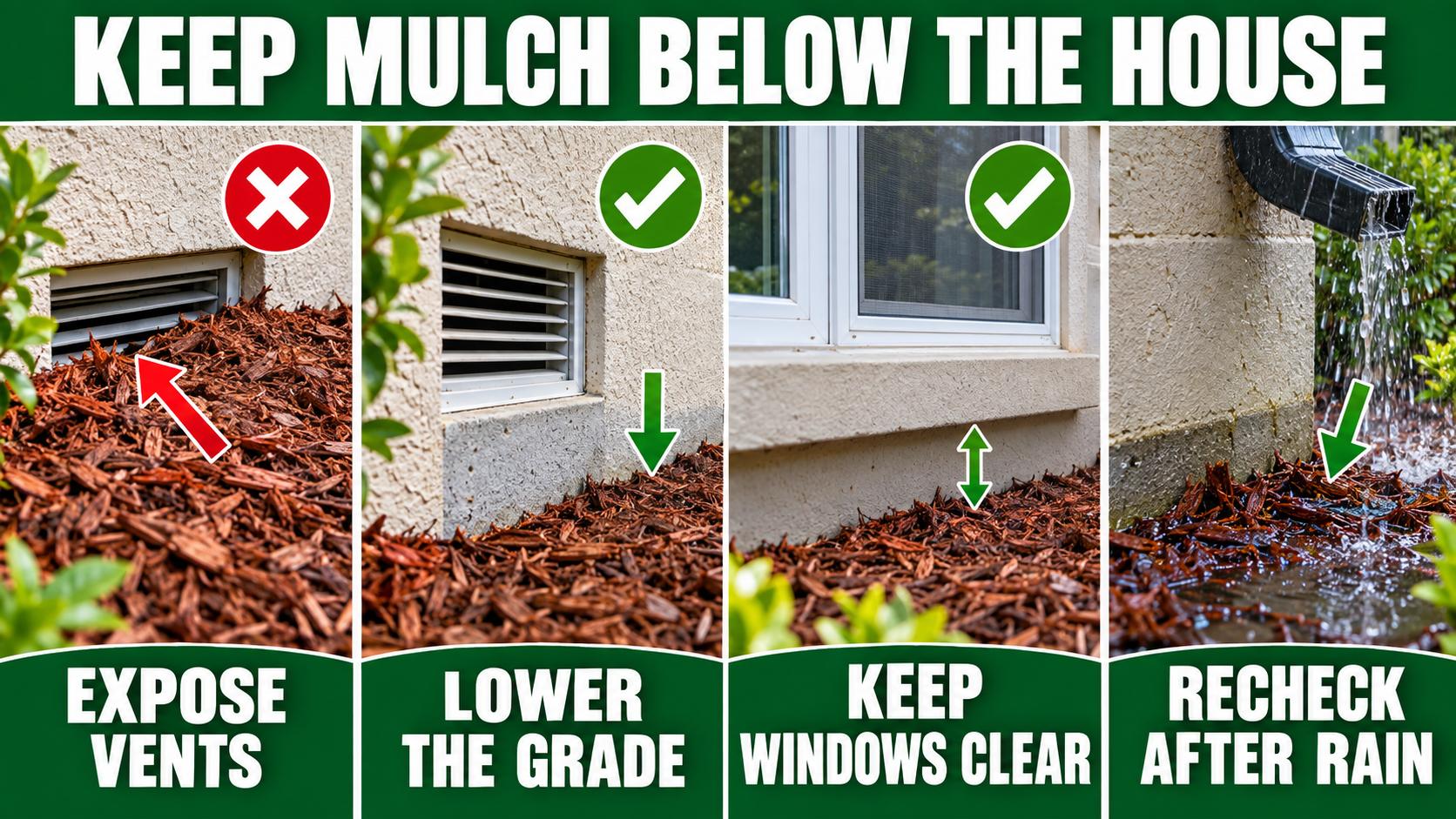
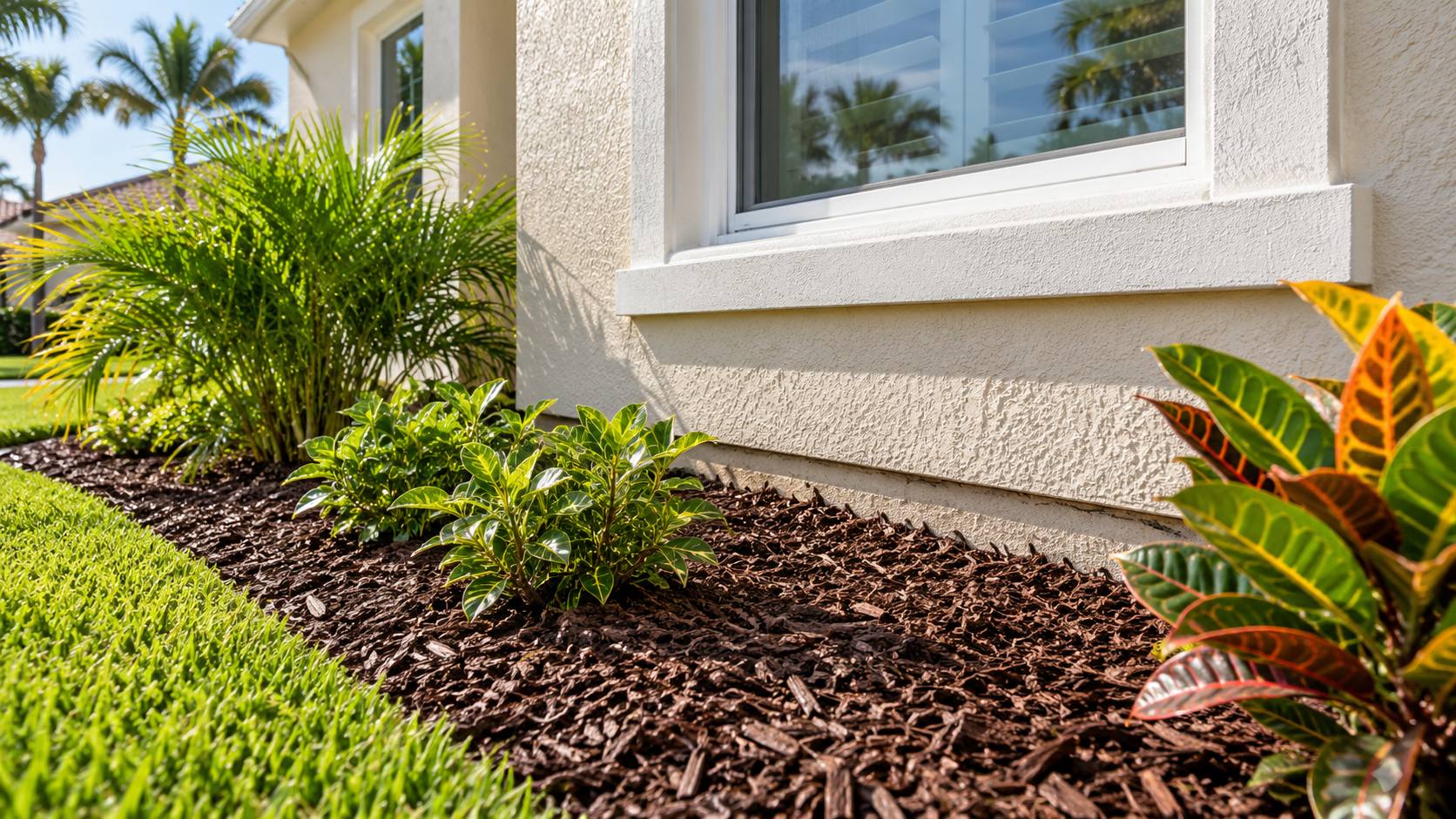
Mulch helps moderate soil temperature, conserve moisture, and suppress weeds, but it should not be banked against a building. Deep material touching siding or stucco can hold moisture where the wall needs to dry. It can also hide cracks, pest activity, drainage problems, and the lower edge of construction details. In Florida’s humid climate, keeping a visible inspection strip is a simple way to support both landscape health and routine property checks.
Areas That Must Stay Visible
Keep mulch below siding, weep screeds, door thresholds, low windows, vents, utility penetrations, and any termite inspection zone identified for the home. Do not cover cleanouts, irrigation valves, air-conditioning pads, or drainage openings. The exact clearance depends on the building assembly and local requirements, so follow the guidance of the builder, pest-control provider, or qualified inspector. The key is to preserve separation and make the edge easy to examine.
Install Mulch at the Right Depth
Remove accumulated layers before adding fresh material. For most ornamental beds, a finished layer of roughly two to three inches is enough to provide benefits without smothering the soil. Taper the mulch thinner as it approaches the house, plant crowns, and tree trunks. Keep the soil grade below the structure and maintain positive drainage away from the foundation. Refresh color by turning usable mulch instead of automatically adding another full layer.
Inspect During Routine Care
Walk the foundation line after heavy rain and during each mulch service. Look for material washed against the wall, damp areas that do not dry, blocked weep points, ant or termite tubes, and downspouts discharging into the bed. Check that plant growth does not prevent access. If mulch repeatedly moves toward the home, correct the slope, runoff source, or edging instead of raking it back after every storm.
Common Mistakes
Avoid creating a mulch volcano around palms, trees, or shrubs. Piling material over trunks and crowns traps moisture and can encourage decay. Do not use mulch to hide exposed foundation problems or low spots. Another mistake is placing landscape fabric and thick mulch over drainage openings, which can slow water and collect sediment. Never treat a tidy appearance as proof that the wall, grade, and pest-inspection clearances are correct.
When Professional Help Makes Sense
Ask for help when beds have years of buildup, grades slope toward the house, windows sit close to soil level, or drainage and pest concerns overlap. Ecoscape Outdoor Services can remove excess material, restore a clean inspection edge, reshape beds for better runoff, and install mulch at a practical depth. Coordinating landscape work with the property’s pest and building professionals helps preserve required access and avoids covering important conditions.
Helpful Resources
UF/IFAS explains Florida-Friendly landscape practices, including appropriate mulching and maintenance, in The Florida-Friendly Landscaping Guide to Plant Selection and Landscape Design. Recheck clearances after every refresh and after strong storms. A short seasonal inspection can catch washed mulch, settling soil, or blocked openings before they contribute to moisture or maintenance problems. Book Ecoscape Outdoor Services if mulch has built up against your home or you need beds lowered and refreshed.