
Keep Mulch Below Stucco Weep Screeds
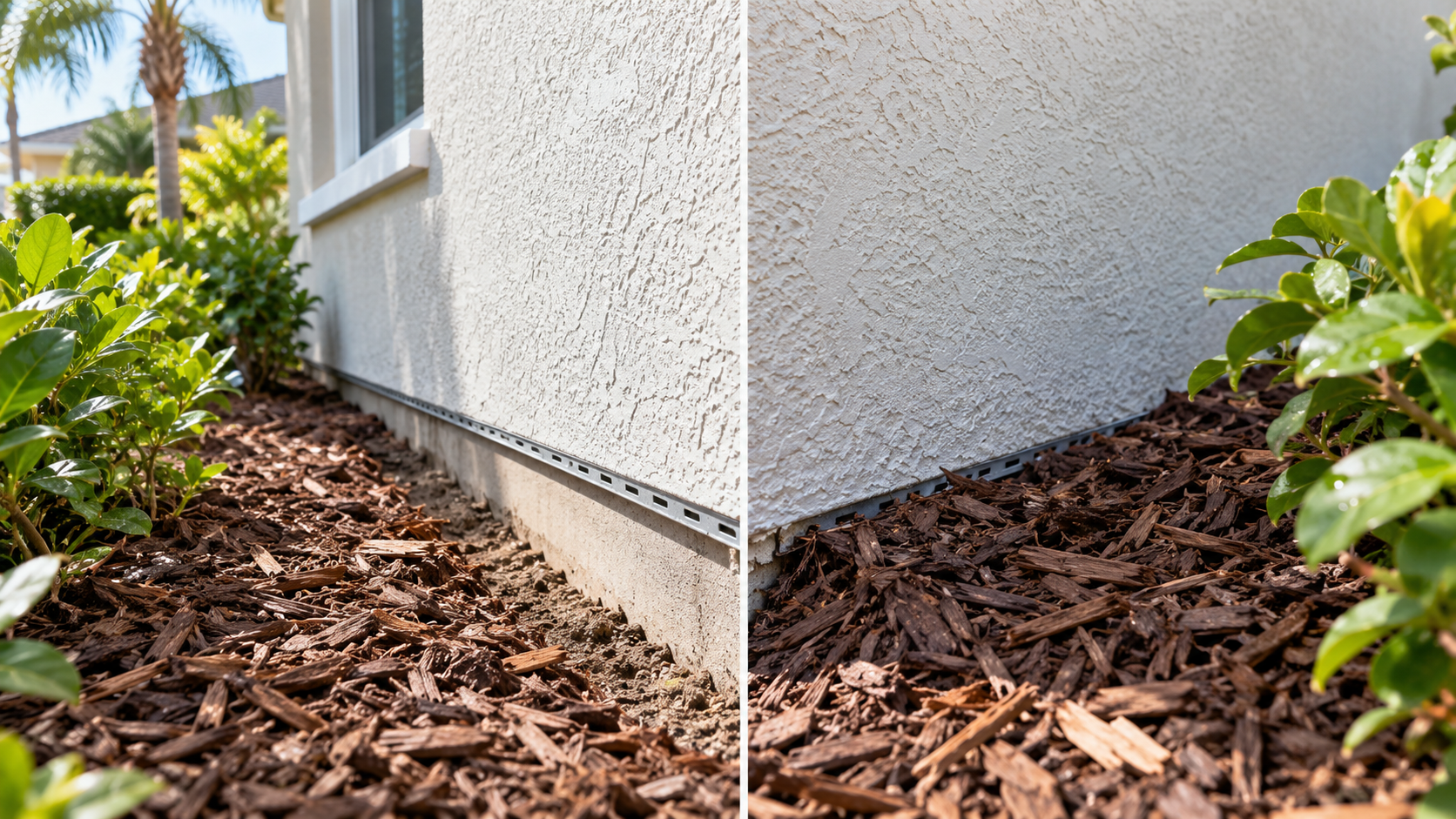
Understand the Wall Detail
Many Florida stucco walls include a metal weep screed near the bottom edge. This detail gives moisture behind the stucco a path to drain and helps terminate the wall system above grade. Mulch, soil, rock, sod, or new pavers piled over this area block visibility and hold moisture against the wall. A polished bed should still preserve the building envelope.
Find the Proper Clearance
Walk the house and locate the lower stucco edge, vents, door thresholds, siding transitions, and foundation openings before adding material. Keep the weep screed exposed and maintain the clearance required for the home’s wall design and local building requirements. When the detail is unclear, ask a qualified building professional before raising grade. Landscape appearance should never depend on hiding a drainage component.
Lower the Bed Instead of Piling Higher
Repeated mulch topdressing raises beds over time. Remove decomposed material and excess soil before installing a fresh layer. Shape the final surface to drain away from the wall without exposing roots or creating a trench which traps water. Use a modest mulch depth and taper it lower near the structure. Keep plant crowns and tree flares visible as part of the same correction.
Account for Florida Moisture
South Tampa receives intense rain, wind-driven water, frequent irrigation, and long periods of humidity. Wet organic material pressed against stucco dries slowly and makes inspection difficult. Roof runoff and misdirected sprinklers increase the exposure. Adjust nearby heads, extend problem downspouts where appropriate, and correct low spots so water does not settle against the foundation after each storm.
Avoid Common Installation Errors
Do not use mulch to cover an uneven stucco line, fill a settlement gap, or make a shallow bed look fuller. Avoid placing weed barrier up the wall or sealing the screed openings with adhesive, caulk, paint, or landscape material. Rock also creates problems when installed too high. Heavy stone hides the detail, retains heat, and becomes difficult to remove for inspection or repair.
Inspect the Perimeter Regularly
Check the wall base after fresh mulch, plant replacement, irrigation repair, pressure washing, and hardscape work. Look for blocked drainage openings, damp staining, cracked stucco, soil contact, insect activity, and overspray. Pull displaced material back promptly. Photograph corrected areas so future crews understand the intended grade. Annual inspection also catches gradual buildup before it reaches the wall system.
Finish Beds Carefully With Ecoscape
Ecoscape Outdoor Services grades and mulches planting beds with the house in mind. Our team checks wall clearance, irrigation direction, drainage flow, plant depth, edging, and final material height during landscape work. Careful installation protects the clean appearance of a South Tampa property while keeping important building details visible for drainage, inspection, and future maintenance.
