
Keep Mulch From Washing Into Storm Drains
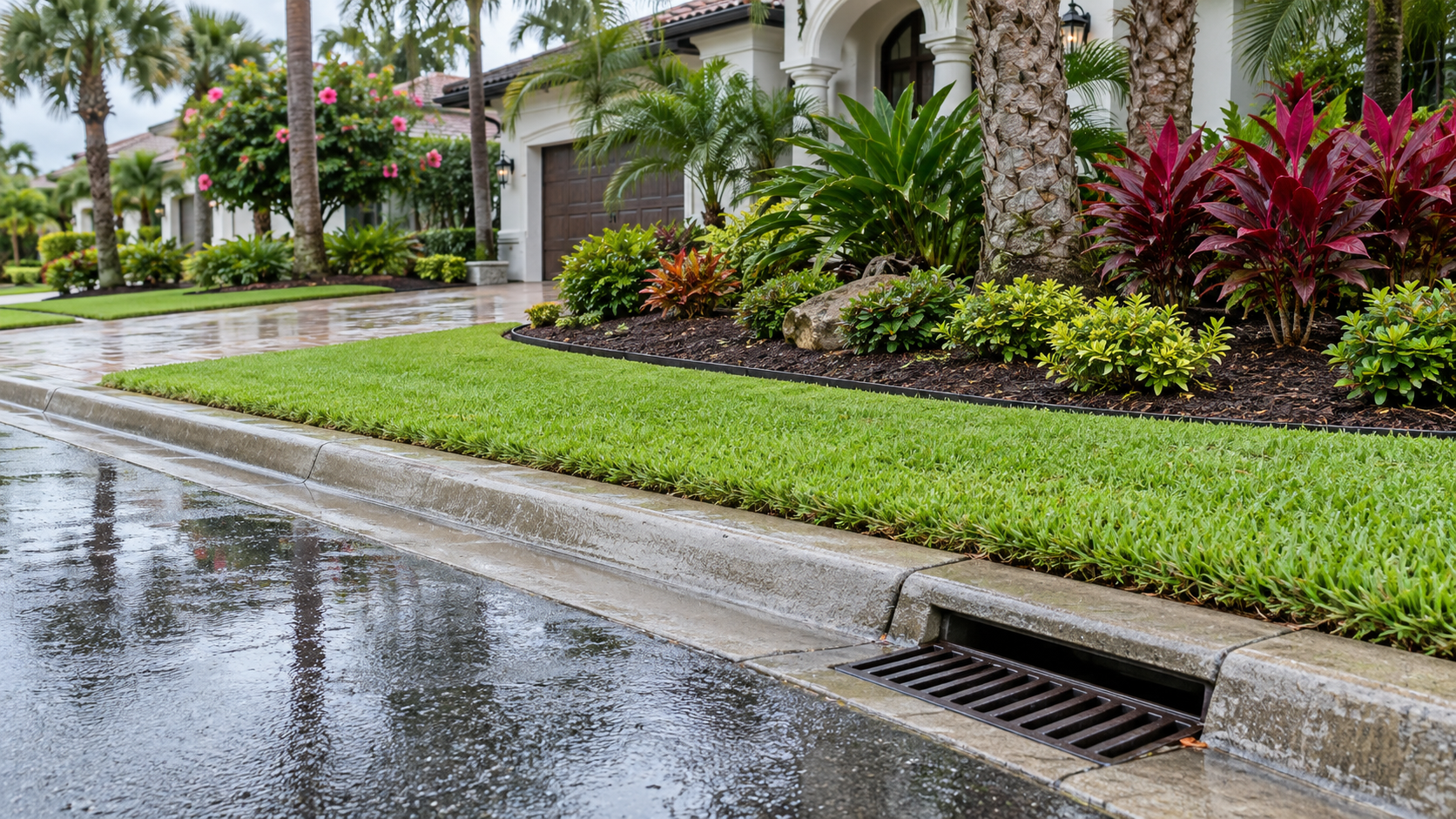
Understand Why Mulch Moves
Loose mulch floats and shifts when fast runoff crosses a planting bed. South Tampa downpours deliver large amounts of water in a short period, especially near driveways, downspouts, and sloped front beds. Once material reaches the curb, it enters storm drains or spreads across pavement. The problem usually involves water direction, bed grade, material choice, or missing edge support.
Watch the Property During Rain
The best inspection happens while water is moving. From a safe location, note where runoff enters the bed, how quickly it travels, and where mulch begins to lift. Check downspouts, irrigation heads, roof valleys, driveway slopes, and low curb openings. A dry-day cleanup hides the flow path. Photos or short videos help compare conditions after each correction.
Redirect Concentrated Water
Extend or redirect downspouts where appropriate so one heavy stream does not strike loose material. Adjust irrigation heads which spray across beds or pavement. Use shallow grading, planted swales, catch basins, or approved drains when runoff needs a defined path. Never build an edge which traps water against the house. Water still needs a safe route toward a lawful discharge area.
Install a Stable Bed Edge
A clean edge slows mulch movement and keeps material away from turf and sidewalks. Set edging at a useful height without creating a dam. Anchor flexible composite edging at close, consistent intervals, especially along curves and low points. Natural cut edges work on gentle grades but need regular refreshing. Near a curb inlet, leave enough clearance for water to reach the drain without carrying loose material.
Choose Mulch for the Location
Fine, lightweight products move faster than larger, interlocking pieces. Use heavier mulch in exposed runoff areas and maintain a moderate depth instead of building a thick loose layer. Do not rely on mulch glue as the main control. Organic material changes shape, absorbs moisture, and decomposes. Correct drainage, thoughtful grading, dependable edging, and suitable mulch provide a stronger long-term result.
Clean and Recheck After Storms
Remove mulch, leaves, grass clippings, and soil from curb openings before the next rain. Inspect bed edges for undercutting, leaning sections, and gaps. Restore washed areas only after correcting the water source. Repeatedly raking material uphill treats the symptom. Track where loss continues and make one focused adjustment at a time so each change has a clear result.
Let Ecoscape Correct the Full Problem
Ecoscape Outdoor Services reviews runoff, downspouts, irrigation, bed grade, edging, and mulch type before recommending repairs. Our team builds South Tampa planting beds which stay cleaner through heavy rain while preserving drainage around the home. Proper preparation reduces street cleanup, protects storm-drain flow, and keeps fresh mulch where it belongs instead of replacing the same washed-out material after every storm.
