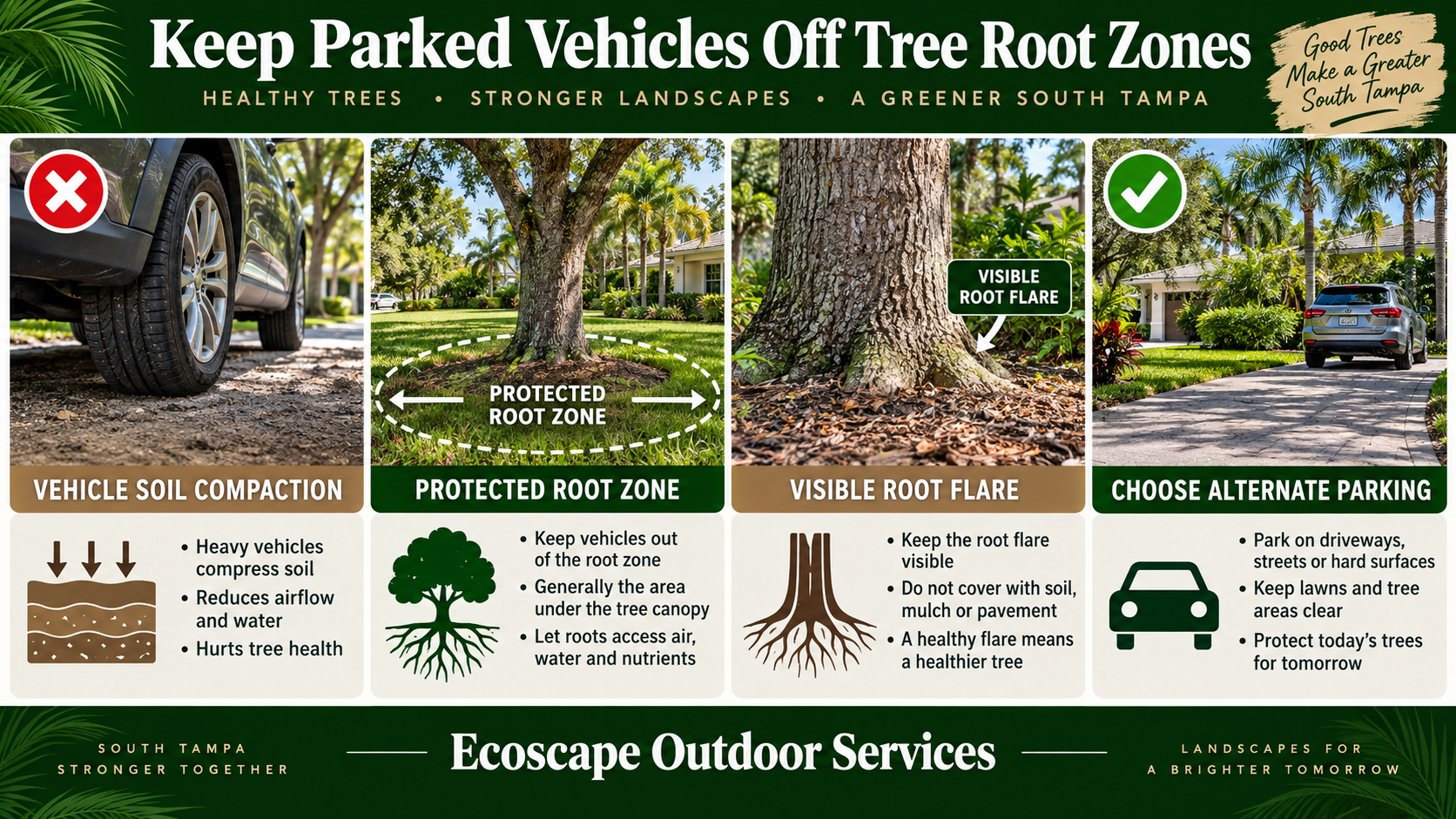
Keep Parked Vehicles Off Tree Root Zones
Roots Need Air as Well as Water
Most absorbing roots grow through the upper soil where oxygen, moisture, and organic matter are available. Parking a truck, trailer, lift, or heavy equipment beneath a tree compresses those pore spaces. The canopy may show no immediate damage, yet root function declines after repeated traffic. South Tampa’s wet summer soil compacts more easily, and large shade trees often extend important roots far beyond the visible trunk flare.
Protect More Than the Trunk
A small circle around the trunk does not represent the root zone. Use the canopy spread and site conditions to establish a broad protection area before work begins. Include the path vehicles would use to enter and turn, not only the final parking spot. Mark irrigation, lighting, drainage, and shallow surface roots. When valuable mature trees are involved, obtain guidance from a qualified arborist before construction or heavy landscape work.
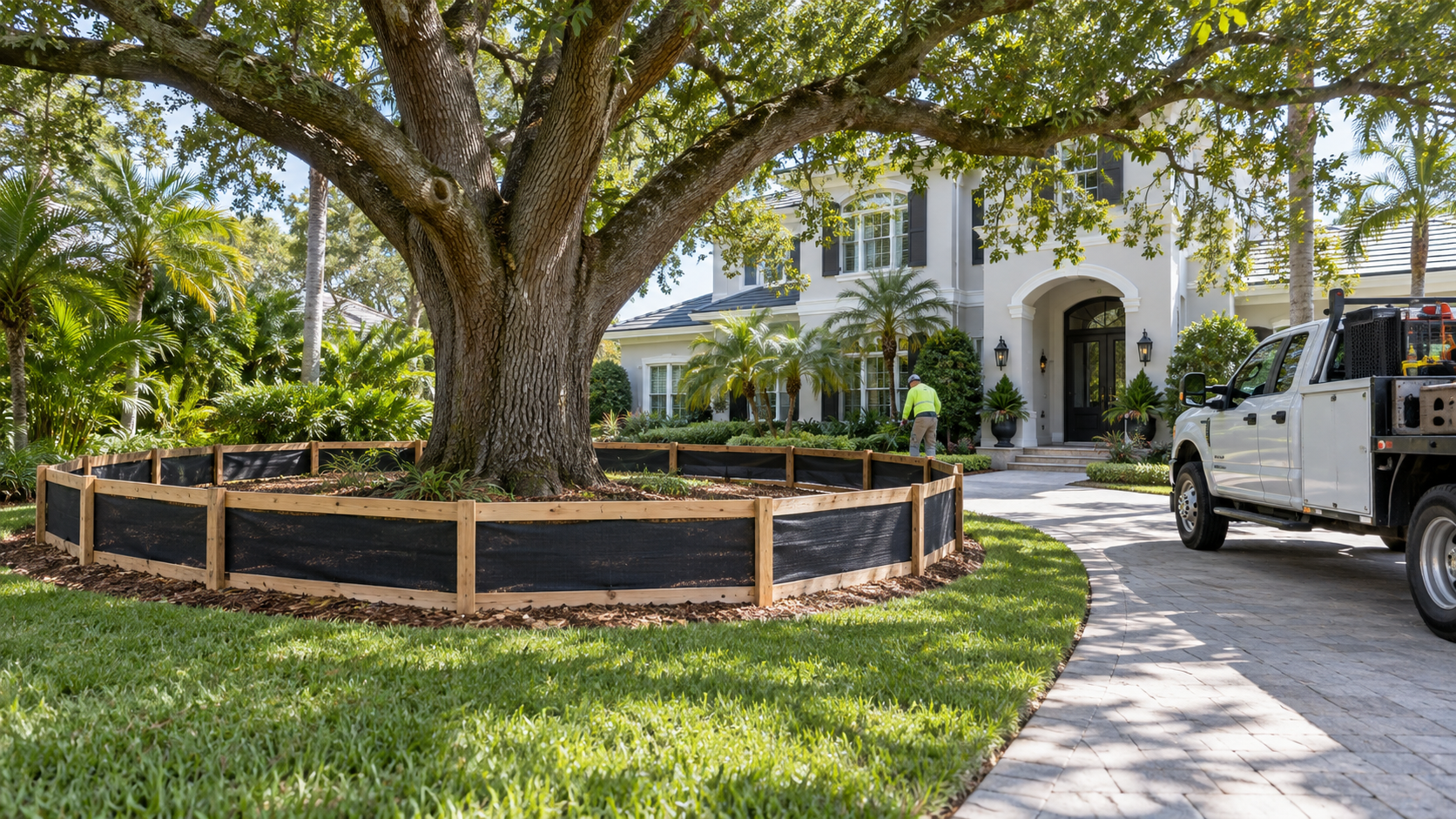
Create a Visible Exclusion Zone
Install sturdy temporary fencing or barriers before trucks arrive. Lightweight tape often sags, disappears, or gets moved. Place the boundary where drivers can see it from the cab and provide a clear paved alternative for parking, loading, and material staging. Tell every crew and delivery driver why the area is protected. A barrier works only when the route plan makes compliance practical.
Keep Materials Off the Soil Too
Soil piles, pallets, rock, sod, dumpsters, and equipment stored beneath a canopy also compact roots or change oxygen movement. Added soil can smother existing roots even without vehicle traffic. Fuel, concrete washout, paint, and cleaning chemicals create additional injury. Stage materials on pavement or another designated surface. Keep drainage flowing normally through the protected area rather than creating a berm that holds water against the tree.
Do Not Repair Compaction by Cutting Roots
If traffic has already occurred, avoid trenching, deep tilling, or aggressively breaking soil near the tree. Those actions may sever the roots the project needs to protect. Document the affected area and look for rutting, exposed roots, standing water, or grade changes. An arborist may recommend targeted measures based on species, soil, damage, and construction needs. Do not add fertilizer as a quick response to physical root injury.
Monitor the Tree After Work Ends
Remove barriers only after heavy activity and material pickup are complete. Restore mulch at a proper depth without covering the root flare. Inspect canopy density, leaf size, dieback, soil moisture, and fungal growth during the following months. Tree stress may appear slowly. Keep dated photos from before, during, and after the project so changes are easier to recognize and future crews understand the protected area.
Plan Logistics Around Valuable Trees
Ecoscape Outdoor Services plans South Tampa landscape production around access, deliveries, equipment paths, root protection, and cleanup. We keep vehicles and stored materials on suitable surfaces and coordinate work near mature trees with the care the site requires. Property owners should define parking and staging locations in every project scope. Good logistics protect the tree, reduce soil repair, and prevent one convenient parking decision from creating years of decline.