
Keep Privacy Hedges Clear of Fences and Equipment
Privacy Still Needs Access
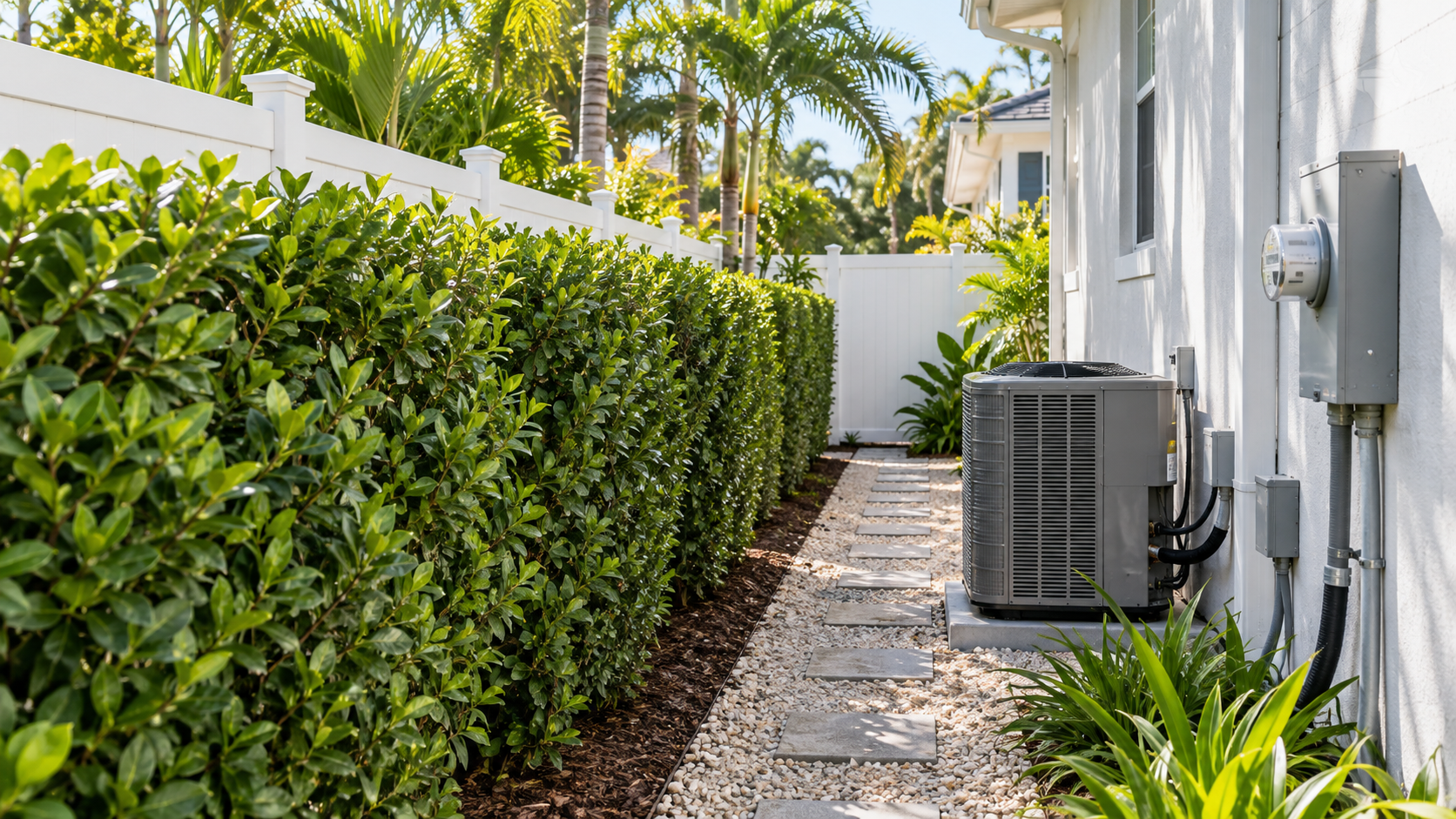
A dense hedge can screen neighboring views and soften a narrow South Tampa property line, but it should not block the parts of the home that require inspection or service. Air-conditioning equipment, electrical panels, gas meters, irrigation valves, pool equipment, gates, and fence posts all need working clearance. When branches grow through equipment or against structures, routine service becomes slower and pruning turns into an emergency instead of planned maintenance.
Plan for the Mature Width
Read the expected mature width before choosing a privacy plant. Measure from the planting center to both the fence and the nearest equipment. A three-foot-wide nursery plant may eventually reach eight feet or more. Give it enough room to fill out without constant severe shearing. In narrow side yards, select naturally slimmer material or use a layered screen with carefully spaced plants instead of forcing an oversized hedge into the available strip.
Preserve a Service Corridor
Maintain a visible walking route to every shutoff, panel, valve, gate, and mechanical unit. The corridor does not need to dominate the design, but a technician should reach the equipment without breaking branches or stepping through wet beds. Keep labels, disconnects, vents, and meter faces visible. Before planting, open gates fully and map the space required to remove or replace large equipment. A hedge should not trap a unit behind permanent growth.
Respect Fences and Property Lines
Set plants far enough from fences to allow painting, repair, pest inspection, and debris removal. Branches pressing through a fence create uneven growth and hold moisture against wood or coated surfaces. Avoid planting directly on a property line unless ownership and maintenance access are clear. South Tampa lots often place utilities and drainage paths along narrow boundaries. Confirm those features before digging or installing roots where future access will cause damage.
Prune for Structure and Airflow
Trim the hedge lightly and consistently during active growth. Keep the base slightly wider than the top so lower foliage receives light. Selectively remove crowded interior branches instead of shearing only the surface year after year. Maintain airflow around air-conditioning coils and leave the manufacturer’s required clearances. Collect clippings from equipment pads, drains, and fence gaps. Check irrigation so spray does not constantly wet walls, electrical components, or mechanical equipment.
Avoid the Common Mistakes
Do not plant close to the fence with a plan to keep a large shrub permanently narrow. Repeated hard pruning produces woody interiors, bare lower growth, and more labor. Avoid hiding meters with rigid edging, rock, or thorny plants. Do not allow vines to use equipment or utility lines as support. Never block emergency shutoffs. Privacy should improve the property without creating unsafe access, damaged fences, restricted airflow, or expensive service delays.
Review the Screen Twice a Year
Walk the entire hedge line before summer growth and again after the rainy season. Open every gate, inspect the fence, and confirm access to equipment. Ecoscape Outdoor Services designs and maintains privacy landscapes for South Tampa properties with mature plant size, access, irrigation, drainage, and clean bed lines considered together. We help create screening that looks full from the living area while remaining practical for the people responsible for maintaining the home.
