Keep Sewer Cleanouts Accessible in Landscaped Yards
Know What the Cleanout Looks Like
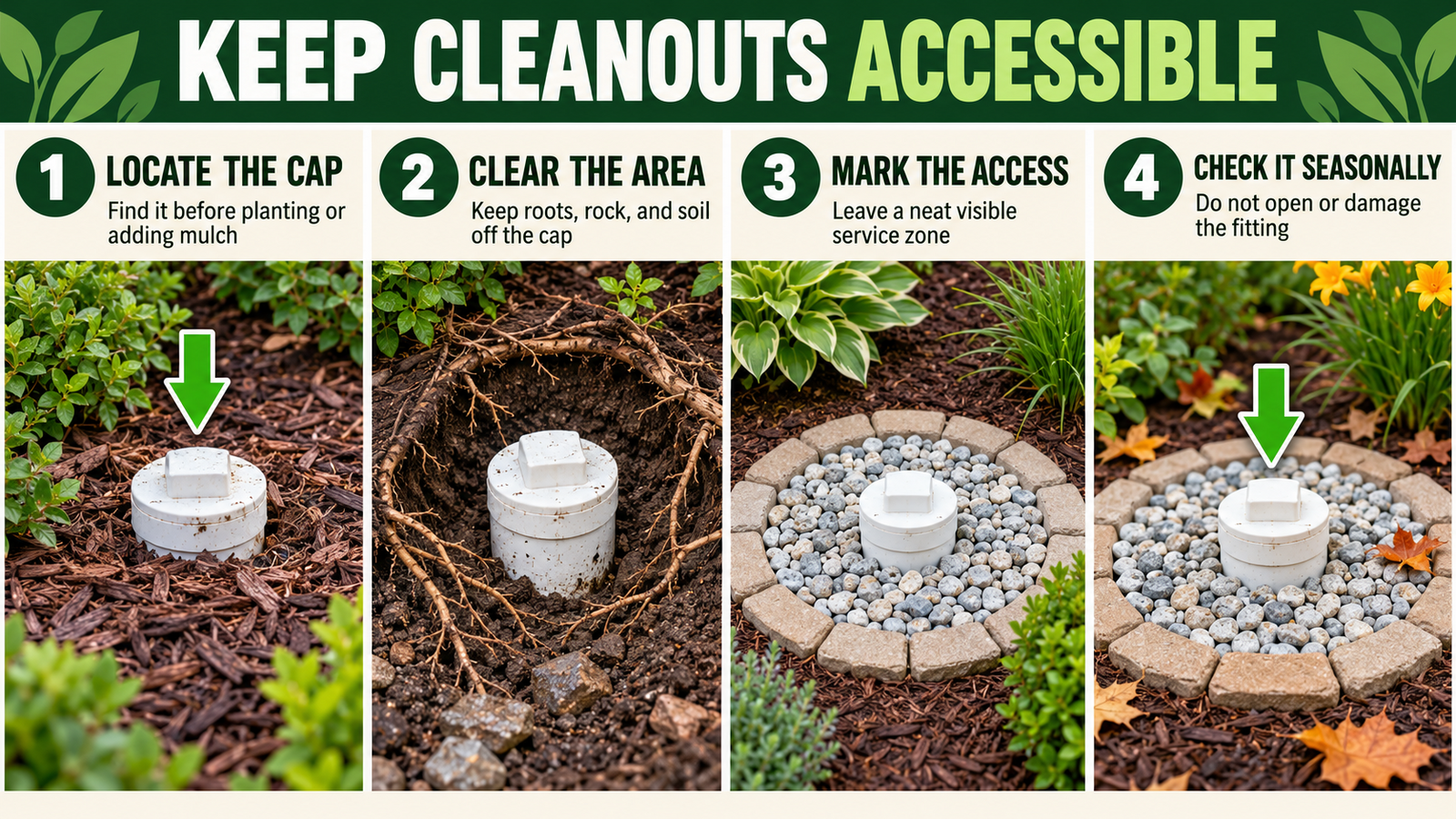
A residential sewer cleanout is commonly a capped PVC fitting that rises from the ground near the house, side yard, or property line. The cap may be white, black, or painted, but it should remain intact and reachable. Do not confuse it with an irrigation valve, drain emitter, or electrical conduit. If the fitting's purpose is uncertain, leave it closed. Photograph its location in relation to the building, driveway, and permanent landscape features before adding new plants or materials.
Preserve Access Before Landscaping
Plan the bed around the cleanout instead of trying to hide it completely. Service access may be needed quickly, and digging through mature shrubs, thick roots, weed barrier, or deep decorative rock wastes time and can damage the landscape. Keep a visible working zone around the cap and maintain a clear approach from the lawn or walkway. The fitting should not become a step, seat, pot stand, or anchor point, and it should remain protected from mower and string-trimmer impacts.
Control Mulch, Soil, and Decorative Rock
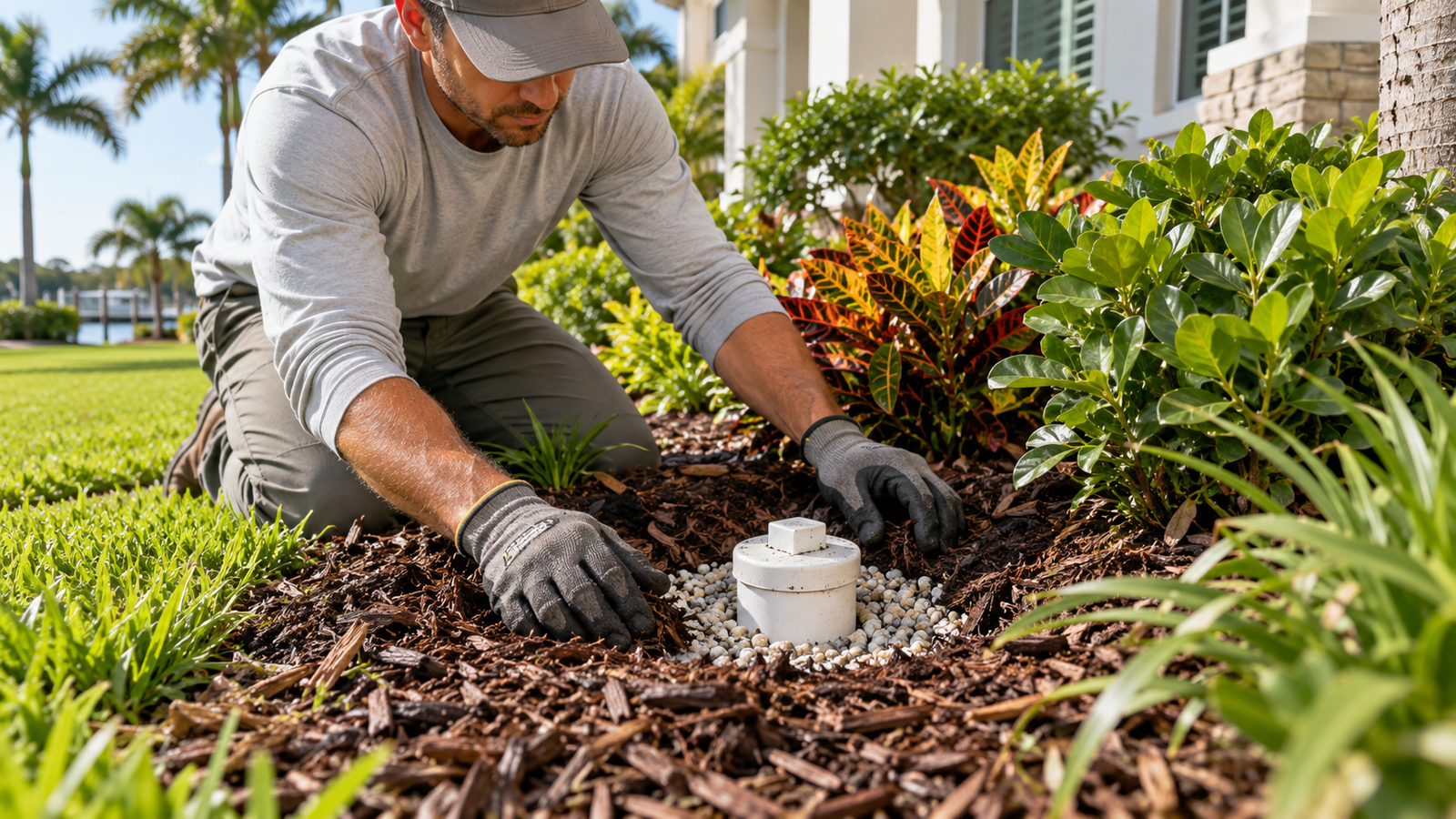
Grade the surrounding bed so loose material does not repeatedly wash over the cap during Florida rain. Keep soil and mulch below the fitting and use a neat gravel ring or defined opening if it suits the design. Do not glue rock across the access area, fasten weed barrier over the cap, or bury the fitting to make the bed look level. After blowing or refreshing mulch, brush debris away and confirm the cap is still visible and undamaged.
Choose Plants With Access in Mind
Avoid planting palms, trees, large shrubs, aggressive groundcovers, or thorny plants where their roots and mature growth will block the service zone. Select low, easily maintained plants outside the access ring and account for their full width rather than their nursery size. Do not let irrigation spray strike the cap continuously or allow vines to wrap around it. If an existing shrub already covers the fitting, prune gradually or redesign the small area without cutting major roots blindly.
Protect the Cap During Landscape Work
Mark the cleanout before crews excavate, edge, aerate, install lighting cable, or place new rock. Hand tools are safer than powered equipment close to the fitting. Do not drive stakes beside it or use the cap to test whether a buried pipe can support weight. A cracked, loose, tilted, or missing cap deserves prompt attention, but visitors should not open the fitting themselves. Keep children and pets away if the cap appears damaged or there is an unusual odor.
Avoid Common Concealment Mistakes
Do not cover the cleanout with a heavy planter, large boulder, permanent edging, landscape fabric, or a glued-rock surface. Artificial covers that resemble irrigation boxes can also create confusion unless the fitting remains immediately identifiable and accessible. Avoid raising the surrounding grade until the cap sits in a depression that collects water. The goal is not to showcase the pipe; it is to create a deliberate, tidy opening that can be found without excavation or plant removal.
Inspect the Access Zone and Ask Ecoscape for Help
Check the cleanout each season and after major bed work. Confirm the cap remains closed, visible, stable, and free of roots, rock, mulch, and standing water. Update property photos if the bed layout changes so the access point can be found quickly. If existing landscaping hides the fitting or a renovation may block it, schedule a free quote with Ecoscape Outdoor Services. We can redesign the surrounding bed, improve clearance, and protect the access zone without opening or servicing the plumbing fitting.