Keep Sprinkler Heads Above New Sod Without Creating Trip Hazards
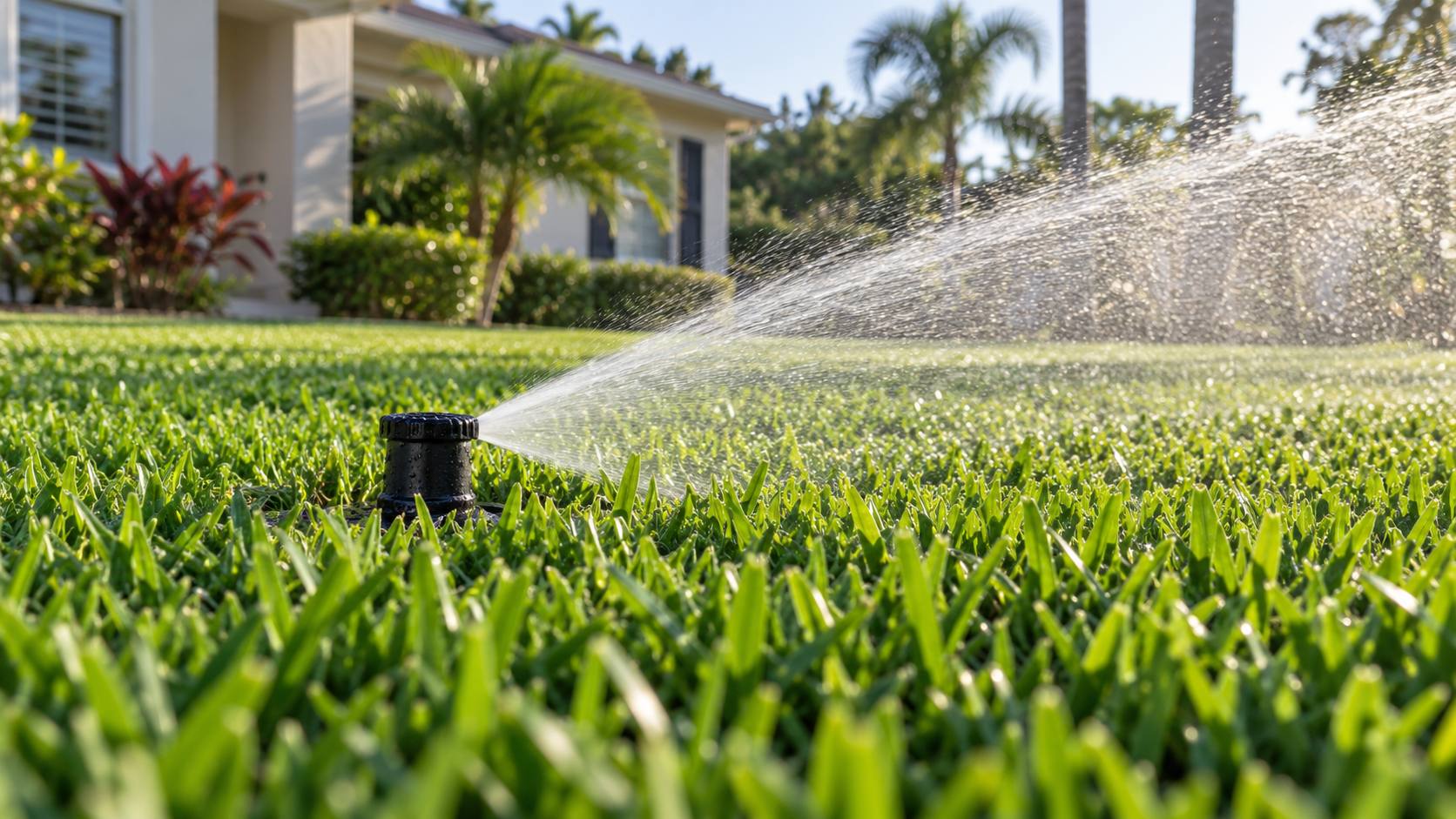
Why Sprinkler Height Matters
New sod changes the finished elevation of a lawn. If sprinkler heads are left below the new turf, grass blades can block the spray pattern and create dry areas. If heads are raised too far, mower blades, wheels, feet, and lawn equipment can strike them. A broken riser may leak underground and wash out the soil beneath fresh sod. Correct height supports even watering while keeping the system protected and the lawn surface safe.
How the Problem Develops
During sod preparation, old turf is removed, low areas are leveled, and soil may be added or compacted. Each step can change the grade around existing irrigation components. Installers sometimes roll sod directly over heads or cut openings that are too small. Fresh sod then settles as the soil firms and roots begin to grow. A head that looked correct on installation day may sit too high or too low several weeks later.
What to Check Before Installation
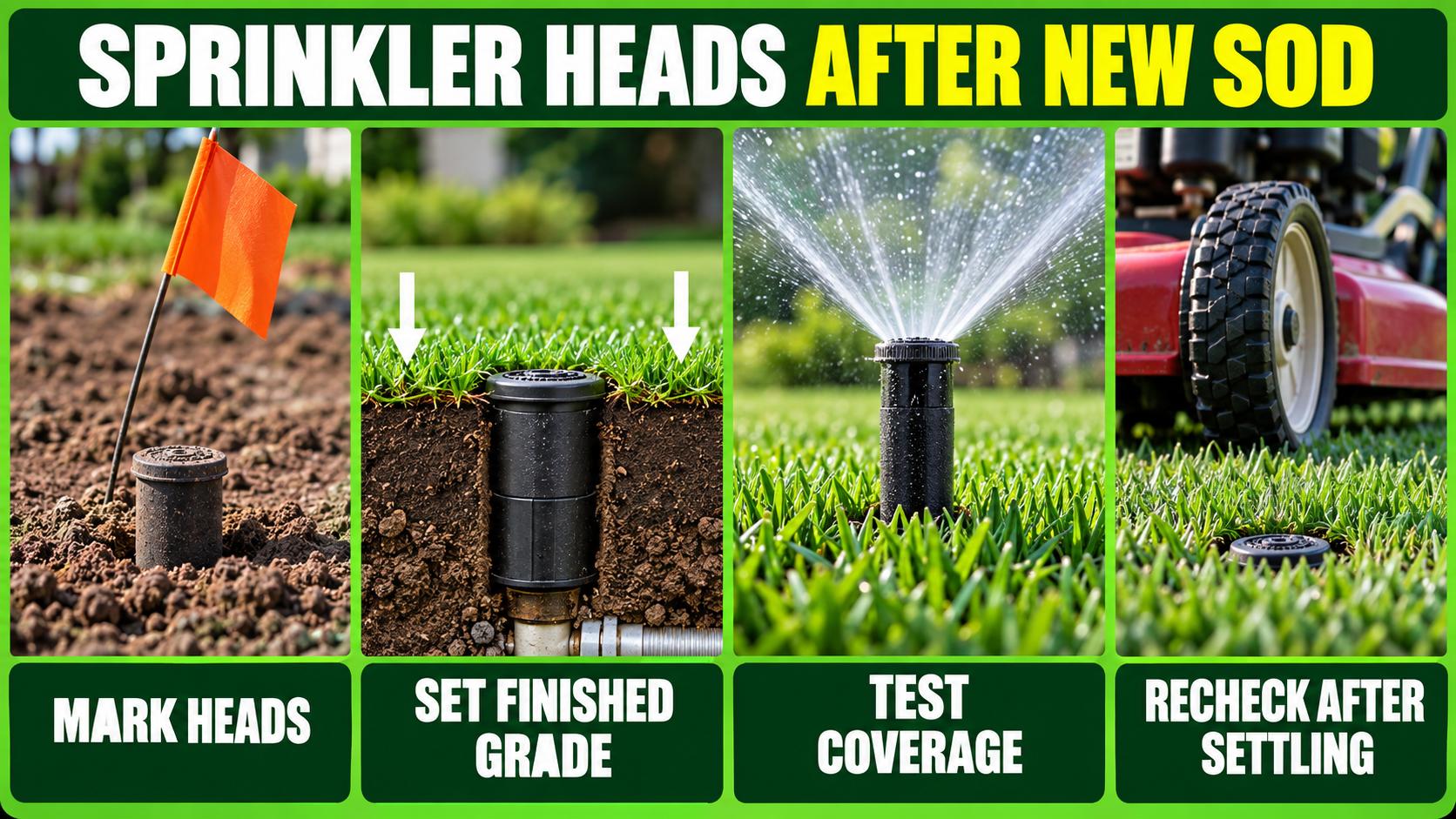
Run every irrigation zone before the sod arrives. Mark each head, valve box, drain, and cleanout with a visible flag. Watch for weak pressure, leaking seals, broken nozzles, or heads that do not retract. Confirm that spray arcs match the future lawn area and do not water sidewalks or walls. Measure the expected finished sod thickness so risers and swing joints can be adjusted before the new turf covers the work area.
The Correct Installation Approach
Set the top of each retracted spray head close to the finished sod grade, with the nozzle able to rise above the leaf blades during operation. Cut a clean opening that allows the body to move without rubbing against sod. Use flexible swing joints where appropriate so minor adjustments do not stress rigid pipe. After laying and rolling the sod, run the system again and inspect coverage from several directions, not only beside the controller.
Common Mistakes
Do not pull a head upward by force or stack improvised fittings to gain height. This can crack the lateral line or create a weak connection. Avoid leaving oversized holes that expose soil and encourage erosion. Do not assume extra watering time will correct a blocked spray pattern. Overwatering one section to compensate for another can contribute to runoff, shallow roots, and disease pressure during Florida’s warm, humid weather.
When Professional Help Makes Sense
Professional adjustment is useful when many heads need raising, the system has mixed head types, pressure is uneven, or pipe repairs are required beneath new turf. Ecoscape Outdoor Services can test the irrigation system before sod installation, adjust components to the planned grade, and verify coverage after the lawn is installed. Coordinating both parts of the project prevents fresh sod from being lifted later to correct avoidable irrigation problems.
Follow-Up After the Sod Settles
Recheck head height after the first few mowings and again after heavy rain or noticeable soil settlement. Confirm that each body rises, rotates when designed to do so, and retracts fully. Trim turf away from the opening without damaging the nozzle. Look for unusually soft soil, bubbling water, or a persistent wet ring around a head. Early correction protects the new lawn and keeps small irrigation problems from becoming expensive repairs. Book an Ecoscape Outdoor Services appointment if new sod has buried sprinkler heads, uneven coverage, or heads that pose a mowing hazard.