
Large Patch Disease: Recognize the Pattern Before Treating
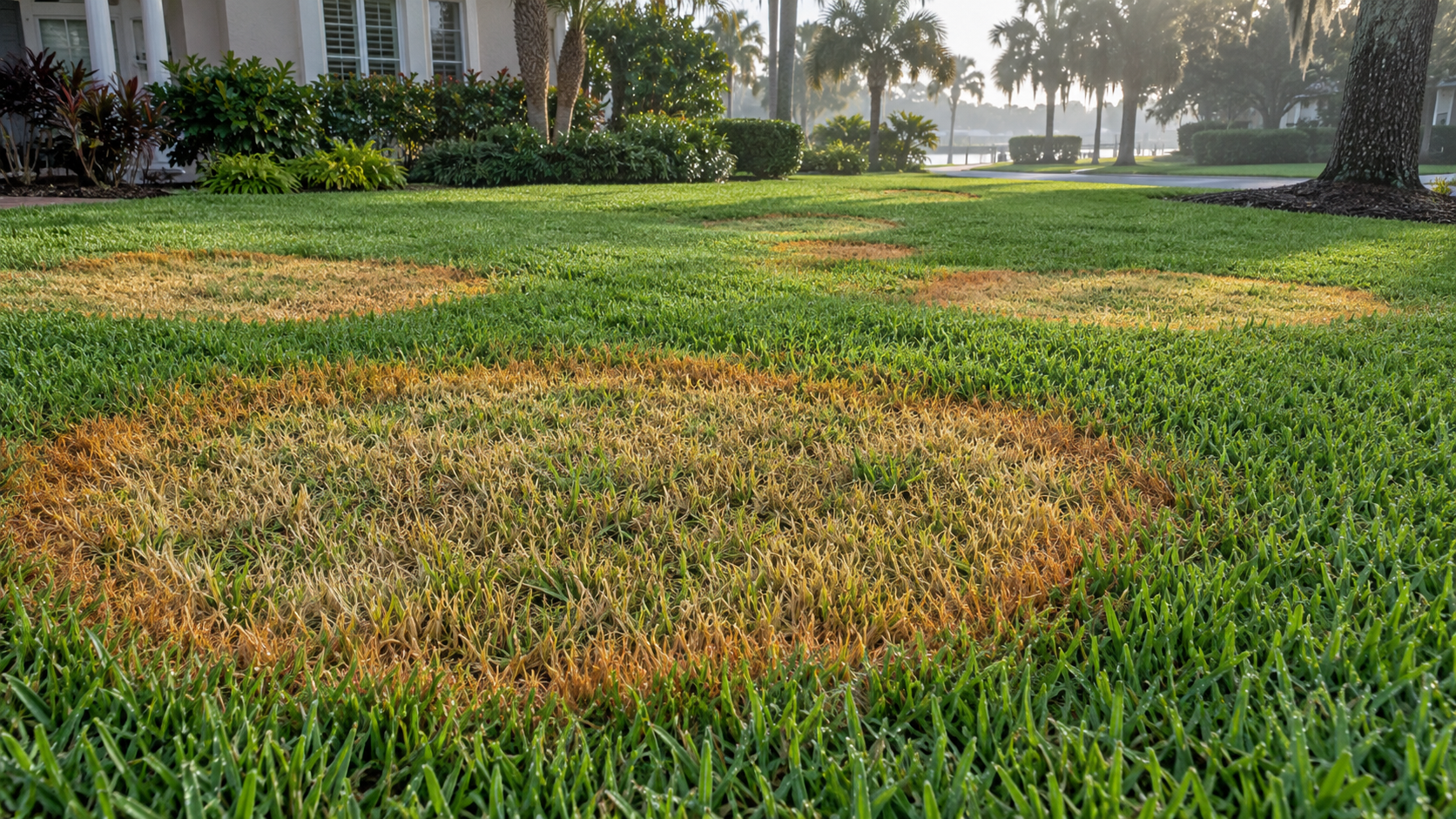
Know the Typical Pattern
Large patch is a fungal disease that affects warm-season turf, including St. Augustine and zoysia grass. It often begins as small yellow or orange areas that expand into irregular circles several feet wide. The outer edge might look yellow, orange, or reddish brown while the center begins recovering. Pattern recognition matters because drought, insects, irrigation problems, and chemical injury require different responses.
Understand Florida Timing
The disease becomes active when soil temperatures cool and turf remains wet for long periods. In Central Florida, symptoms often develop during fall and spring, especially after cloudy weather, rainfall, heavy dew, or excessive irrigation. The grass might look worse after a warm afternoon even though infection began earlier. Summer brown spots are not automatically large patch, so timing alone should never replace close inspection.
Check Moisture and Irrigation
Walk the property early in the morning and compare affected turf with nearby healthy areas. Look for sprinkler overlap, leaking heads, low spots, roof runoff, and zones operating too frequently. Water only when the lawn shows need, and schedule irrigation early enough for leaf surfaces to dry after sunrise. Avoid evening watering. Correcting excess moisture reduces disease pressure and supports stronger root function.
Reduce Mowing-Related Spread
Do not mow saturated or visibly diseased turf when avoidable. Wet clippings and mower tires move infected material across the lawn. Mow healthy areas first, then affected sections. Keep blades sharp and avoid removing more than one-third of the leaf height. Collect or disperse heavy clumps. Clean accumulated turf debris from equipment before moving to another property or an unaffected portion of the yard.
Avoid the Wrong Response
Do not assume a brown area needs more water, fertilizer, or immediate sod replacement. Extra irrigation extends leaf wetness. Nitrogen applied during active disease can drive tender growth and worsen symptoms. New sod often fails when the moisture problem remains. Dig into the edge of the patch, inspect roots and runners, and rule out insects or physical damage before choosing treatment.
Monitor Recovery and Escalate Wisely
Outline the patch with small markers or take dated photographs so you can track expansion. Correct drainage and irrigation issues, then watch the active edge. A licensed lawn treatment provider should confirm the diagnosis and select any fungicide according to the label and local rules. Fungicides protect susceptible tissue. They do not instantly restore dead grass or correct poor drainage, mowing stress, or compacted soil.
Build a Complete Lawn Plan
Ecoscape Outdoor Services evaluates the physical conditions surrounding turf decline, including mowing height, irrigation coverage, drainage, shade, compaction, and traffic. We coordinate repairs and work with licensed treatment professionals when chemical diagnosis or application is needed. South Tampa lawns recover more reliably when the moisture source and maintenance practices improve before damaged areas receive new sod.
