
Leave Room for Airflow Around Outdoor AC Equipment
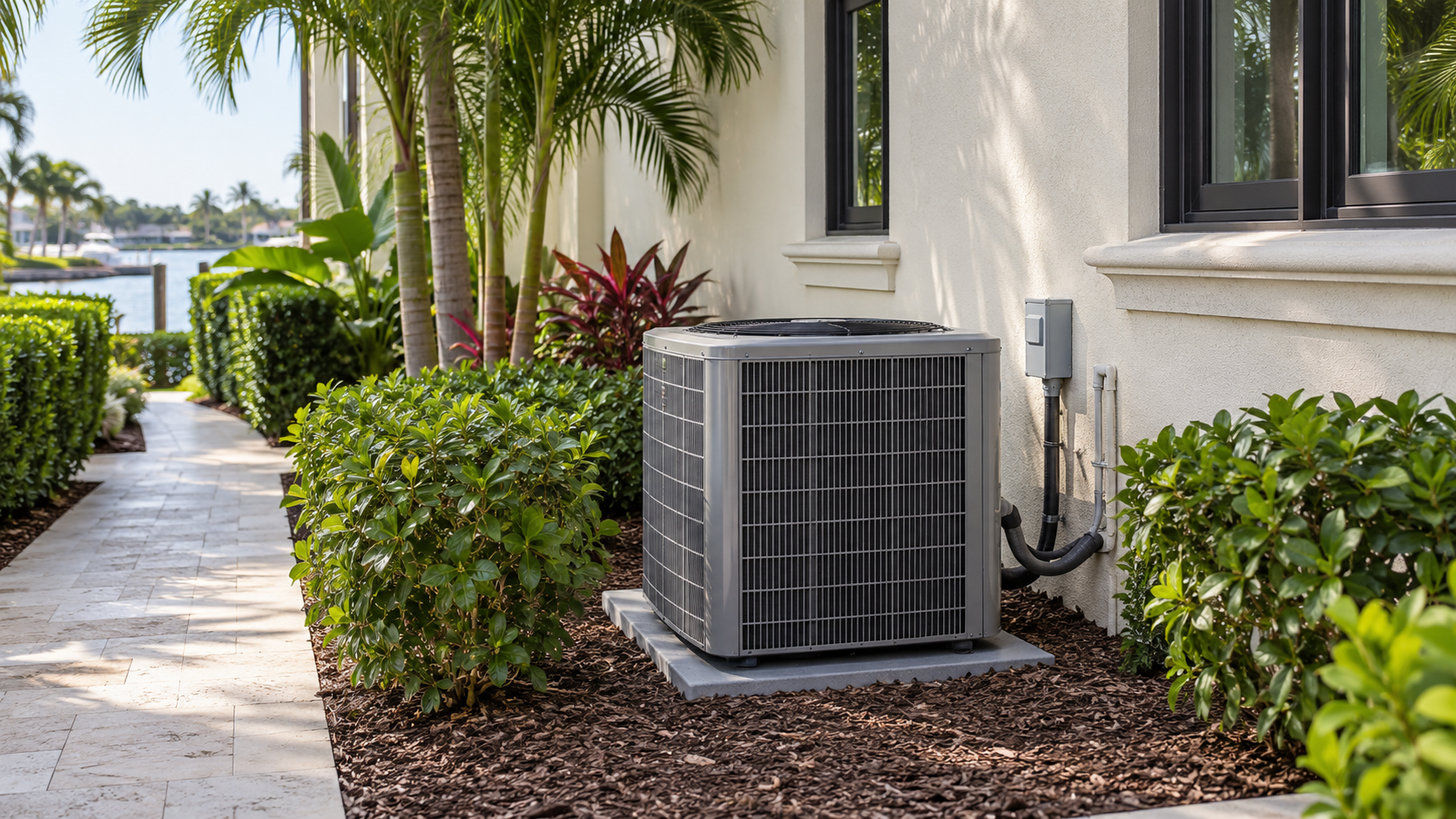
Why Clearance Matters
An outdoor air-conditioning condenser releases heat through its sides and top. Dense shrubs, vines, fences, or stored materials restrict airflow and force the equipment to work harder. Landscape growth also blocks technicians from reaching panels and service connections. A well-designed planting bed screens the unit from primary views while preserving the open space required by the equipment manufacturer and local service needs.
Start With Manufacturer Guidance
Clearance requirements vary by model, wall location, neighboring units, and overhead conditions. Read the installation manual or ask the HVAC contractor before planting. Treat the stated dimensions as minimum operating space, not a target for mature foliage. Measure from the equipment to the plant’s expected mature spread. Small nursery shrubs often become wide enough to close the gap within a few growing seasons.
Choose Plants With Controlled Growth
Select shrubs that tolerate the site’s sun, reflected heat, roof runoff, and irrigation conditions without aggressive spreading. Favor plants that respond well to selective pruning and remain below the condenser’s discharge area. Avoid thorny species, brittle branches, heavy leaf drop, climbing vines, and plants with intrusive roots. Leave one side especially open as a direct service path from the yard or walkway.
Keep Debris Out of the Unit
Fallen leaves, grass clippings, mulch, and windblown litter collect against condenser fins and around the equipment pad. Aim mower discharge away from the unit. Keep loose mulch below the pad and prevent irrigation from spraying the cabinet. After storms, remove branches and debris from the surrounding area without bending fins or reaching into moving equipment. Turn power off before any owner maintenance allowed by the manual.
Avoid Common Screening Mistakes
Do not box the condenser inside a tight fence or hedge. A screen that looks open from the driveway might still trap hot air above and behind the unit. Avoid planting directly over refrigerant lines, electrical conduits, drains, or access panels. Do not raise soil or mulch against the pad. Maintain drainage so stormwater does not settle around the equipment or wash out its support.
Inspect the Space Through the Year
Florida plants grow quickly during warm, wet months. Inspect clearance monthly during the growing season and after storms. Prune selectively before branches touch the cabinet or enter the fan area. Confirm the service route remains wide enough for tools and replacement equipment. If a plant repeatedly outgrows its space, relocate or replace it rather than shearing it into an unhealthy shape every few weeks.
Combine Screening With Service Access
Ecoscape Outdoor Services designs South Tampa planting beds around real property functions, including air-conditioning equipment, meters, irrigation controls, drains, and access routes. We select plants by mature size and position them to frame utilities without obstructing airflow or maintenance. Thoughtful spacing keeps the landscape attractive while helping HVAC technicians work safely and preventing routine plant growth from becoming an equipment problem.
