Let Bahia Grass Recover From Drought Before Cutting It Short
Drought Stress Changes the Lawn
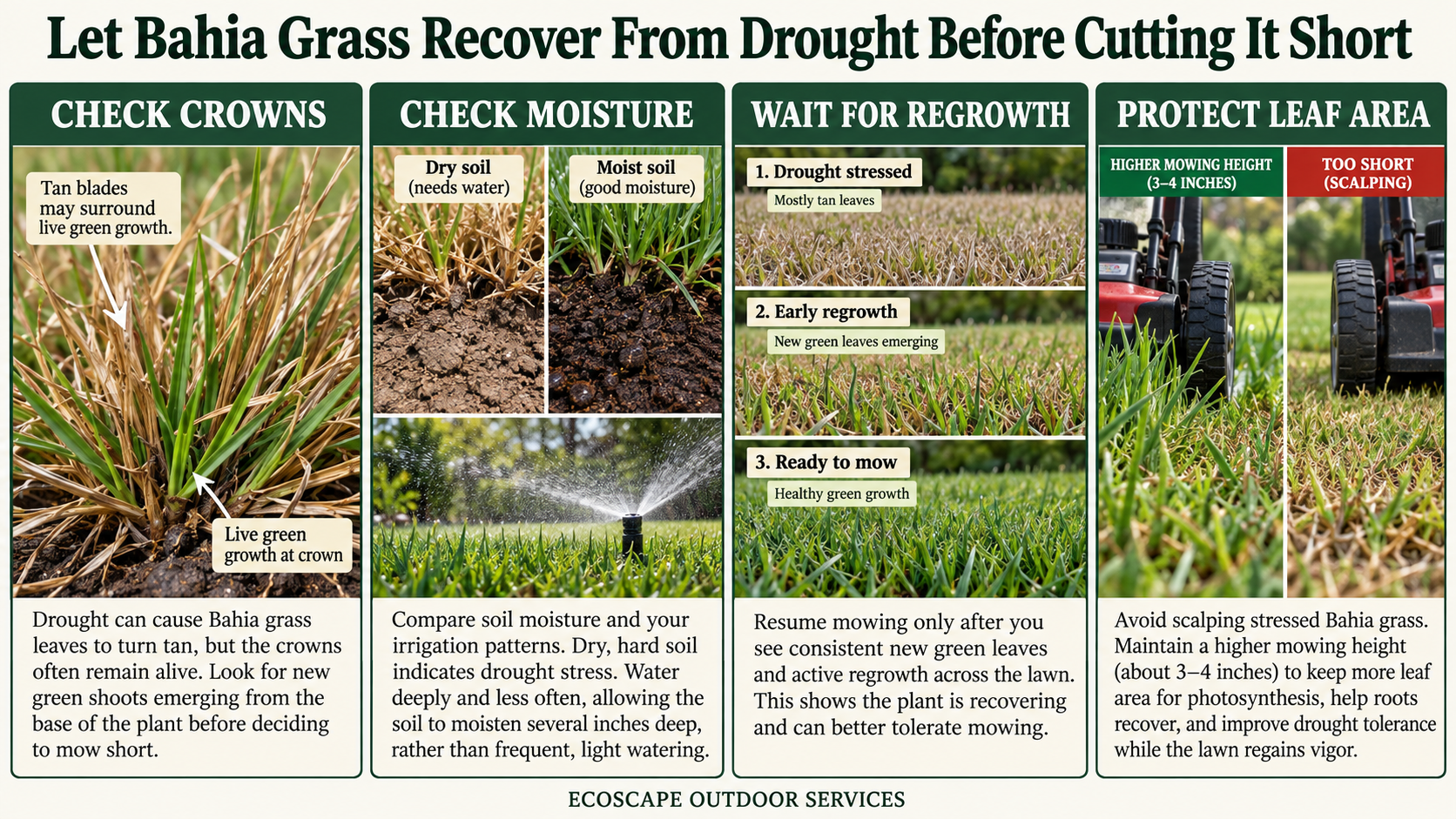
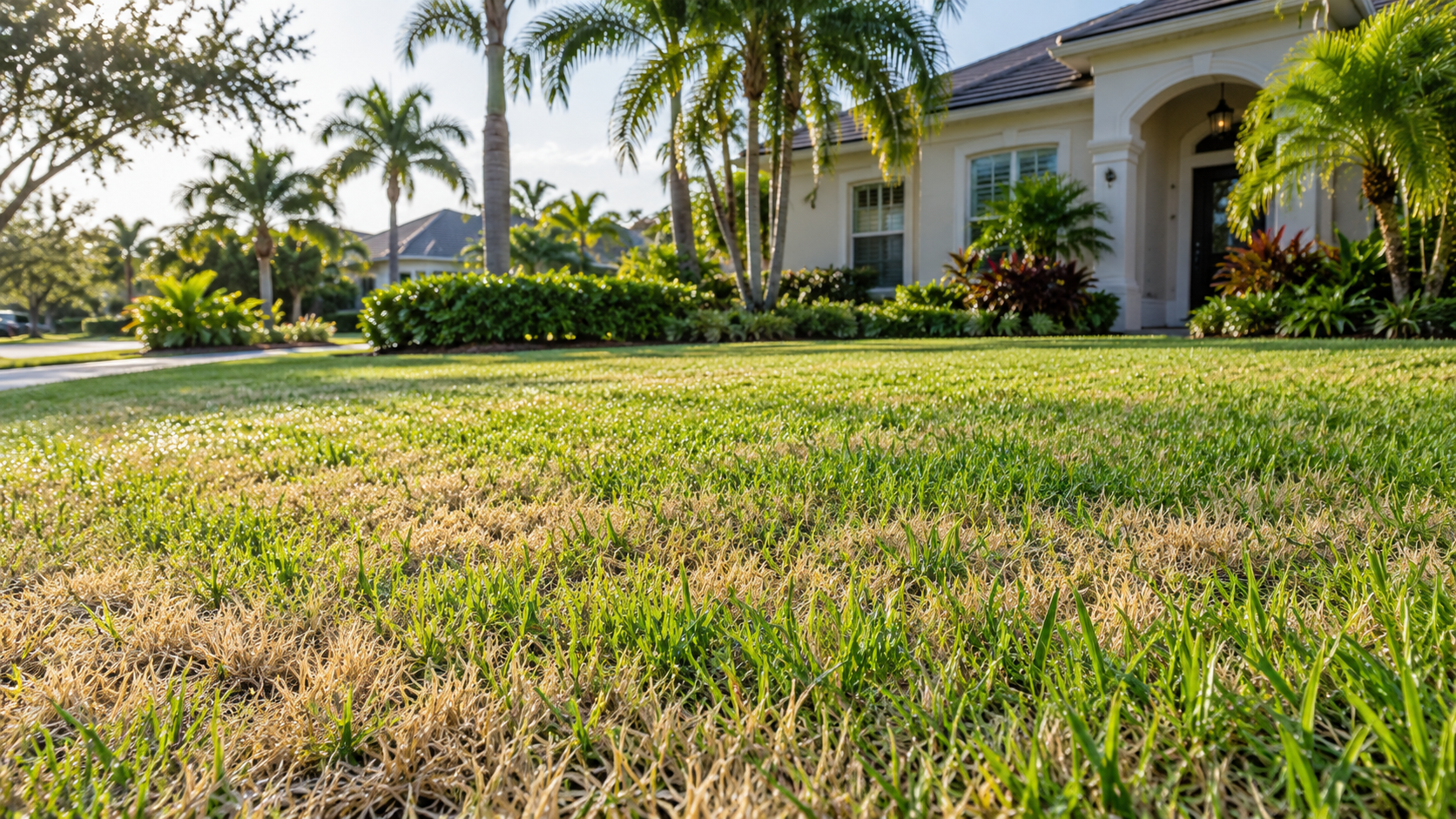
Bahia grass handles Florida heat and sandy soil better than many turf types, but extended dry weather still slows growth and turns sections tan. The lawn may be dormant rather than dead. Green tissue often remains near the crown and roots. Cutting drought-stressed Bahia too short removes the leaf area needed for recovery, exposes soil to more heat, and increases weed pressure. Give the turf time to respond before making an aggressive mowing correction.
Confirm the Cause First
Check several locations instead of judging the lawn from the street. Push a screwdriver into the soil, examine root moisture, and compare sunny slopes with shaded or irrigated sections. Look for sprinkler gaps, compacted areas, mower scalping, insects, and disease patterns. Drought stress usually follows exposure and soil conditions. An expanding irregular patch beside healthy moist turf deserves closer investigation. Do not assume every tan Bahia lawn needs more water or immediate replacement.
Wait for Active Growth
Delay mowing when the grass has stopped growing and blades remain brittle. After rain or corrected irrigation, watch for fresh green leaves emerging from the crowns. Resume mowing once the lawn gains enough height to remove no more than one-third of the blade. Keep the mowing height appropriate for Bahia grass and the equipment being used. A slightly taller canopy shades the soil and supports deeper roots during the next dry period.
Restore Water Carefully
Inspect irrigation coverage before increasing run time. Correct blocked nozzles, tilted heads, and overspray first. Apply water deeply enough to reach the active roots without creating runoff or saturated soil. Allow the surface to dry between watering events. South Tampa restrictions and seasonal rainfall still guide scheduling. Bahia grass often survives with less supplemental irrigation than highly managed turf, so avoid turning a short drought response into a permanent overwatering problem.
Mow With Sharp Equipment
Use a sharp blade because Bahia’s tough leaf texture tears easily. Ragged tips make recovering turf look brown even when growth has resumed. Avoid tight turns on weak sections and keep heavy equipment off soft soil after the first major rain. Change mowing direction to reduce repeated wheel tracks. Collect large debris before cutting. Do not lower the deck to remove tan blades in one visit. Gradual mowing protects new growth at the crown.
Avoid Fast Cosmetic Fixes
Do not apply fertilizer to a dormant lawn in an attempt to force color. Nutrients do not replace moisture, and Florida fertilizer rules still apply. Avoid watering every day, scalping brown areas, or covering living crowns with thick topsoil. Do not spread seed or install sod until you know whether the Bahia is recovering. Photograph marked sections weekly. New green leaves and connected roots offer better evidence than the color of old drought-damaged blades.
Build a Recovery Plan
Review the lawn two weeks after rainfall or irrigation correction, then again after several mowing cycles. Ecoscape Outdoor Services helps South Tampa property owners evaluate mowing height, irrigation coverage, traffic, drainage, and recovery patterns before recommending repair. We maintain Bahia and other Florida turf with measured field decisions rather than quick cosmetic cuts. Protecting the crown during drought gives the lawn the strongest opportunity to regain density when normal growth returns.