Map Irrigation Valve Boxes Before Landscaping Covers Them
Why Valve Access Matters
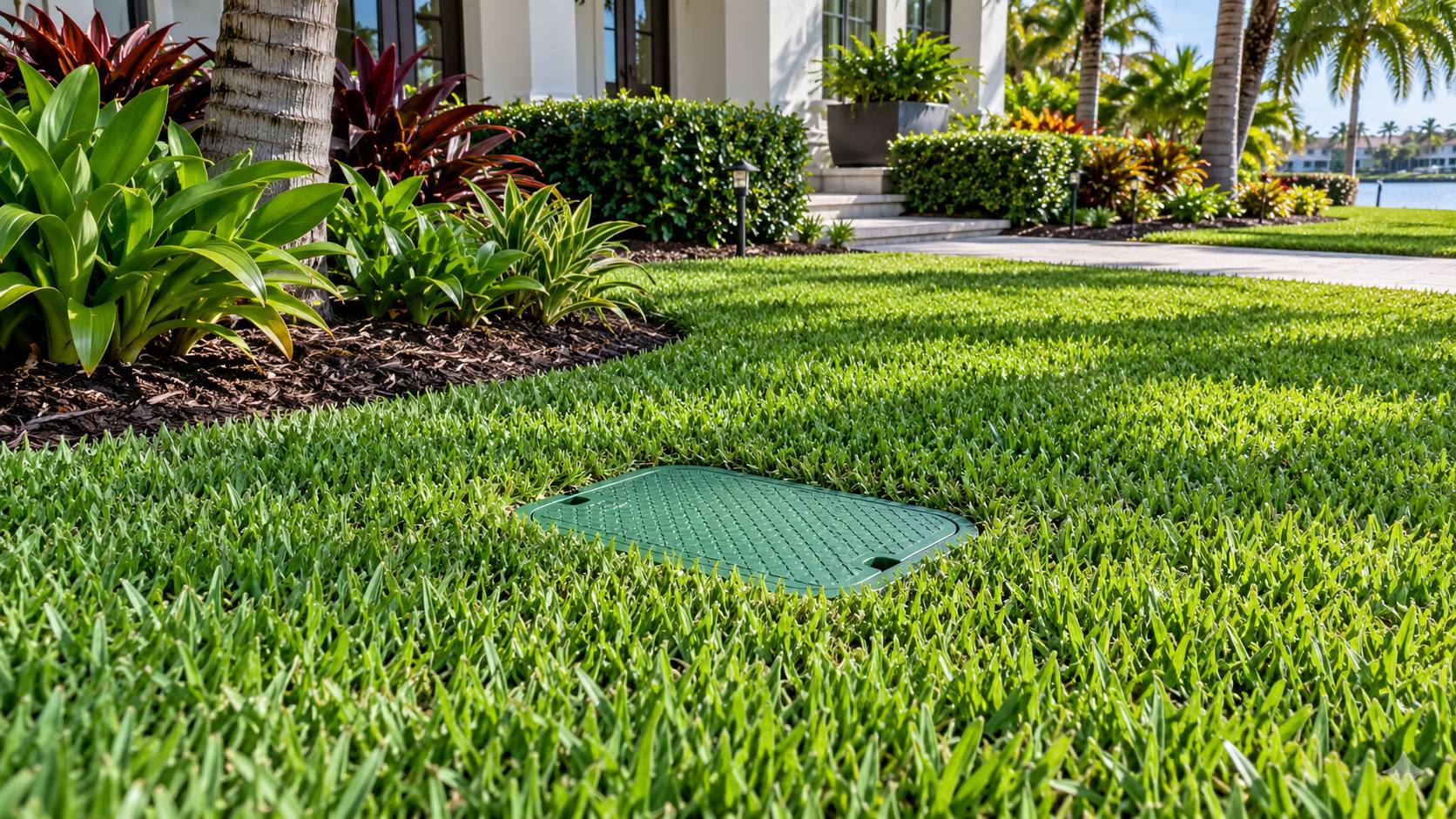
Irrigation valves control individual watering zones and are usually housed in boxes at or just below grade. Over time, turf grows across the lids, mulch covers them, soil settles, and new shrubs hide their location. When a valve sticks open, leaks, or loses a wire connection, every minute spent searching delays the repair. Easy access also makes routine testing safer and reduces the chance of damaging pipes while probing blindly.
Find Every Box Systematically
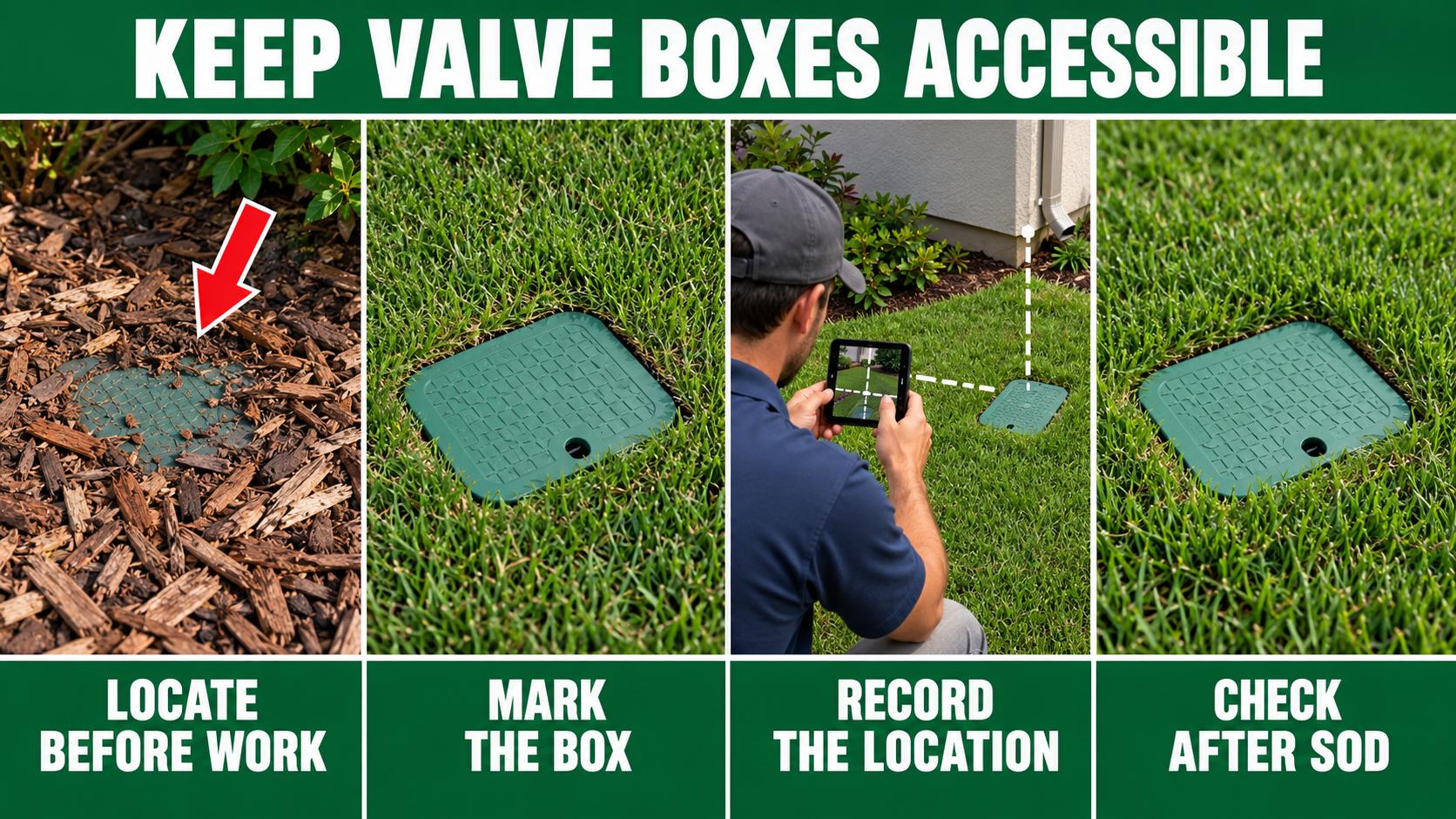
Start at the controller and record each active zone. Run zones one at a time while listening for flow changes near likely valve locations. Look along the route between the backflow assembly, water source, and irrigated areas. Existing lids may reveal a faint circular or rectangular outline in turf or mulch. A qualified technician can use a wire and valve locator when visual searching fails. Avoid aggressive digging until utilities and irrigation routes are understood.
Create a Useful Property Map
Mark each box on a simple site plan using permanent reference points such as building corners, sidewalks, fences, or large trees. Add two measurements from fixed points so the location can be triangulated even if the landscape changes. Label the valves with the controller zone numbers and note which lawn or bed area each serves. Save photos that include a wide view and a close view. Keep a copy near the controller and a digital backup.
Restore Safe, Serviceable Access
Set lids near finished grade so they are visible but do not create a mower or trip hazard. Remove soil and roots carefully from inside the box without pulling wires or stressing fittings. Replace cracked lids and damaged boxes with correctly sized components. Keep mulch and dense groundcover back from the edge. Do not pour concrete, install edging, or place heavy rock over a valve box. After work, test every affected zone for leaks and correct operation.
Common Mistakes
Do not rely on memory or a single close-up photo without landmarks. Avoid marking locations only with temporary flags, which are easily moved or removed. Never bury a leaking valve to make the area look finished. Another mistake is planting shrubs directly over the box, where future root growth makes service harder. If several valves share one box, do not assume their physical order matches the zone order at the controller.
When Professional Help Makes Sense
Professional help is useful when records are missing, wiring is damaged, valves are deep, or the property has multiple controllers and water sources. Ecoscape Outdoor Services can locate accessible components, document zones, restore box clearances, and coordinate repairs before new sod or planting is installed. Mapping first prevents fresh landscape work from being disturbed later. Review the map with anyone performing excavation, edging, lighting, or drainage work on the property.
Helpful Resources
UF/IFAS provides Florida-specific irrigation information at Gardening Solutions: Irrigation. Test the system at least seasonally and update the map whenever a valve, pipe, controller, or zone changes. After major storms or construction, inspect lids for settling and damage so every box remains easy to identify and open during an urgent repair. Book Ecoscape Outdoor Services to locate covered valve boxes or keep irrigation access clear during landscape work.