
Match Florida Native Plants to Salt Exposure
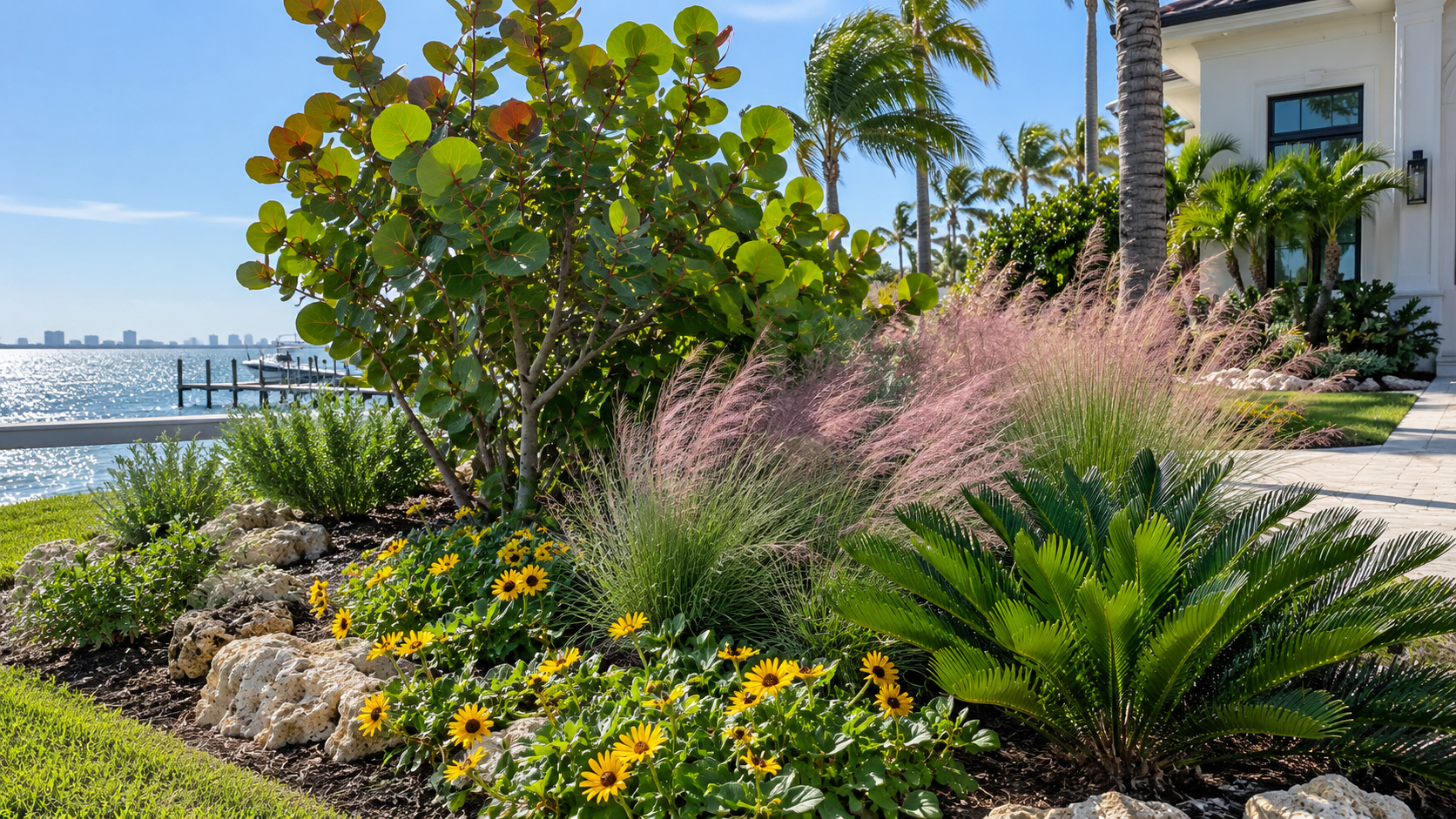
Salt Exposure Varies by Property
A plant labeled Florida native is not automatically salt tolerant. Coastal wind, bay spray, reclaimed irrigation, storm surge, and salty well water create different exposure levels. Even one South Tampa yard contains protected courtyards and exposed waterfront edges. Map where salt reaches the property before selecting plants. Matching tolerance to the exact location prevents burned leaves, repeated replacement, and unnecessary irrigation.
Identify the Salt Source
Look for wind-facing leaf burn, white deposits, decline along seawalls, or damage concentrated beside roads after coastal flooding. Ask whether irrigation uses reclaimed water or a well. Observe which structures block prevailing wind. Salt spray affects foliage, while salty soil affects roots. A plant might tolerate one form better than another. Soil and water testing supports decisions when symptoms continue.
Choose Proven Site Matches
Use highly tolerant plants in the most exposed zone, then transition to moderately tolerant species behind buildings or stronger plant screens. Sea grape, coontie, certain native grasses, and many coastal groundcovers fit specific conditions, but mature size still matters. Check sunlight, soil drainage, irrigation, wildlife value, and local restrictions. Confirm botanical identity because common names often refer to different plants.
Install for Establishment
Prepare a broad root zone without creating an overly rich planting pocket. Set each plant at the same depth it grew in the container. Water thoroughly after installation, then follow a measured establishment schedule. Apply organic mulch while keeping crowns clear. New plants remain vulnerable until roots expand, even when the species is naturally salt tolerant. Protect them from direct spray when feasible.
Respond After Salt Events
After storm surge or intense spray, rinse foliage with fresh water when local guidance and water conditions allow. Check soil drainage and remove deposited debris. Do not immediately prune every burned leaf because remaining green tissue supports recovery. Watch new growth, soil moisture, and crown condition. Severe soil salinity needs professional evaluation. Replant only after understanding whether the exposure will remain.
Avoid Common Design Mistakes
Do not place one species across every exposure zone. Avoid planting large sea grapes where mature width blocks walks, views, or access. Never combine salt-tolerant and salt-sensitive plants on the same spray line and expect irrigation to solve the difference. Do not overwater stressed roots. Leave seawall access, drainage routes, lighting, utilities, and hurricane cleanup paths open.
How Ecoscape Outdoor Services Helps
Ecoscape Outdoor Services plans Florida native landscapes around each South Tampa property’s salt, sun, wind, soil, drainage, irrigation, mature space, and maintenance needs. We source appropriate plants, coordinate delivery, prepare beds, install at correct depth, and provide establishment guidance. Our site-specific approach builds attractive native plantings with stronger long-term performance near Tampa Bay and other exposed locations.
