Match Landscape Light Color Temperature Without a Patchwork Look
Why Color Temperature Changes the Whole Yard
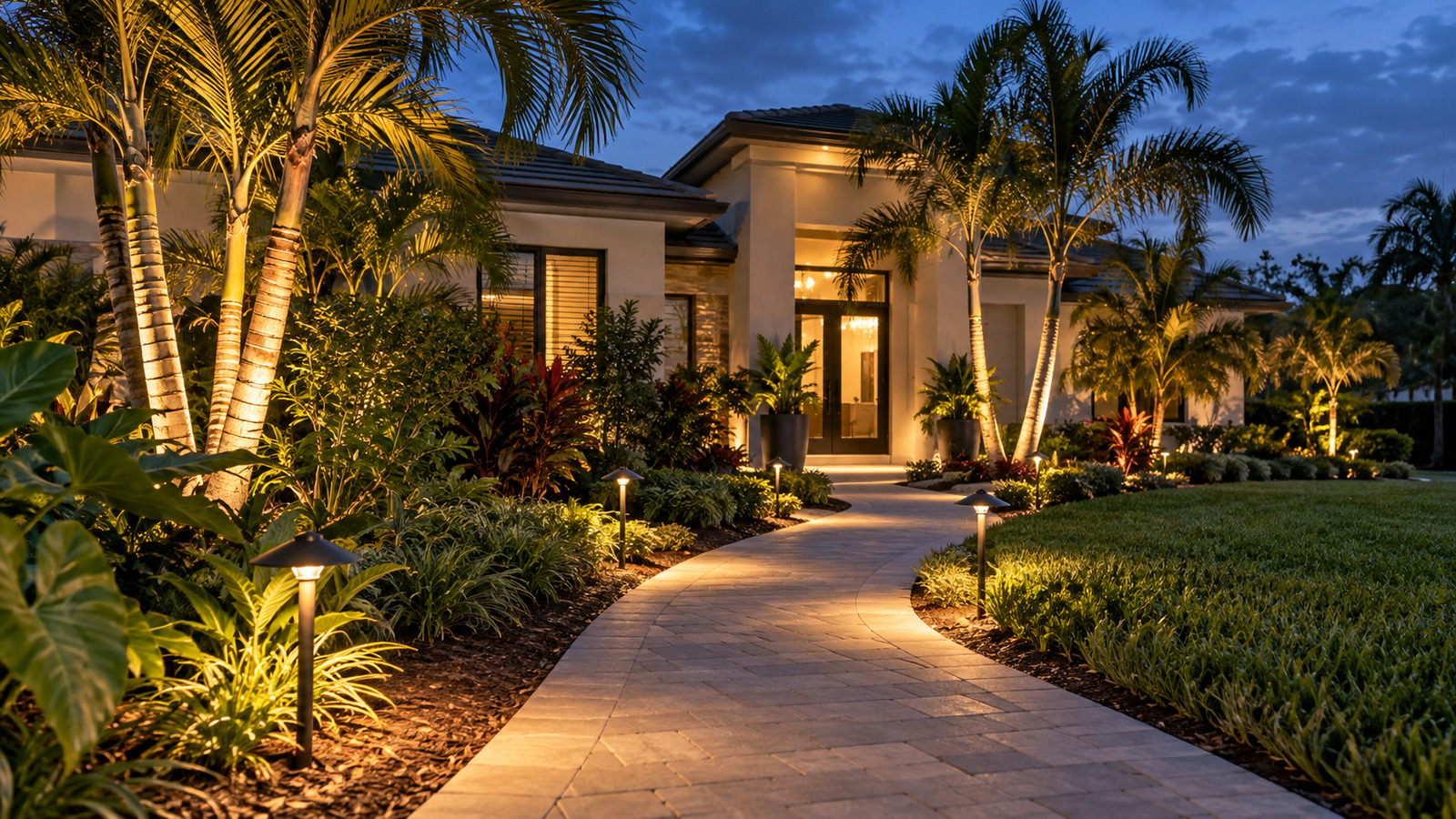
Landscape lighting can be electrically sound and still look wrong when neighboring fixtures produce noticeably different shades of white. Correlated color temperature, listed in kelvins on a lamp or fixture, describes that visual warmth. Lower numbers look more amber, while higher numbers look cooler. In a Florida landscape, a consistent warm tone usually complements palms, stone, stucco, and wood while making the lighting feel intentional instead of pieced together.
Audit the Lighting After Dark
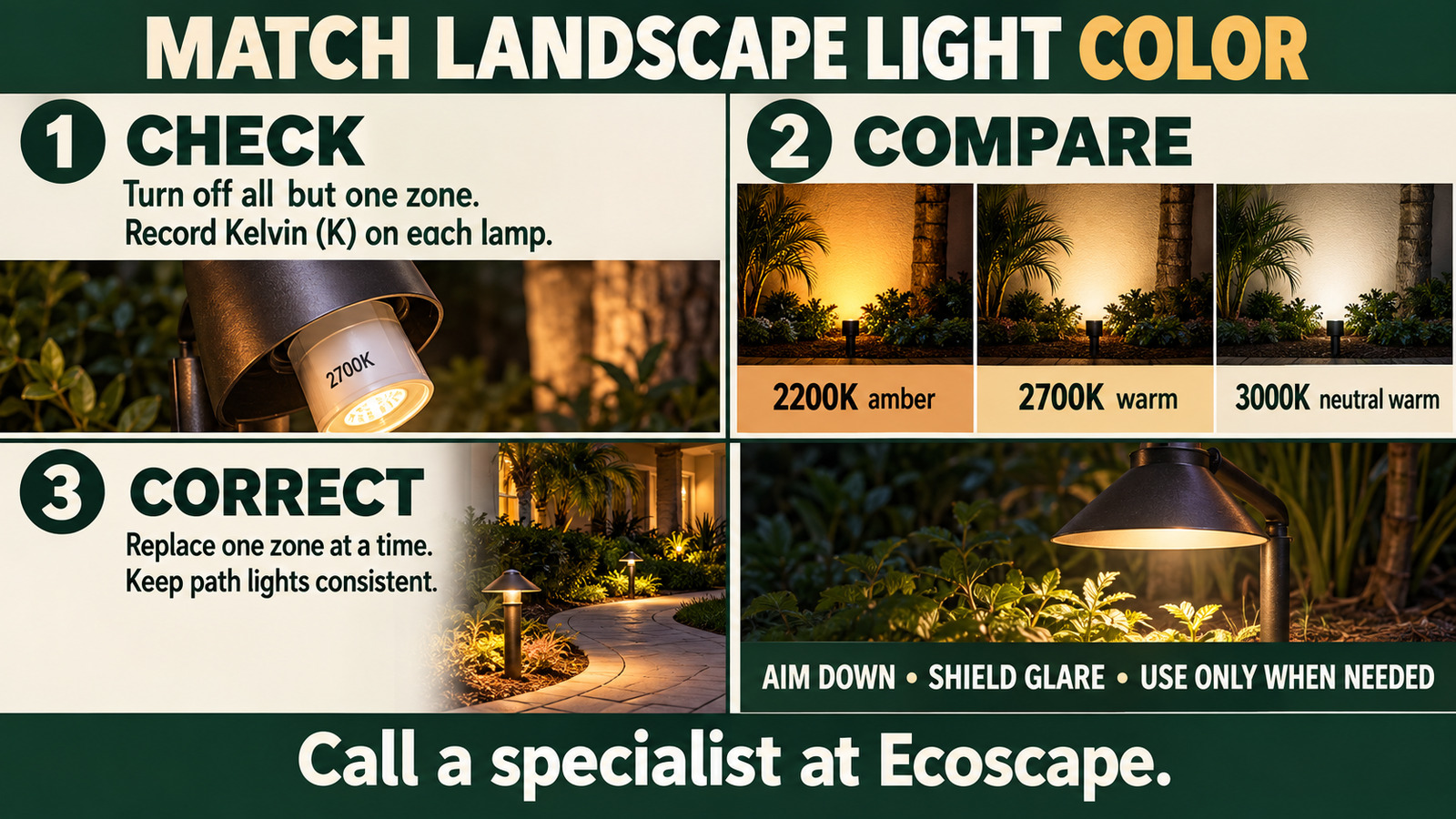
Wait until full darkness, then turn on one lighting zone at a time. Photograph the path, planting beds, façade, and feature trees from normal viewing positions. Note any fixture that looks blue, green, overly yellow, or much brighter than its neighbors. Switch the system off before handling a lamp. Read the Kelvin rating printed on each replaceable lamp or the fixture label, and record the value by location.
Choose a Practical Warm Range
For most residential landscape applications, keep exterior white light at 3000K or lower; 2700K creates a familiar warm-white appearance, while 2200K looks more amber. The exact choice matters less than consistency within a view. Use one temperature for repeated path lights and another only when there is a deliberate reason, such as a warmer accent on a specimen tree. Match brightness and beam spread as well as Kelvin value.
Correct One Zone at a Time
Start with the most visible group, such as the front walk, and replace mismatched lamps together rather than chasing one odd light every few weeks. Confirm voltage and lamp type before buying replacements. For integrated LED fixtures, the entire fixture may need replacement. After each change, aim beams at the intended surface, shield the source from direct view, and walk the property again from the street, entry, windows, and seating areas.
Account for Florida Conditions
Humidity, irrigation spray, salt exposure, dirty lenses, and aging plastic can shift how a light appears even when its Kelvin rating matches. Clean lenses with the power off, correct overspray, and inspect gaskets and connections before assuming every color difference is a bad lamp. Dense tropical foliage also reflects warm light differently than pale walls or crushed shell, so judge the finished scene at night instead of relying only on package labels.
Avoid Common Lighting Mistakes
Do not mix bargain lamps from unrelated product lines and expect identical color. Avoid increasing brightness to compensate for a poor beam angle; that often adds glare without improving useful visibility. Do not aim uplights through windows or toward neighboring properties, and do not treat cooler light as automatically safer. Good visibility comes from controlled placement, even coverage, appropriate output, and glare reduction rather than the bluest or brightest lamp available.
Know When to Schedule Professional Help
If colors still vary after lamp replacement, the problem may involve voltage drop, incompatible LED drivers, moisture intrusion, or aging fixtures. Book an Ecoscape Outdoor Services appointment for an on-site landscape-lighting assessment. We can evaluate the exact mismatched zones, fixture condition, aiming, and glare, then recommend a coordinated correction that supports the existing Book Now option without turning the yard into an overlit display.