
Measure Sprinkler Output With a Catch-Cup Test
Why Measure Irrigation Output
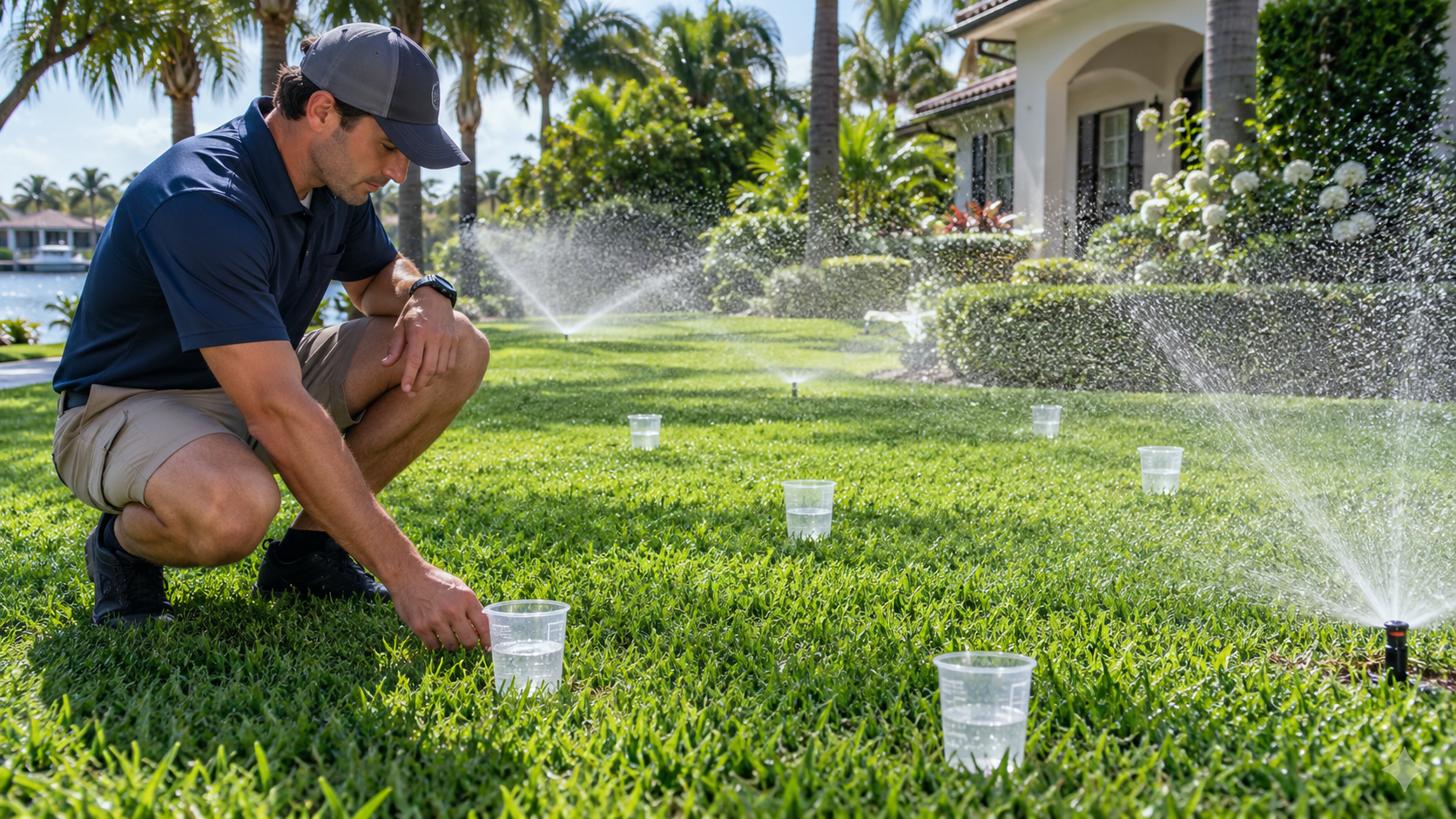
A controller runtime tells you how long a zone operates, not how much water reaches the turf. Pressure, nozzle type, head spacing, wind, clogged screens, and misalignment all change coverage. A catch-cup test measures the water landing across one zone. The results reveal dry gaps, excessive overlap, and runoff risks before brown patches or wasted water become routine.
Set Up the Test
Place six to ten identical straight-sided containers evenly across one irrigation zone. Include areas near heads, between heads, and along suspected dry edges. Keep containers level and away from roofs or other water sources. Run only the selected zone for a measured period such as fifteen minutes. Complete the test early in the morning when wind and evaporation remain lower.
Read the Results
Measure the depth in every container with a ruler. Add the readings and divide by the number of cups to find the average. Multiply as needed to estimate an hourly application rate. Compare individual cups with the average. Large differences show poor distribution even when the total amount seems adequate. Record the zone, runtime, weather, pressure symptoms, and each container reading.
Correct Coverage Problems First
Do not solve every dry cup by adding runtime. Clean clogged nozzles, straighten tilted heads, raise buried heads, replace mismatched nozzles, and realign spray away from pavement. Check for broken lines or weak pressure when an entire section performs poorly. Heads should generally provide coordinated coverage. Complete repairs, then repeat the same catch-cup test before changing the controller schedule.
Apply Florida Water Wisely
South Tampa sandy soil accepts water differently from compacted or layered fill. Apply enough water to reach the active root zone without causing runoff. Split cycles when slopes or compacted areas shed water before absorption. Account for rainfall and local watering restrictions when scheduling. Shrub beds and turf need separate zones whenever their water needs differ. Recheck output after major plant growth or equipment work.
Avoid Common Testing Mistakes
Do not mix containers with different shapes. Avoid testing several zones together because overlapping water hides individual performance. Do not test during strong wind or immediately after heavy rain. Never assume one zone represents the whole property. Skip fertilizer cups or containers with tapered sides. Repeating the same setup after repairs produces a useful comparison and supports accurate seasonal adjustments.
How Ecoscape Outdoor Services Helps
Ecoscape Outdoor Services inspects irrigation coverage as part of detailed South Tampa property care. We identify tilted heads, blocked sprays, leaks, mismatched nozzles, overspray, and runoff patterns that waste water or weaken turf. Our irrigation work connects measured field conditions with practical controller adjustments, helping lawns and landscape beds receive more uniform water without unnecessary operating time.
