
Mulch vs. Gravel: Which Is Better for Your Landscape?
The Main Difference
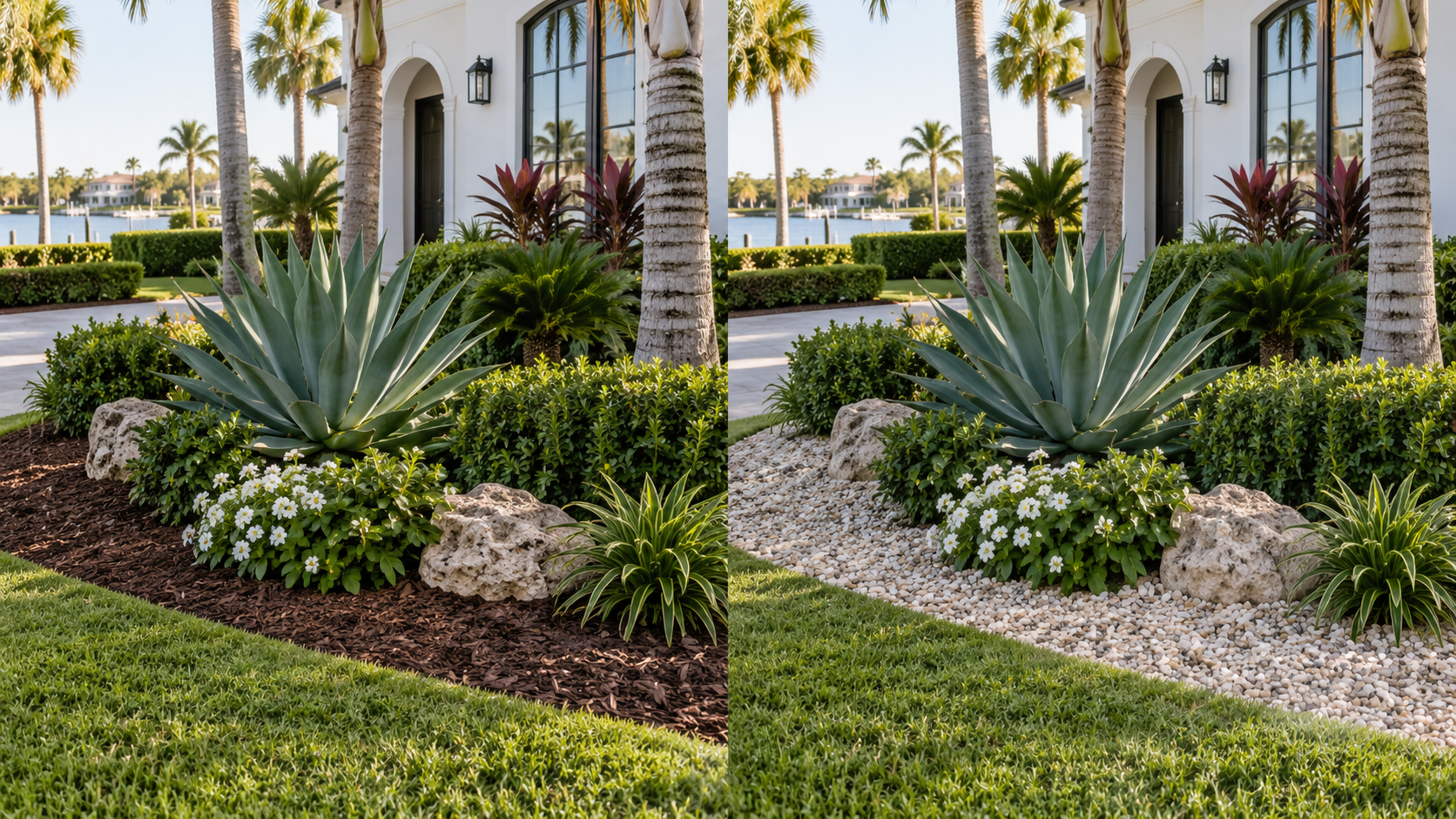
Mulch and gravel both create a finished planting bed, but they manage the soil differently. Organic mulch breaks down and contributes material to the soil. Gravel remains in place much longer and creates a more permanent surface. The right choice depends on the plants, sun exposure, drainage, maintenance expectations, and appearance you want around your home.
Where Mulch Performs Best
Mulch works well around shrubs, flowers, young trees, and beds that receive regular planting changes. A two-to-three-inch layer helps reduce evaporation, moderate soil temperature, and limit weed germination. Keep mulch several inches away from trunks and plant crowns. Replace only what has decomposed instead of piling a fresh thick layer over old material every season.
Where Gravel Performs Best
Decorative gravel suits pathways, narrow side yards, drainage areas, and low-maintenance designs using heat-tolerant plants. It resists washing and decomposition better than mulch. Gravel still requires edging and routine cleaning. Leaves, soil, and organic debris collect between stones, then support weeds above the barrier. Gravel is durable, but it is not maintenance-free.
Consider Heat and Moisture
Dark stone absorbs and reflects considerable heat. It can raise temperatures around sensitive roots and plant crowns during a South Tampa summer. Mulch keeps soil cooler and holds moisture longer, which benefits many plants but can become a problem when installed too deeply or kept constantly wet. Match the surface material to the plant rather than choosing by appearance alone.
Installation Details Matter
Rock beds usually need excavation, grading, firm edging, and a quality permeable weed barrier. Mulch beds rarely benefit from permanent fabric because decomposed mulch creates soil above it and makes future planting difficult. Both materials need positive drainage. Never raise a bed surface high enough to cover siding, block weep holes, or direct water toward the foundation.
Choose for Long-Term Maintenance
Consider leaf drop, irrigation overspray, pets, foot traffic, and future design changes. Ecoscape Outdoor Services helps South Tampa homeowners compare installed cost, drainage, plant health, and long-term upkeep. We prepare the bed correctly, calculate material depth, install proper containment, and select finishes that support the property instead of creating another maintenance problem.
Helpful Resource
Review Florida-friendly mulching guidance through UF/IFAS Florida-Friendly Landscaping.
