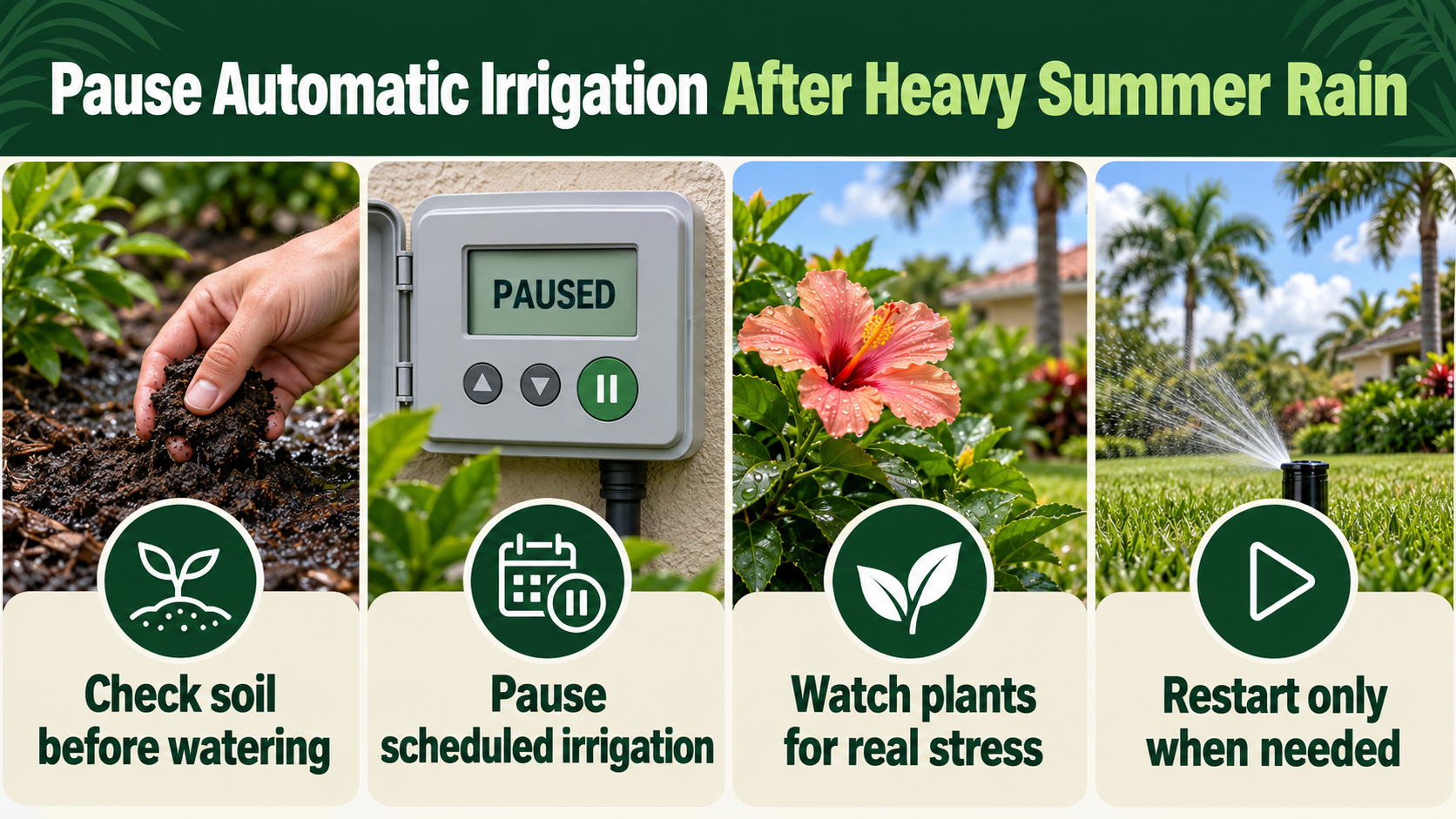
Pause Automatic Irrigation After Heavy Summer Rain
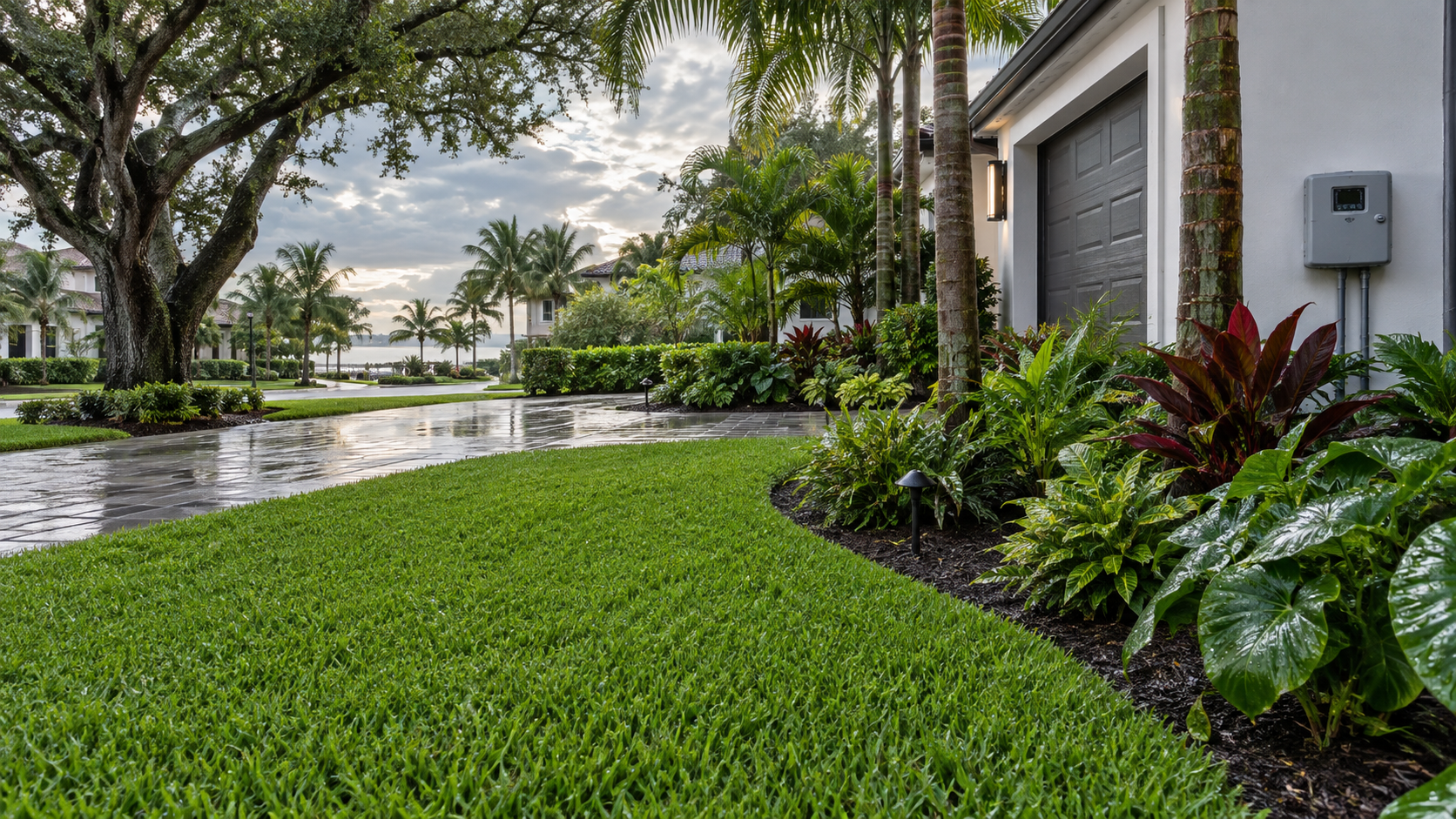
Rain Changes the Watering Decision
A summer thunderstorm may deliver more water in thirty minutes than an irrigation zone applies during a normal cycle. Leaving the automatic schedule unchanged often keeps already-wet soil saturated. Roots need oxygen as much as moisture. Before the next programmed start time, review recent rainfall and inspect the root zone instead of relying on the appearance of wet leaves or pavement.
Check the Soil Below the Surface
Push a screwdriver or soil probe several inches into the lawn and planting beds. Test sunny and shaded areas because they dry at different rates. Soil near the surface may look dry while deeper soil remains wet. If the probe enters easily and comes out damp, irrigation is rarely needed. Recheck after another day of heat and wind.
Use the Controller's Rain Delay
Most modern controllers include a rain-delay or temporary-off setting. Use it instead of deleting the normal program. A delay keeps the seasonal schedule intact while skipping unnecessary cycles. Confirm the date and time before activating it. Inspect the display later because power interruptions, manual watering, or an incorrect clock may restart watering sooner than expected.
Do Not Trust the Rain Sensor Alone
A working rain sensor improves efficiency, but placement and maintenance matter. Leaves, roof overhangs, paint, insects, and age may affect operation. Watch the controller during a wet-weather cycle to confirm the sensor interrupts watering. Clean the device and test it periodically. The sensor supports good judgment, but it does not replace checking soil moisture across the property.
Watch Plants Instead of the Calendar
Plants respond to soil, sunlight, wind, root depth, and drainage. Newly installed material dries differently from established shrubs. Containers often require separate attention. Look for true moisture stress in the morning, not temporary afternoon wilt. Folded turf blades, persistent wilting, and dry soil support watering. Soft growth, yellowing, and continually wet soil point in the opposite direction.
Restart Irrigation Carefully
Resume the schedule only after the root zone begins drying. Run each zone and watch for runoff, broken heads, blocked spray, and water reaching pavement. Rain may wash soil around heads or move mulch into nozzles. Use shorter cycle-and-soak periods where slopes or compacted areas shed water. The goal is even root-zone moisture without extending saturation.
Make Rainy-Season Adjustments Part of Maintenance
Ecoscape Outdoor Services evaluates irrigation alongside turf, plants, drainage, and recent weather. South Tampa properties often contain several microclimates within one yard. A thoughtful pause after heavy rain protects roots, reduces runoff, and lowers water use. Regular observation produces a healthier landscape than leaving the same timer program active through every Florida season.
Source: UF/IFAS Gardening Solutions