Place Pop-Up Drainage Emitters Where Water Can Escape
An Outlet Needs a Safe Destination
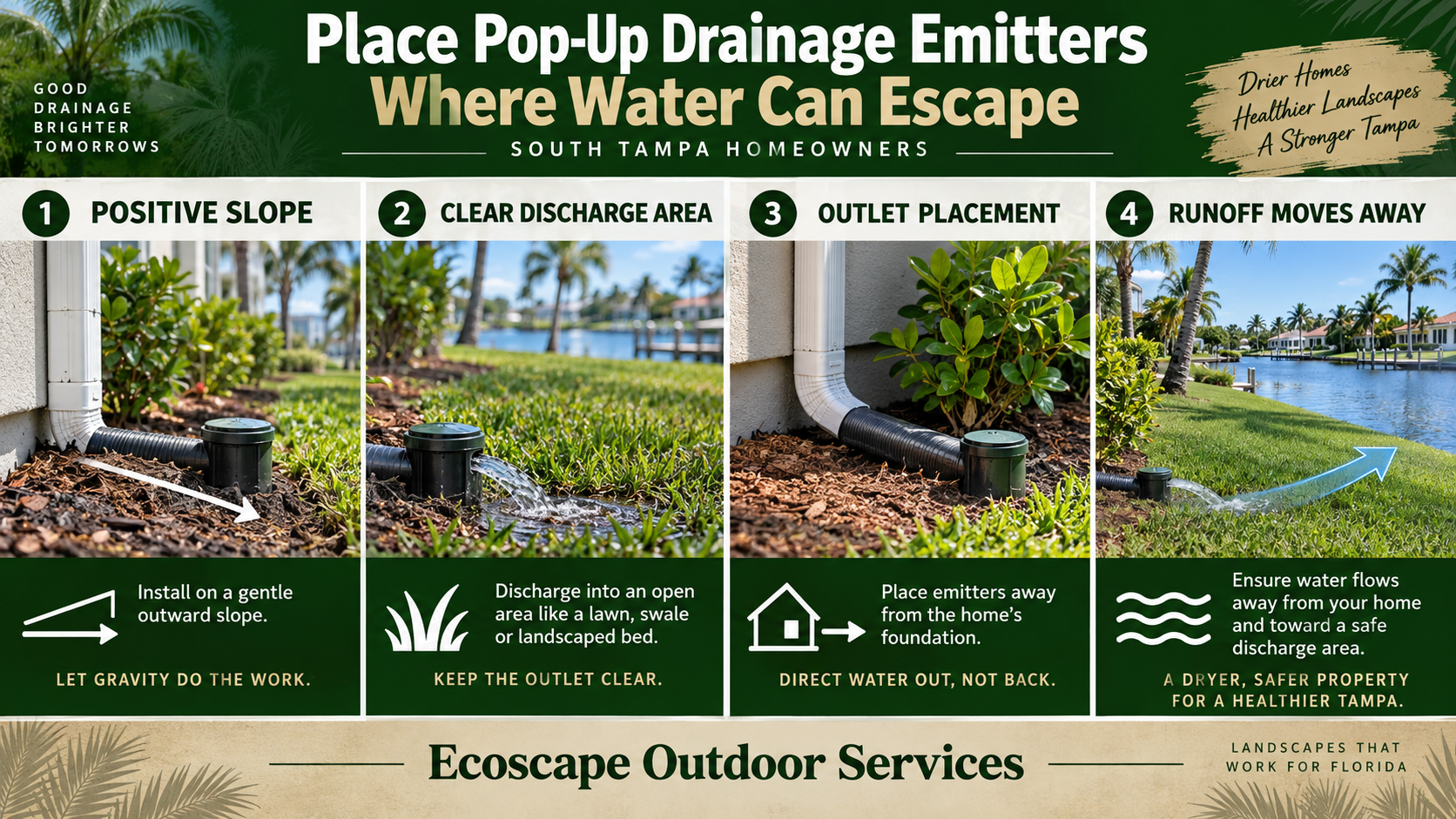
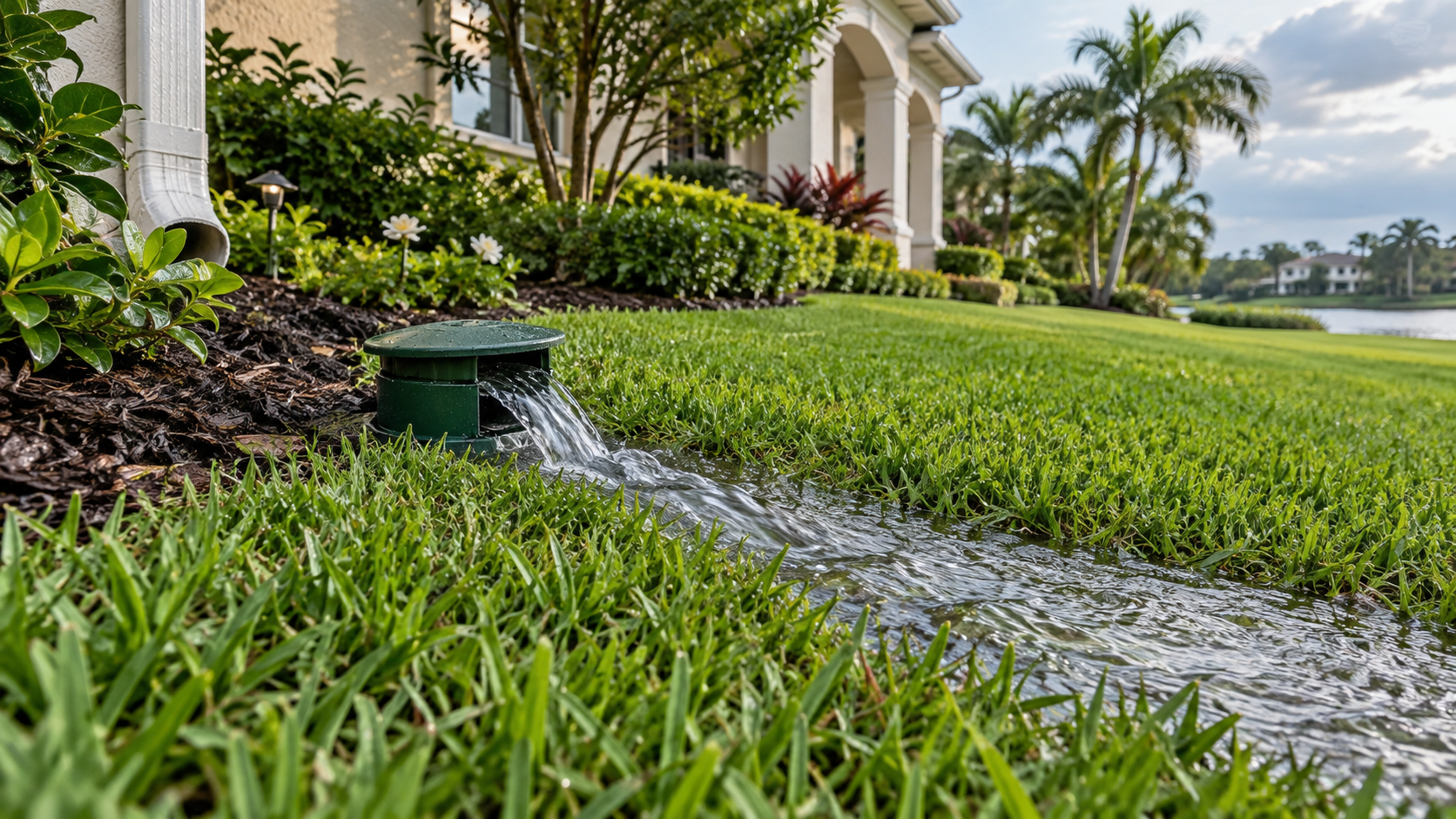
A pop-up emitter releases water from an underground drainage line when flow lifts its lid. It works only when the outlet sits where water can spread, soak in, or continue downhill without returning toward the house. Installing one in a low pocket simply moves roof runoff into another puddle. South Tampa’s intense rain makes outlet elevation, soil condition, nearby pavement, and downstream flow critical parts of the design.
Trace the Complete Drainage Route
Start at the gutter, downspout, basin, or area drain and follow the proposed pipe to the discharge point. Confirm the line has a usable slope and does not rise over roots, utility crossings, or compacted fill. Look beyond the emitter. Water must remain on the property, avoid neighboring lots, and stay clear of foundations, sidewalks, driveways, and storm-sensitive planting beds. A short route is not always the safest route.
Choose a Positive Outlet Grade
Set the emitter on ground that falls away from the structure. The top should sit at the finished grade, high enough to open freely but low enough to avoid mower and foot damage. Do not hide it beneath mulch, rock, thick turf, or spreading groundcovers. If the surrounding soil forms a bowl, reshape the area or select a different outlet. The emitter cannot force water uphill after discharge.
Match the Pipe and Flow Volume
Size the drainage line for the contributing roof area and expected flow. Keep fittings smooth, joints secure, and the pipe protected from crushing. Too many sharp turns or an undersized line slows movement and traps debris. The emitter must be compatible with the pipe and installed so the lid opens under flow. High-volume systems may need a different outlet design or additional overflow protection.
Provide Access for Cleaning
Leaves, roof grit, mulch, insects, and roots can restrict underground drainage. Include cleanouts or accessible connections where the system can be inspected without excavation. Lift the emitter lid periodically and remove debris around the hinge or opening. Keep grass from growing over the cap. If the system includes a catch basin, clean its basket before storm season and after heavy leaf drop.
Test With Realistic Water Flow
Run water through the downspout or inlet and watch the emitter open. Continue the test long enough to observe where discharge travels and whether water ponds after flow stops. Recheck during a strong rain because a hose test may not match roof volume. Inspect the pipe route for soft soil, leaks, or settlement. Correct poor outlet grading before replacing sod or finishing the surrounding bed.
Design the Outlet With the Landscape
Ecoscape Outdoor Services evaluates South Tampa drainage from the source through the final discharge area. We consider roof flow, pipe slope, soil, roots, turf, irrigation, walkways, and long-term access before installing an emitter. Property owners should inspect the outlet after the first major storm and again during seasonal maintenance. A successful system moves water away, opens reliably, drains completely, and remains easy to service.