
Prepare Newly Planted Trees for Tropical Weather
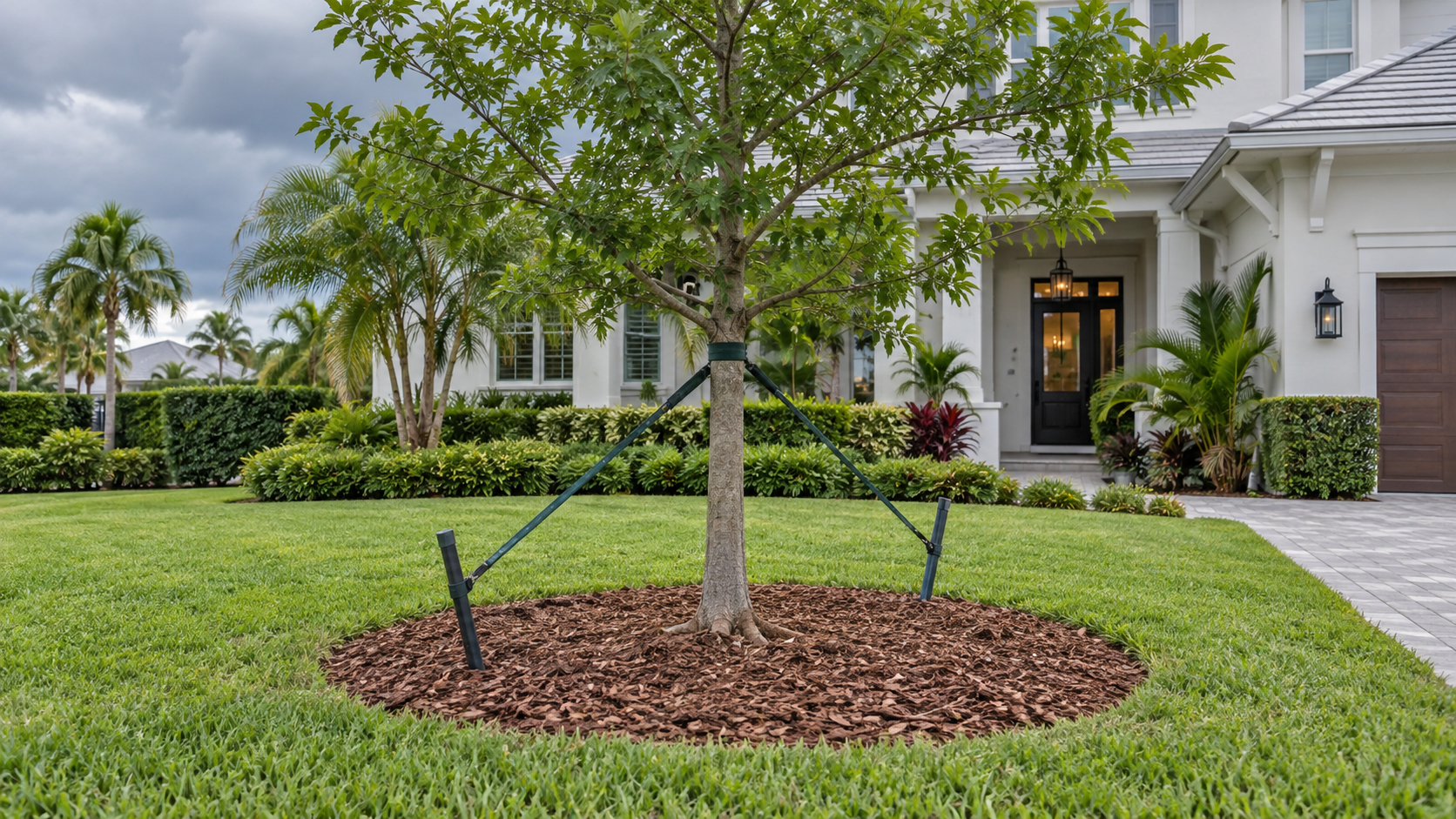
Why New Trees Need Special Attention
A newly planted tree lacks the wide, established root system that helps a mature tree resist Florida wind. The trunk and canopy act like a lever while the loose root ball shifts below. Preparation should protect the root zone without preventing normal trunk movement. Start during routine care, not when tropical-storm winds arrive. Good planting depth, correct watering, and healthy roots provide more protection than last-minute ropes or severe pruning.
Check Planting Depth and Stability
Find the root flare where the trunk widens into the first major roots. It should remain visible at or slightly above the surrounding grade. Pull mulch and loose soil away from the trunk. Press gently near the root ball and watch for movement. A rocking root ball, leaning trunk, buried flare, or soft saturated soil needs attention. Do not add soil against the trunk to make a leaning tree appear straight.
Stake Only When the Tree Needs It
Many small trees stand well without stakes. Use support when the root ball moves, the site receives strong wind, or the trunk cannot remain upright. Place stakes outside the root ball and use broad, flexible ties that allow slight movement. Keep ties below the lowest branches when practical. Never wrap bare wire, rope, or hose tightly around bark. Support the root ball while allowing the trunk to develop strength.
Prepare Before Conditions Deteriorate
Inspect ties, stakes, irrigation, and drainage early in hurricane season and again when a storm threatens the Tampa Bay area. Remove loose garden décor, empty pots, hanging items, and tools near the tree. Clear clogged drains so heavy rain does not leave the root ball floating in saturated soil. Water normally before the storm if soil is dry, but do not flood an already wet planting area.
Do Not Hurricane-Cut the Canopy
Severe topping or stripping does not make a young tree safer. It creates wounds, removes energy-producing leaves, and often encourages weak regrowth. Prune only dead, broken, crossing, or structurally poor branches with proper cuts. Never remove a large share of the canopy right before a storm. If the tree has competing leaders or a major defect, schedule corrective pruning during calm weather and follow the species’ growth pattern.
Inspect Again After the Storm
Stay clear of hanging limbs and nearby power lines. Once the area is safe, check whether the root ball shifted, the trunk cracked, ties tightened, or stakes pulled loose. Straighten only small, recently moved trees when the root system remains mostly intact. Reset supports without burying the flare. Water according to soil moisture. Continue weekly checks because hidden root movement and tie damage often appear after the immediate cleanup.
Protect the Investment
Remove temporary staking once the roots hold the tree firmly, often after one growing period rather than leaving it indefinitely. Ecoscape Outdoor Services helps South Tampa clients review planting depth, drainage, mulch placement, staking, and post-storm condition. We focus on practical corrections that support healthy establishment. A tree planted and maintained correctly has a stronger foundation for future Florida summers, heavy rain, and tropical weather.
