Preserve Yard Swales When Regrading a Florida Property
Why a Yard Swale Matters
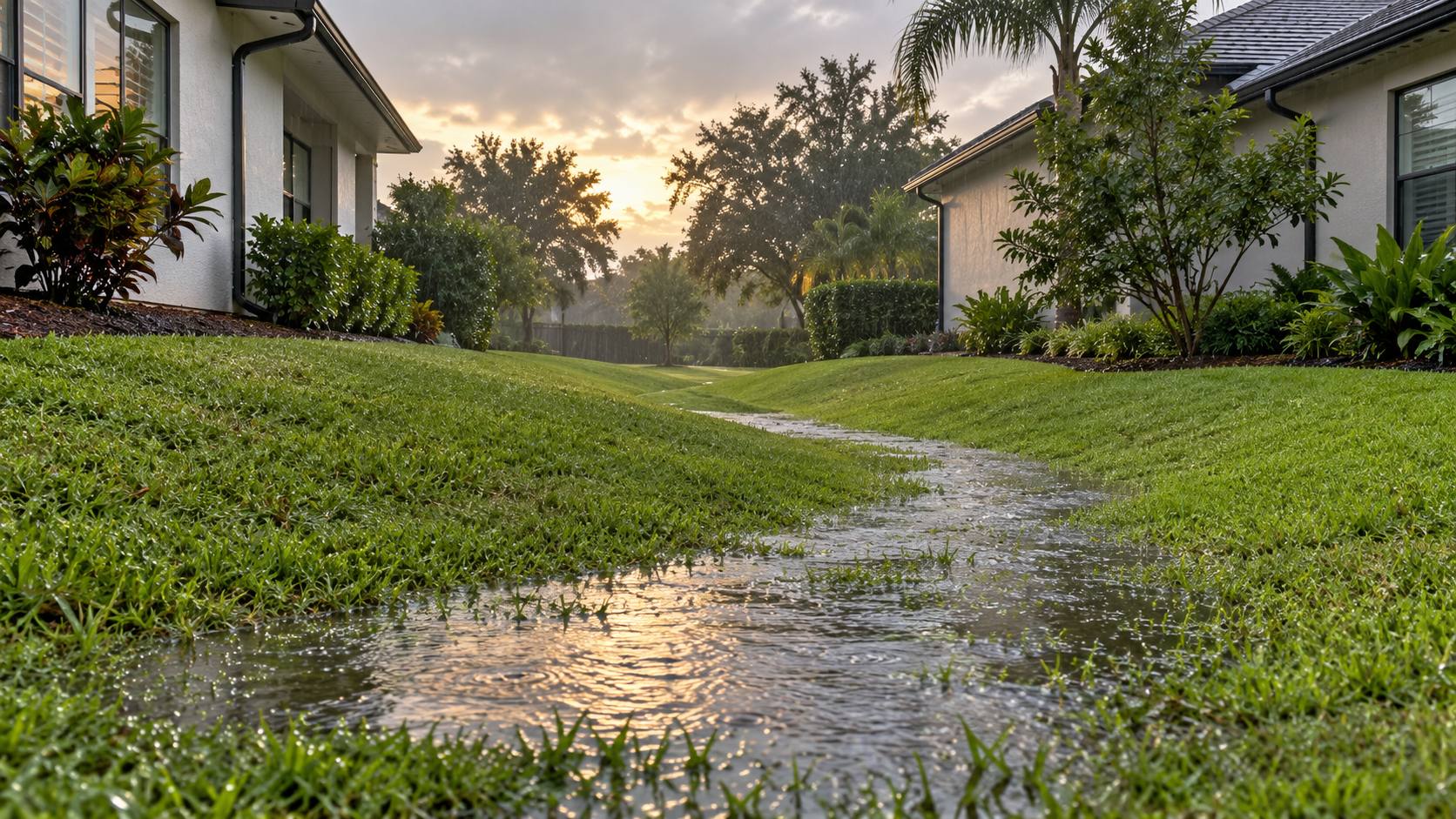
A swale is a broad, shallow low area shaped to move stormwater across a property. It may run between homes, along a side yard, or toward a street inlet or approved drainage area. Because it is usually covered with grass, homeowners may mistake it for poor grading and try to fill it. In South Tampa’s flat terrain, even a small change in elevation can redirect heavy rain toward a foundation, patio, or neighboring yard.
How Drainage Paths Get Blocked
Swales are often altered during sod replacement, landscape-bed expansion, fence installation, driveway work, or the addition of fill soil. Raised edging, thick mulch, roots, stored materials, and compacted construction debris can also interrupt flow. A new planting bed may look harmless in dry weather but act like a dam during a strong storm. Water then spreads into low lawn areas or remains trapped long enough to weaken turf and plant roots.
What to Check Before Regrading
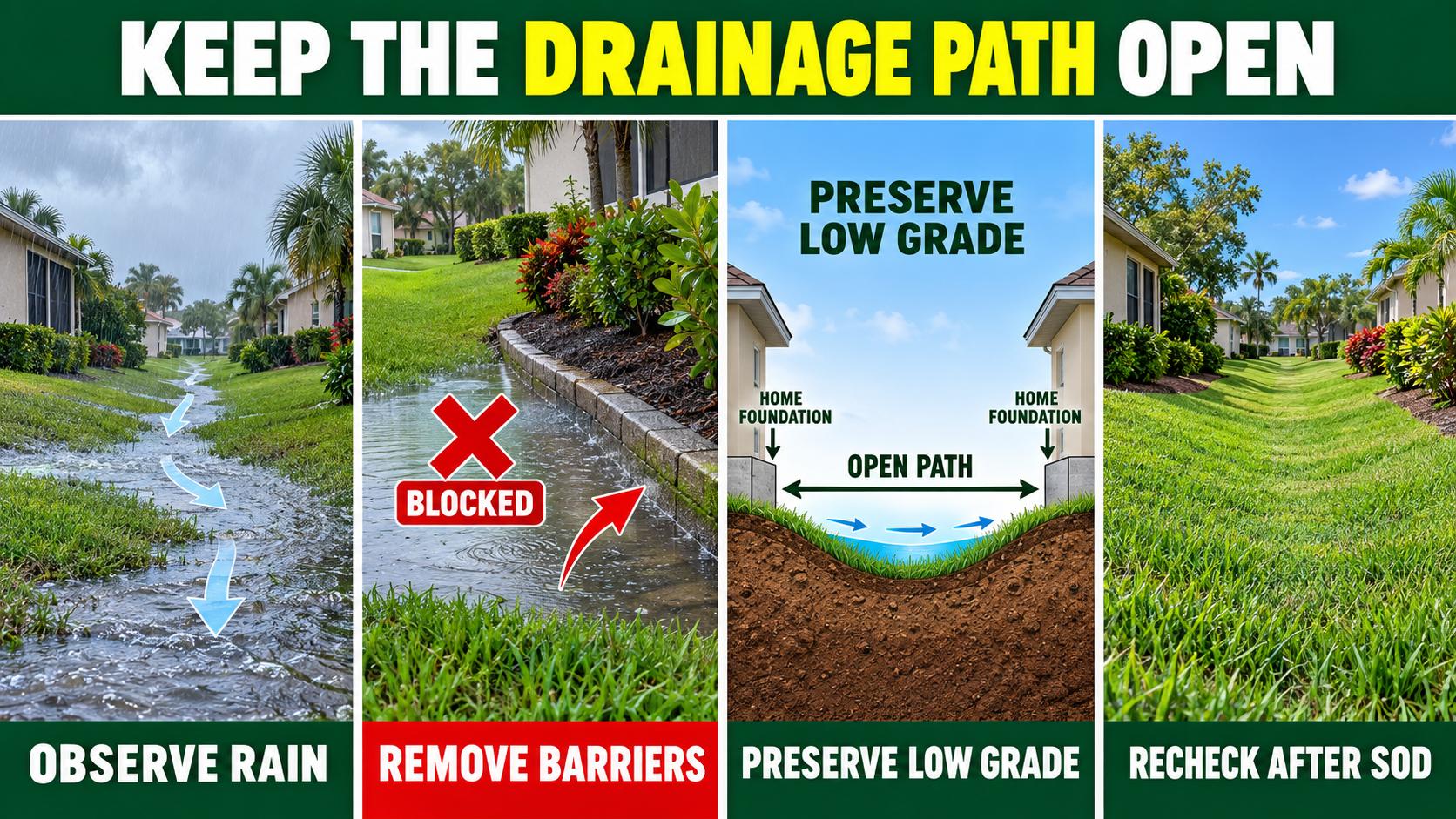
Walk the property during or soon after a heavy rain and photograph the direction of moving water. Identify low points, inlets, drains, downspout outlets, and places where water crosses property lines. Compare the yard with available surveys or drainage plans when possible. Mark utilities before digging. Also check whether neighboring lots contribute runoff, since solving one puddle by raising the grade may transfer the problem instead of correcting it.
The Correct Regrading Approach
Maintain a continuous, gentle path that carries water away from structures without creating a steep ditch. Remove isolated high spots and obstructions rather than filling the entire low route. Where new sod is installed, account for its thickness so the finished surface still follows the intended grade. Keep fences, edging, rock, and mulch from crossing the flow line. Direct water only to a lawful, stable outlet that can receive it without causing erosion.
Common Mistakes
Do not assume a drain pipe is the best answer for every wet area. Pipes need adequate slope, access for cleaning, and a safe discharge point. Avoid digging a narrow trench through a lawn when a broad grassed swale will move water more gently. Do not send runoff toward a neighbor, sidewalk hazard, or building. Another mistake is evaluating drainage with light hose flow, which may not reveal problems that appear during intense Florida rainfall.
When Professional Help Makes Sense
Professional evaluation is wise when water approaches the house, several properties share the flow path, existing drains are involved, or major soil movement is planned. Ecoscape Outdoor Services can observe site grades, protect known drainage routes, coordinate landscape improvements around them, and recommend when a drainage specialist or engineer should become involved. Planning the grade before sod, beds, rock, or fencing are installed prevents costly removal and rework.
Follow-Up During the Next Storm
Inspect the finished area during the next substantial rain. Water should move through the swale without cutting channels, washing away soil, or remaining against structures. Check drain openings and low points for leaves and mulch. Photograph any new ponding and note how long it lasts after rainfall stops. Minor settlement can often be corrected early, while recurring or expanding flooding deserves a fresh assessment before additional fill or landscaping is added. Book an Ecoscape Outdoor Services assessment before regrading a swale or changing a yard where stormwater collects.