Prevent Dog Urine Spots From Damaging Florida Turf
Why This Tip Matters
Small yellow or brown circles in an otherwise green lawn often lead homeowners to suspect insects, fungus, or an irrigation problem. When the spots appear where a dog regularly urinates, concentrated salts and nitrogen may be the cause. The damage is usually local, but repeated use of the same area can kill St. Augustinegrass and leave openings for weeds. A practical routine protects the turf without blaming the dog or applying products the lawn does not need.
How Dog Urine Affects Grass
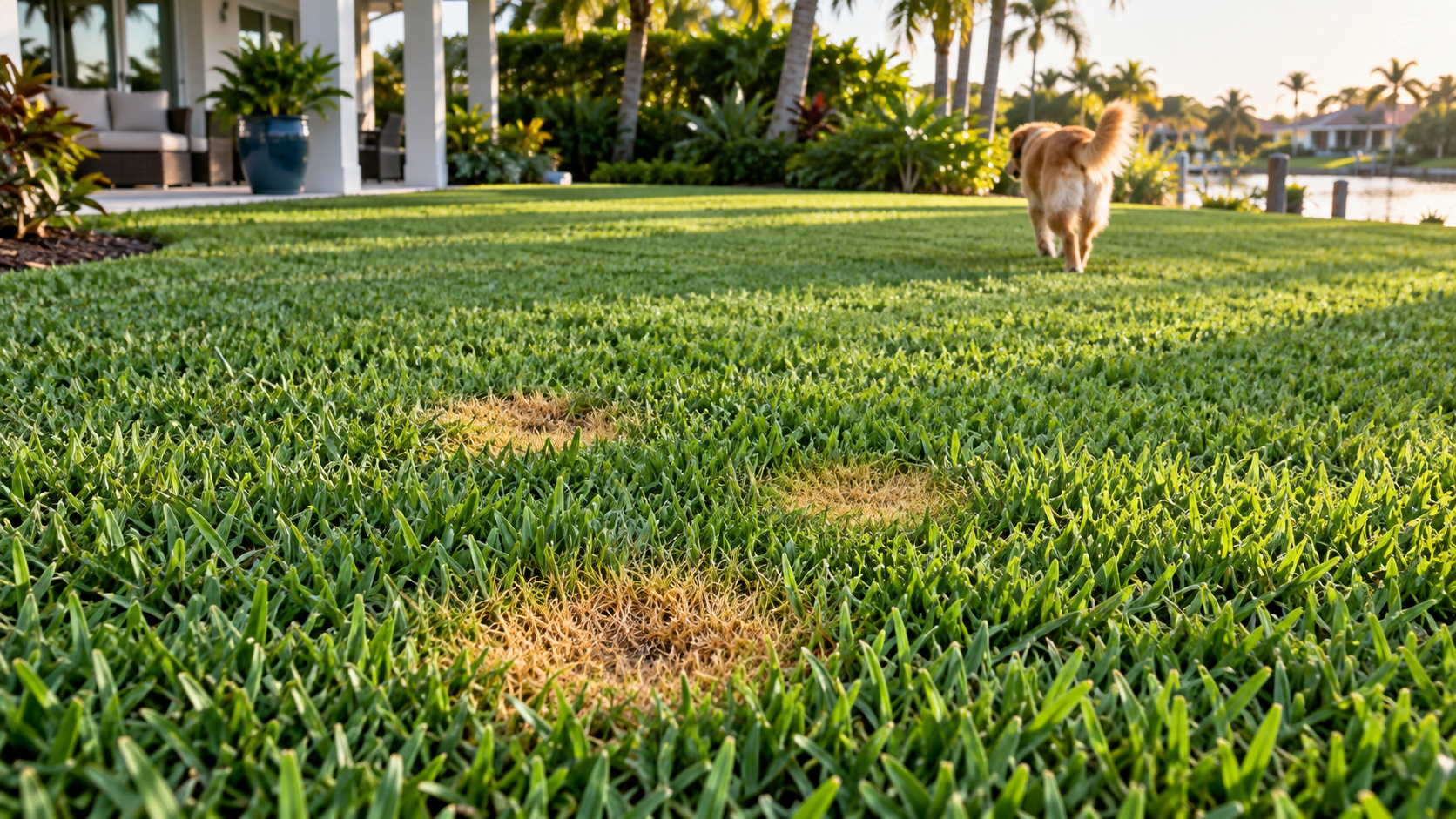
Urine contains water, nitrogen compounds, and dissolved salts. In a small amount, nitrogen supports plant growth. In a concentrated dose, it can burn leaves and roots. A typical urine spot develops a straw-colored center with a darker green ring around the edge. The center received too much nitrogen and salt, while the outer ring received a diluted amount that stimulated growth. This pattern differs from many diseases, which often spread, merge, or produce leaf lesions rather than a neat isolated circle.
Confirm the Cause First
Watch where your dog regularly stops and compare those locations with the damaged areas. Check whether the spots remain small and separate or expand after rain. Inspect the blades for chewing, spots, rot, or loose roots. Make sure a sprinkler head is not missing the same section. Dog urine is a reasonable explanation when the timing, location, and ring pattern agree. If the damage continues in areas the dog never visits, investigate insects, irrigation coverage, soil compaction, or disease.
Reduce New Damage
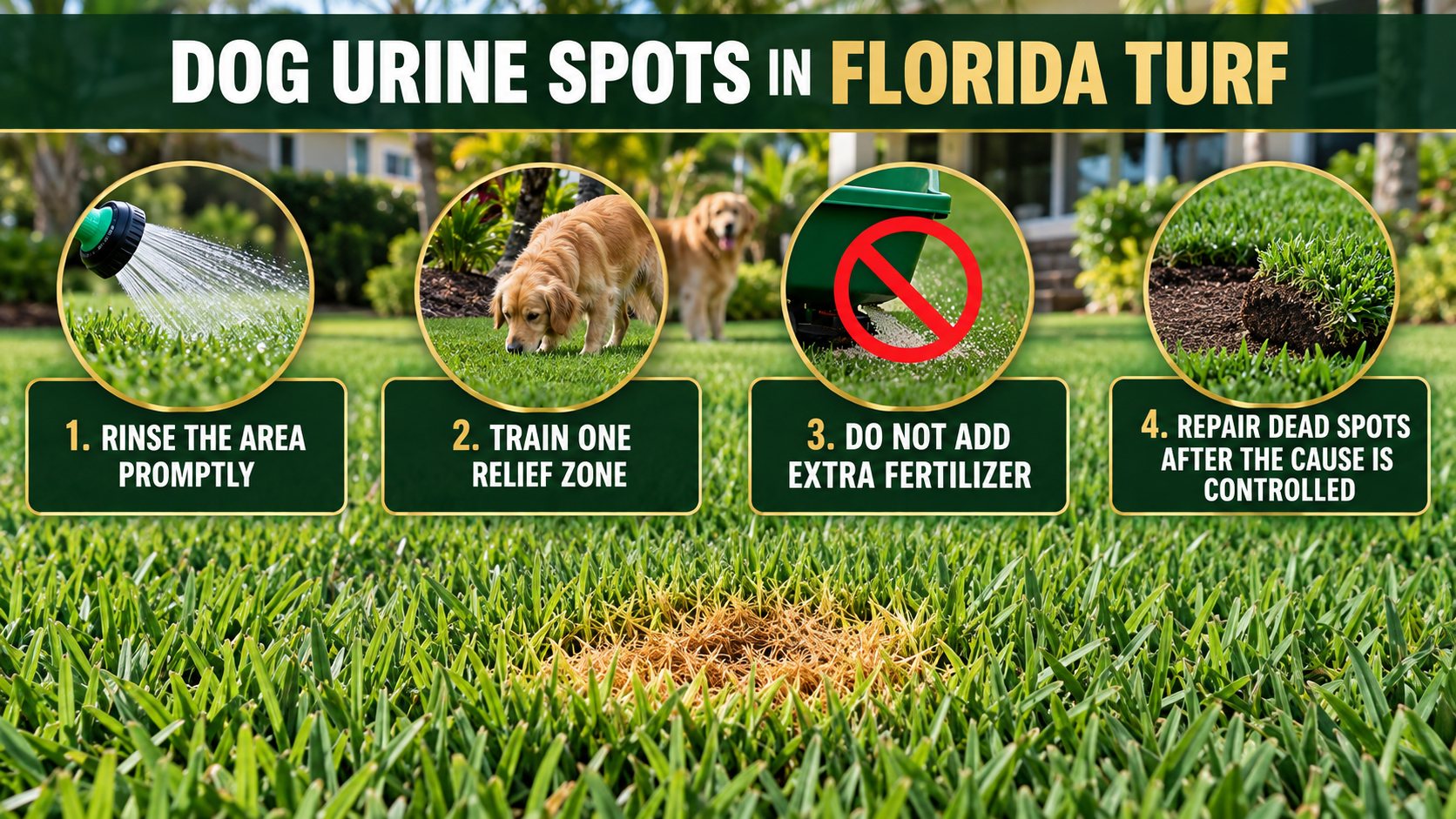
Rinse the area with plain water soon after urination when practical. The goal is to spread the salts through a larger soil volume, not to flood the lawn. Train the dog to use a designated relief area surfaced with mulch, gravel, artificial turf, or another easy-to-clean material selected for safe foot temperature and drainage. Choose a spot away from edible plants, play areas, downspouts, and standing water. Consistency matters more than punishment. Reward the dog for using the selected area and keep the route easy to reach.
Repair Existing Spots
Wait until you have controlled repeated exposure. Rake out completely dead material without tearing healthy runners. Loosen only the surface soil and use matching St. Augustine sod pieces or plugs where the turf has died. Keep new material evenly moist during establishment, then transition toward normal deep watering. Small spots with living runners around the edge may fill in during active growth if sunlight, moisture, and mowing height are correct. Mark repaired areas so lawn equipment and foot traffic do not disturb them.
Common Mistakes to Avoid
Do not add fertilizer to a fresh urine spot. The area already received excess nitrogen and salts. Avoid lime, gypsum, dish soap, or homemade neutralizers unless a reliable soil test and qualified recommendation support their use. These products do not remove the original concentration and may create another soil problem. Do not overwater the entire yard to solve a few spots. Excess irrigation increases disease pressure, wastes water, and weakens roots.
How Ecoscape Outdoor Services Helps
Ecoscape Outdoor Services helps South Tampa homeowners separate pet damage from irrigation, insect, and disease problems. We evaluate the pattern, confirm whether the turf remains alive, recommend a repair method, and help design a practical relief area when needed. Our team also checks mowing height, irrigation coverage, drainage, and traffic so the repaired lawn has the conditions it needs to recover.