Prevent Mower Damage Around Sprinkler Heads
Why sprinkler heads get hit
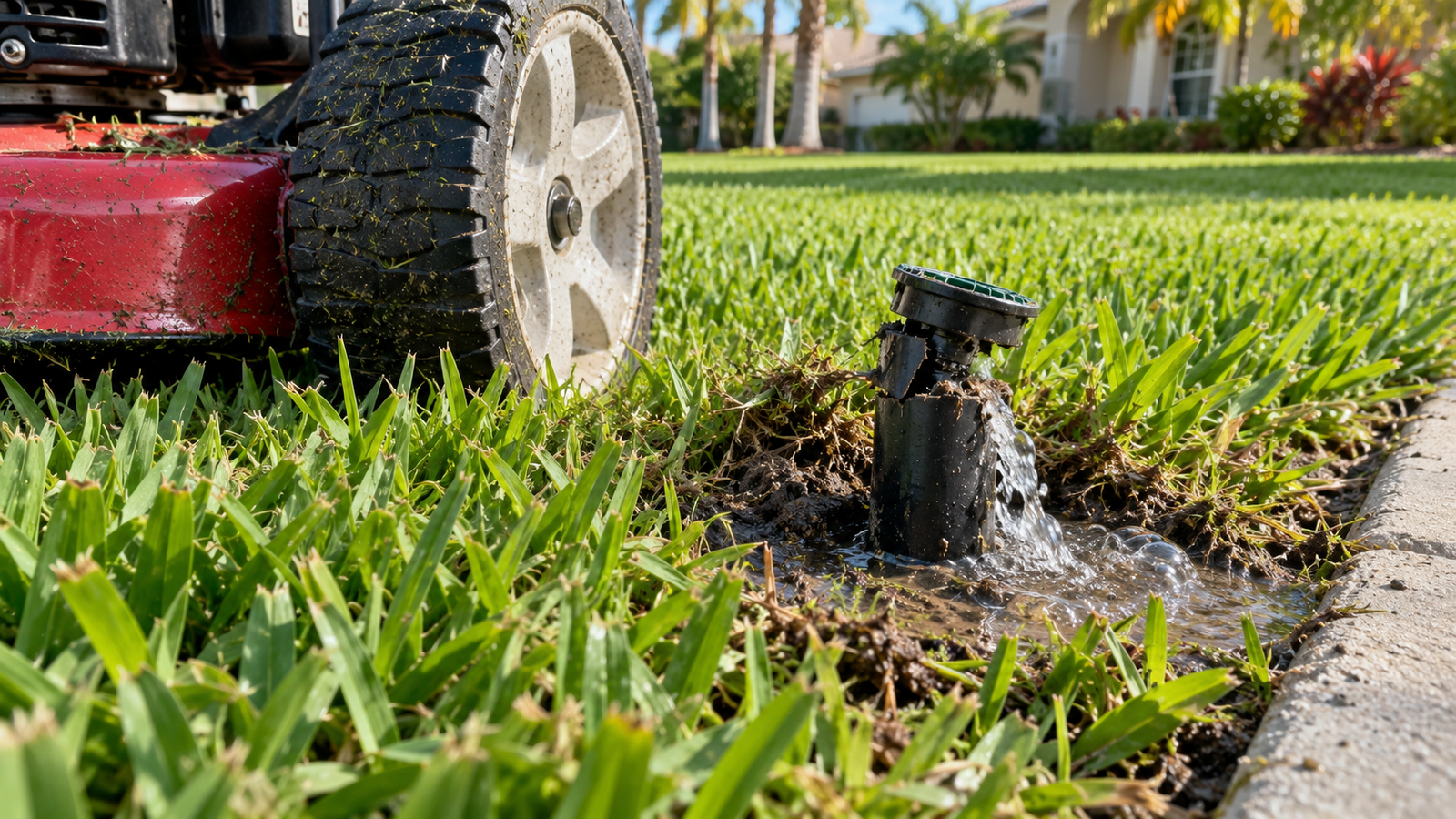
Pop-up heads disappear into turf when a zone is off, especially in thick St. Augustinegrass. Soil settlement can leave one head too high while new sod or accumulated thatch hides another. A mower wheel may bend the riser, and a blade can crack the cap or nozzle. The damage is not always immediate; the first clue may be a wet spot or weak coverage during the next watering cycle.
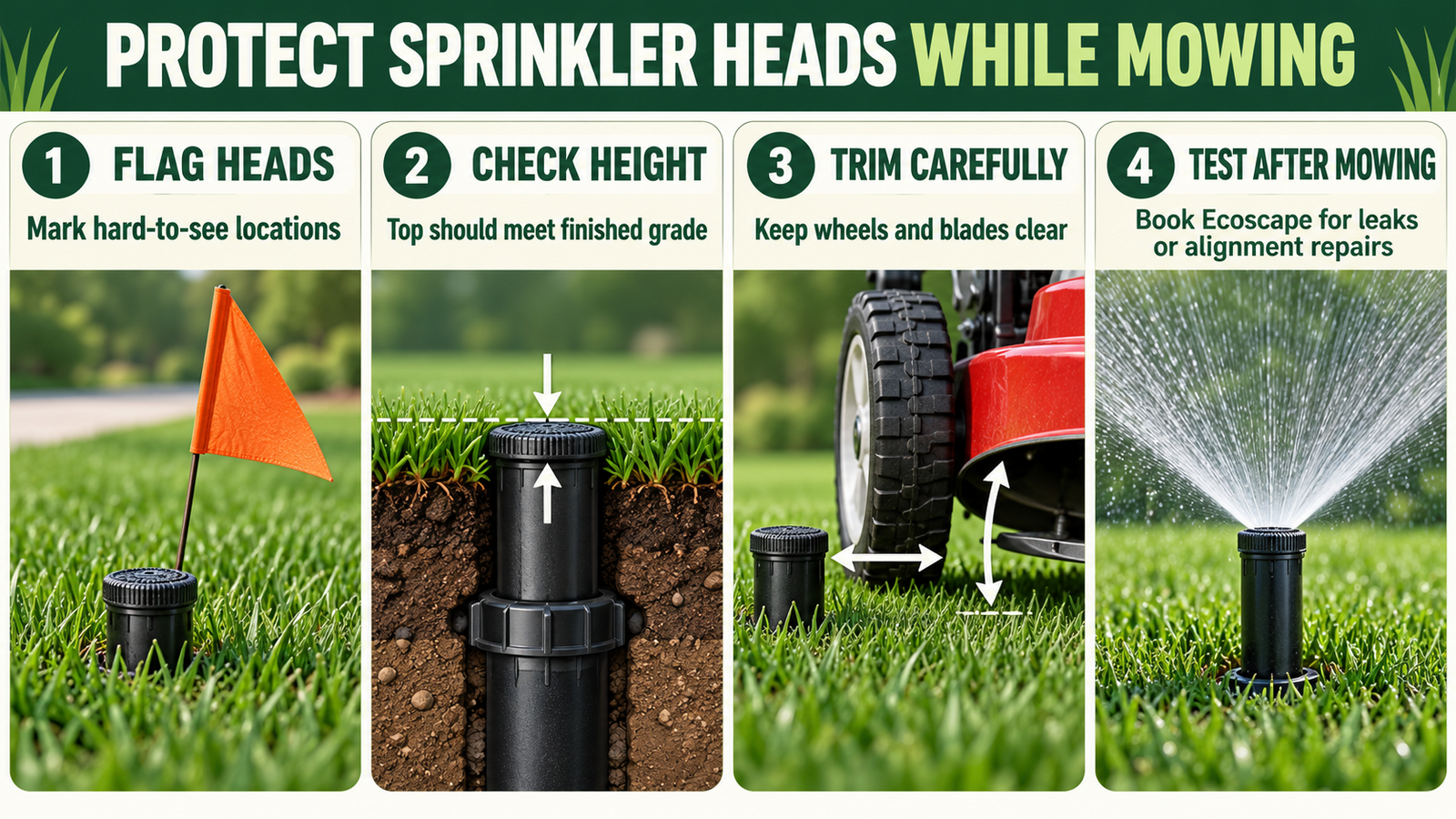
Locate and mark every head
Run one irrigation zone at a time and walk the lawn outside the spray. Mark each head with a flexible irrigation flag placed far enough away that it does not interfere with operation. Pay close attention near curbs, driveways, bed edges, and narrow strips where mower turns are tight. A simple map or phone photo helps new crew members and prevents locations from being forgotten after grass grows over them.
Check height and surrounding grade
When the water is off, inspect whether each cap sits near the finished soil grade and rises freely above the turf. A leaning head, exposed riser, loose soil, or head buried beneath sod needs attention. Do not pull a head upward, add makeshift fittings, or pack hard debris around it. Correct height depends on the body, connection, slope, and turf, so unstable components should be evaluated before mowing resumes.
Mow and trim with deliberate clearance
Slow down before reaching a marked location and keep the mower wheel from pivoting directly over the head. Avoid dropping a deck onto uneven ground or scalping the grass around the cap to make it visible. Use a string trimmer carefully, keeping the line away from plastic bodies, nozzles, and exposed tubing. Hand trimming is safer where heads sit close to edging, roots, or other obstacles.
Test the system after lawn work
Run the zones after mowing when practical. Watch for water bubbling at ground level, a head that will not rise, a crooked spray, reduced pressure, or a new geyser. Shut the affected zone off if a leak is washing soil away. Mark the fault and keep people and equipment clear of softened ground. One broken connection can reduce coverage throughout the rest of that zone.
Avoid repeat damage
Do not hide a problem with extra soil, a rock ring, or an improvised protective collar that becomes another blade or trip hazard. Repeated strikes often mean the head is poorly positioned, the grade has changed, or the mowing route needs adjustment. Recheck locations after sod installation, aeration, storm washout, and bed expansion. Keep the head list with the property's regular maintenance notes.
Book repairs before washout spreads
A cracked cap may be simple, but a bent riser, leaking fitting, unstable lateral line, or consistently misaligned head can require excavation and compatible parts. Book an Ecoscape Outdoor Services appointment to inspect mower-related sprinkler damage, restore coverage, and correct the surrounding grade before a small leak erodes the lawn or raises the water bill.