
Protect Irrigation Backflow Devices During a Freeze
Why This Device Needs Protection
South Tampa rarely experiences long freezes, but exposed irrigation components can still suffer damage during a sharp overnight cold snap. Water trapped inside a backflow preventer, valve, or above-ground pipe expands as it freezes. Plastic fittings can split and metal bodies can crack. The leak often becomes visible only after temperatures rise and water pressure returns. A short preparation routine protects an expensive irrigation component and limits wasted water.
Know What You Are Covering
Locate the irrigation shutoff and the exposed backflow assembly before cold weather arrives. Many homes use an above-ground pressure vacuum breaker or another approved device near the water source. Do not confuse the irrigation valve with the home’s main water shutoff. Photograph the normal valve positions and keep the manufacturer’s instructions available. If the assembly has test cocks, relief openings, or drain points, do not plug them permanently or force them with damaged tools.
Prepare Before the Temperature Drops
Turn off scheduled irrigation so sprinklers do not coat turf, sidewalks, or plants with ice. Follow the device manufacturer’s directions for shutting down or relieving trapped pressure. Systems differ, and some steps require a trained irrigation professional. Inspect exposed pipe for existing cracks or loose fittings before covering it. Complete this work during daylight. Waiting until the coldest hour increases the chance of rushed valve changes, broken handles, and incomplete protection.
Use Dry, Secure Insulation
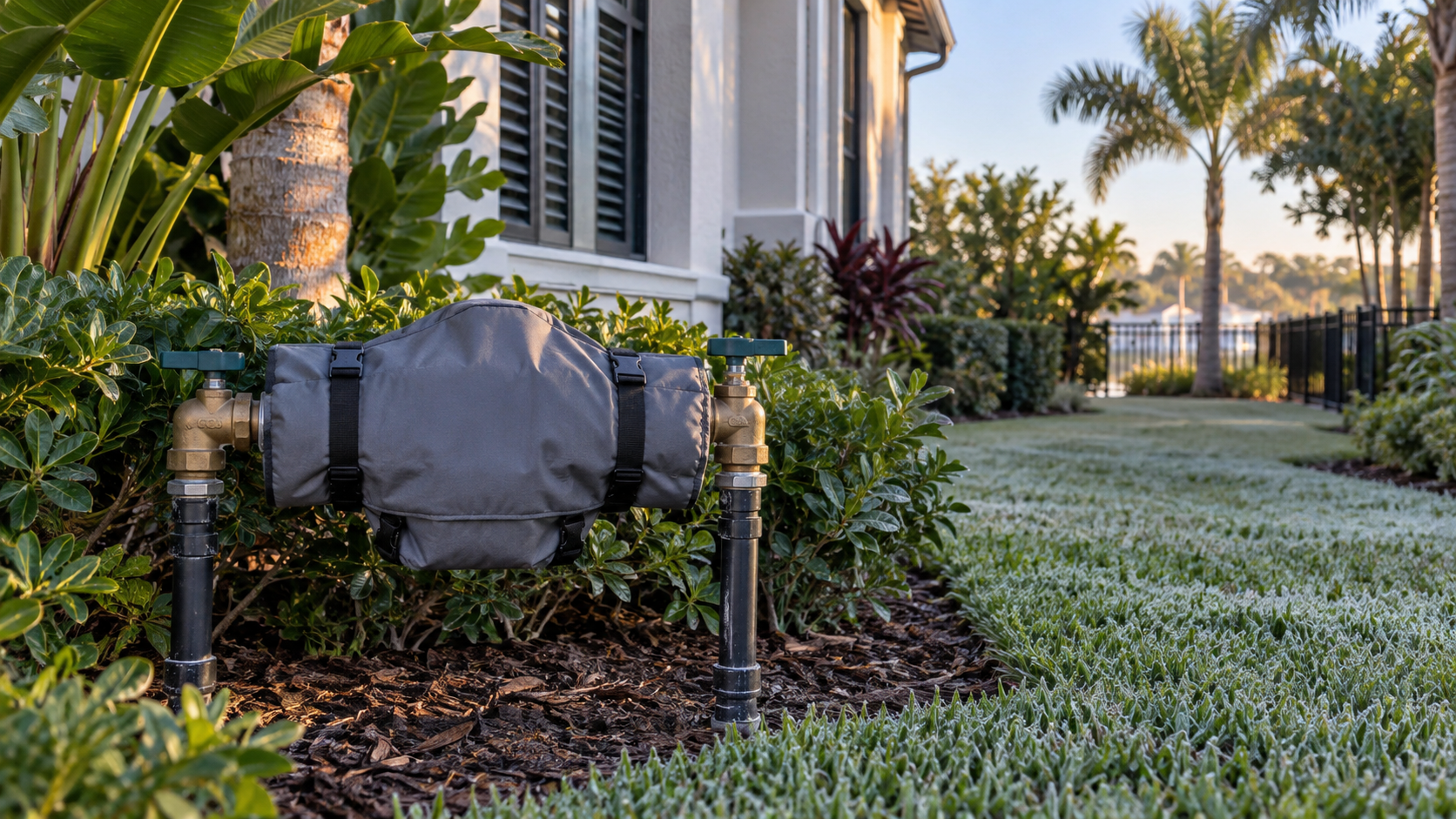
Choose a fitted commercial backflow cover or wrap the exposed assembly with dry insulating material protected by a weather-resistant outer layer. Cover the device and vulnerable pipe while keeping required relief areas accessible according to the manufacturer’s design. Secure the cover against wind without compressing it so tightly that it loses insulating value. Keep insulation off the ground when possible because wet material transfers cold and becomes less effective.
Protect the Surrounding Area
Check hose bibs, shallow exposed irrigation lines, pump components, and delicate plants near the assembly. Disconnect garden hoses and drain removable attachments. Move portable containers to a sheltered area. Do not run irrigation through the night as a general freeze strategy. Water on pavement creates a safety problem, and improper watering can damage plants. Focus first on dry insulation, correct system settings, and protection of known exposed components.
Avoid Dangerous Shortcuts
Never use an open flame, torch, space heater, or boiling water on frozen irrigation equipment. Avoid unapproved heat tape and electrical cords exposed to irrigation spray or rain. A thin plastic bag alone offers little insulation and can trap condensation. Do not strike a frozen valve or turn it forcefully. If a component is already frozen, leave it protected and allow a gradual thaw before checking pressure and operation.
Inspect After the Freeze
Remove temporary coverings after temperatures recover and the equipment is dry. Restore the system carefully, then watch for dripping, spraying, pressure loss, and unusual controller alerts. Ecoscape Outdoor Services helps South Tampa property owners inspect irrigation components, locate freeze damage, adjust controllers, and coordinate practical repairs. Preparing before a cold front and checking the system afterward costs far less than repairing an unnoticed leak and the landscape damage it creates.
