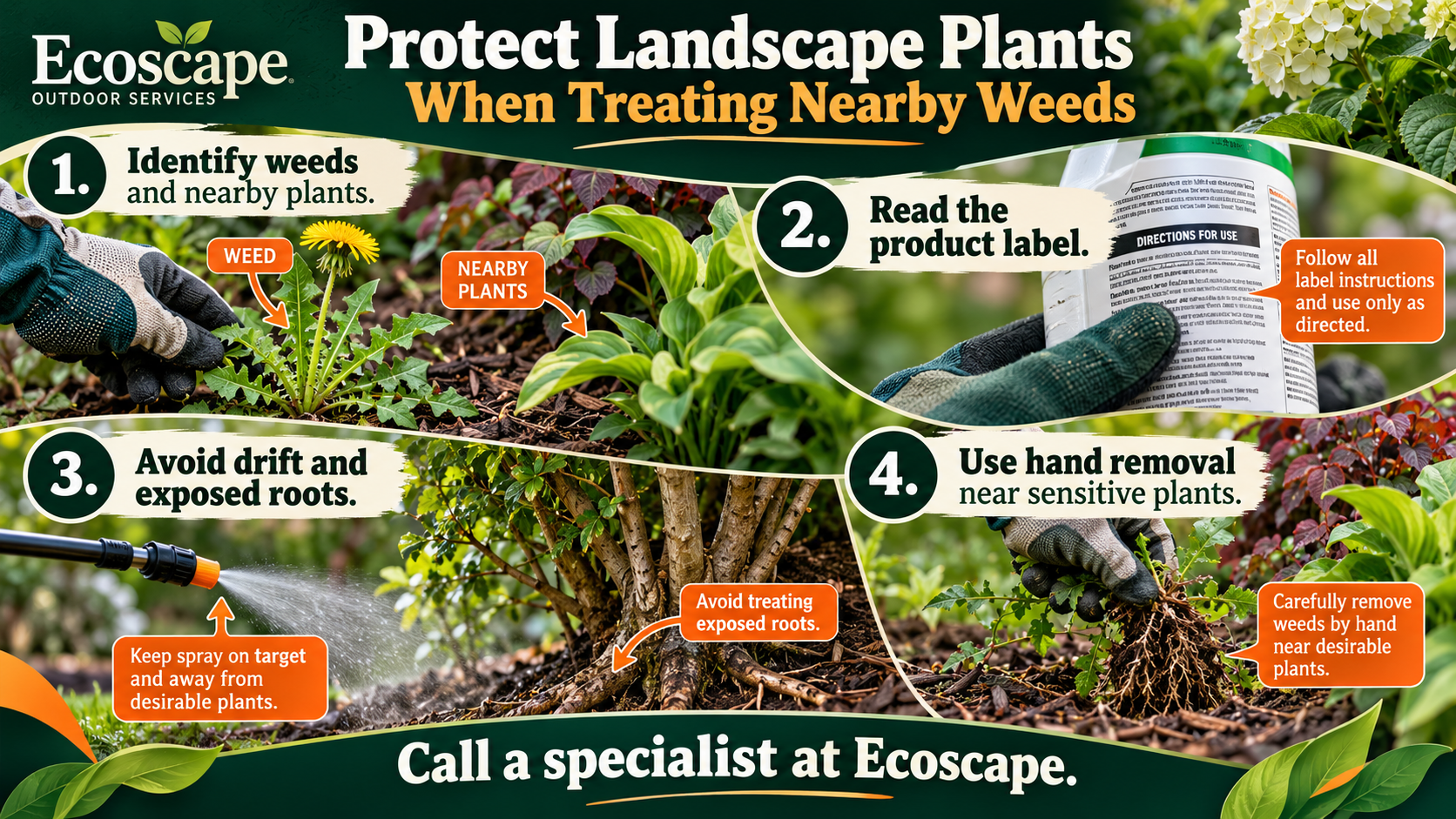
Protect Landscape Plants When Treating Nearby Weeds
Identify What You Are Treating
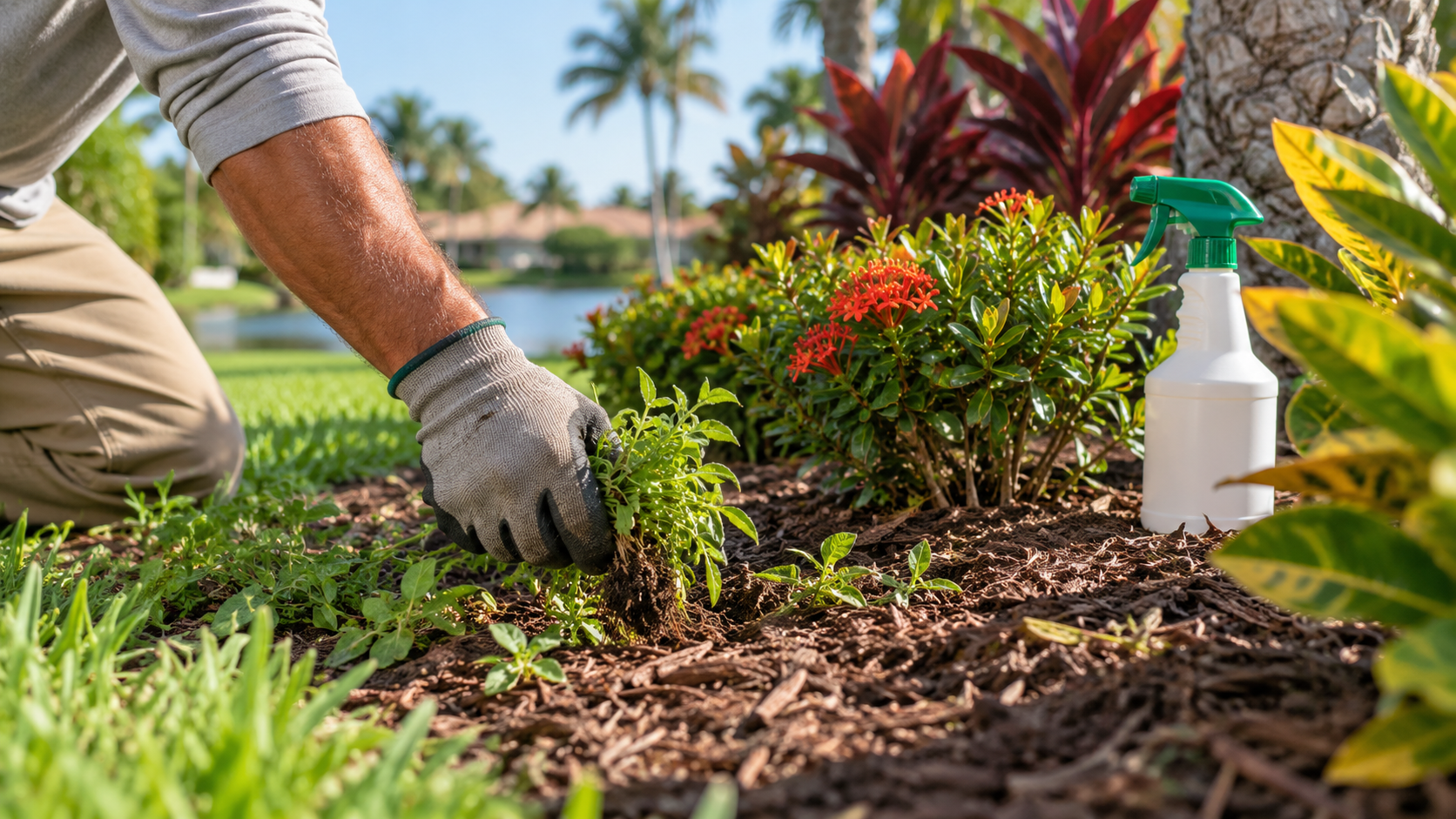
A weed growing through a shrub bed needs a different approach from a weed in open turf. Identify the weed, desirable plants, and treatment area before choosing a product. Lawn-safe does not mean safe for every ornamental. Even a small application causes injury when the wrong product contacts susceptible foliage or roots. Hand removal often provides the most controlled option beside young plants and exposed ornamental stems.
Read the Entire Label
Check approved sites, plant restrictions, application method, protective equipment, weather limits, and reentry directions. Follow the label for the exact formulation in your container. Similar product names sometimes contain different active ingredients. Products marketed for extended bare-ground control require particular care around landscaping. Never assume a driveway weed treatment belongs in a planting bed. Keep the container label available throughout the work.
Protect Foliage and Roots
Desirable plant roots extend beyond the visible trunk and often beyond the canopy. Prevent spray from reaching ornamental leaves, green bark, suckers, and exposed roots unless the label specifically permits contact. Some herbicides also injure plants through soil uptake. A spray shield helps control placement but does not make an unsuitable product appropriate. Avoid treatment where weeds are intertwined with desirable growth and clean separation is impossible.
Control Drift and Runoff
Use application equipment and conditions specified on the label. Stop when wind moves droplets toward nearby plants. Avoid spraying toward pools, drains, pets, and pedestrian areas. Watch for runoff from paving into a bed. Do not increase concentration to finish faster or combine products without label authorization. Keep separate, clearly identified equipment for herbicides so residue does not contaminate later plant-care applications.
Respond to Suspected Injury
Record the product, date, treated area, and weather. Photograph affected plants and retain the label. New curled growth, discoloration, and decline require a review of exposure alongside other potential causes. Avoid repeated chemical treatment while the cause remains uncertain. Follow the product's directions for accidental exposure and seek appropriate professional guidance. Heavy fertilizer or aggressive pruning does not reliably reverse herbicide injury and sometimes increases stress.
Keep Useful Treatment Records
Save a photo of the label and document exactly where a product was applied. Include the application date and any changes in nearby plants over the following weeks. Provide these details when requesting a plant assessment. Tell anyone maintaining the property about recent treatments so another application does not overlap unexpectedly. Keep children and pets out of the treatment area according to label directions. A documented maintenance plan makes future decisions clearer and helps separate chemical exposure from irrigation stress or insect injury.
Reduce Future Weed Pressure
Maintain suitable mulch coverage without piling material against stems. Remove weeds before seed production and address irrigation leaks encouraging growth. Inspect beds during routine maintenance so isolated weeds receive early attention. Ecoscape evaluates weed pressure, plant sensitivity, and site conditions before choosing a control method. The goal is a clean bed with healthy ornamental plants and a repeatable maintenance plan. Call a specialist at Ecoscape.
Helpful Resource