
Protect Low-Voltage Lighting Cable During Bed Renovations
Locate the Lighting System First
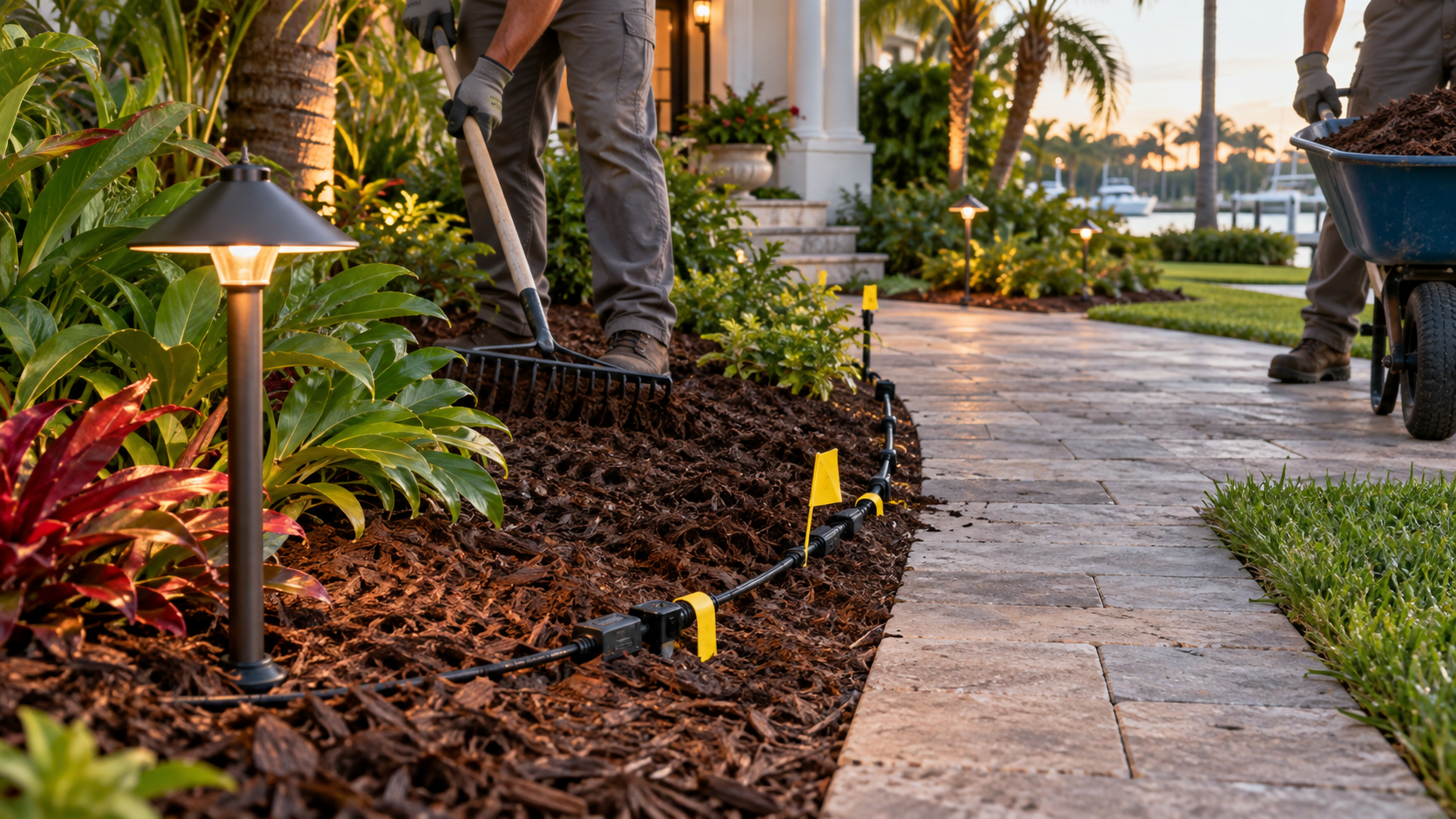
Before removing plants, changing edging, or spreading new material, identify every fixture, transformer, connector, and visible cable route. Turn the system on after dark and photograph fixture locations. During daylight, trace cable near each light and mark likely runs with flags. Older installations often follow bed edges, sidewalks, roots, or direct paths between fixtures rather than one obvious route.
Shut Power Off Before Work
Switch the transformer off and disconnect its power before digging. Low-voltage systems still suffer damaged conductors, short circuits, overheated connections, and transformer problems after a shovel strike. Confirm the lights remain off before excavation begins. Keep household electrical circuits outside the scope of landscape work. Any line-voltage concern belongs with a qualified electrician.
Use Hand Tools Near Marked Routes
Remove mulch carefully around fixtures and connectors. Use a hand trowel near marked cable instead of driving a shovel or edging blade into the bed. Expose enough cable to understand its direction before lifting plants or roots. Do not pull a fixture by its wire. Support the light body, free surrounding soil, and protect both lead wire and connection during relocation.
Coordinate New Bed Features
New edging, trees, root barriers, drains, and irrigation lines often cross existing lighting routes. Plan crossings before installation. Reroute cable around future root growth and high-maintenance areas when practical. Leave service slack near fixtures without creating loose loops at the surface. Keep connections accessible and above locations where water routinely collects. Record the revised route for future crews and property owners.
Avoid Mulch and Connector Problems
Do not bury fixtures, lenses, stems, or connectors under fresh mulch. Material piled around a fixture traps moisture, blocks light, changes aiming, and invites mower or string-trimmer contact. Use weather-rated outdoor connectors designed for the system. Twisted wires, household tape, exposed copper, and connections resting in wet soil lead to unreliable performance and repeated service calls.
Test the Entire System Afterward
Reconnect power and inspect every fixture at night. Look for dark lights, flicker, uneven brightness, glare, shifted aiming, and cable visible above grade. Confirm the transformer timer and photocell still follow the intended schedule. Recheck after irrigation runs or heavy rain. A connection which works while dry might fail once water reaches a weak splice.
Protect the Investment With Ecoscape
Ecoscape Outdoor Services coordinates landscape renovation with irrigation and outdoor lighting instead of treating each system separately. Our team locates likely cable routes, protects fixtures during bed work, repairs approved low-voltage issues, and restores final aiming after plants and mulch are in place. This approach reduces accidental damage and keeps the finished South Tampa landscape looking complete after sunset.
