Protect New Sod From Foot Traffic During Establishment
Why This Tip Matters
New sod provides an immediate green surface, but the roots still need time to grow into the prepared soil. Foot traffic can shift pieces, open seams, create low spots, and compact the wet soil beneath them. The damage may not be obvious until edges dry or the lawn develops uneven areas. Temporary protection helps the installation establish as one connected turf surface.
Limit Access
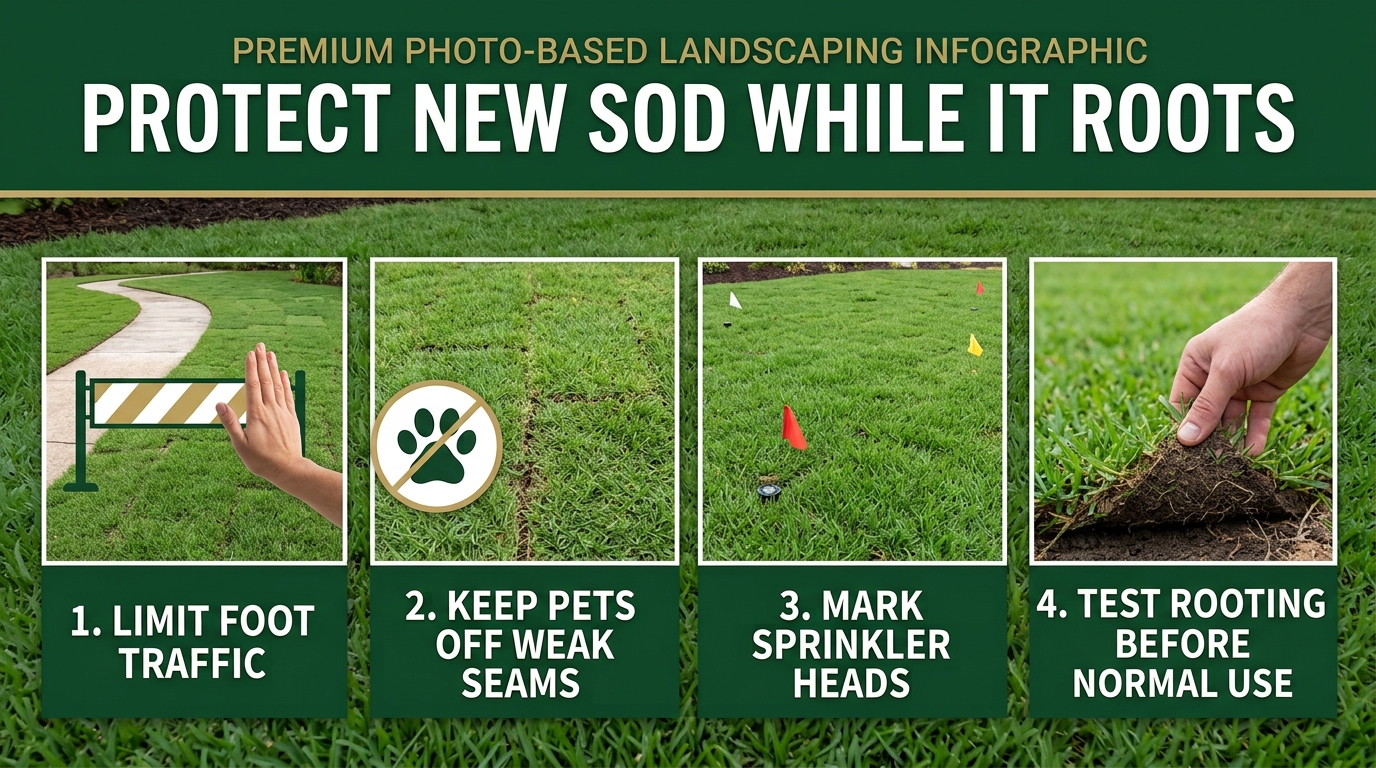
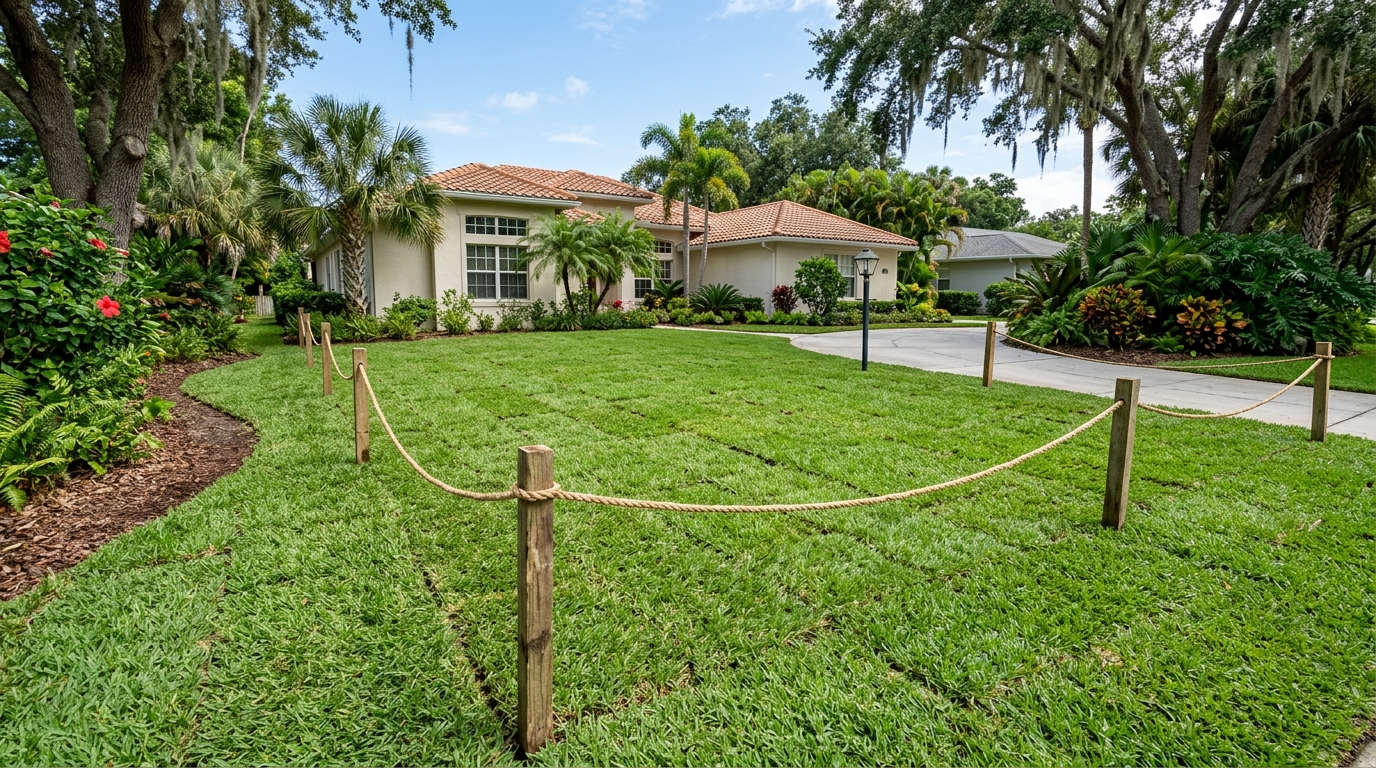
Use stakes, rope, cones, or another visible barrier to guide people around the lawn. Provide a stable route to gates, trash areas, meters, and service equipment. Ask delivery drivers and contractors to avoid the sod. Keep children and pets away from soft seams and corners, where pieces are easiest to displace.
Protect Irrigation Components
Mark sprinkler heads, valve boxes, and drain inlets before the lawn blends together. A hidden head can be stepped on, pushed out of level, or damaged by early mowing. Run short daytime tests and watch for dry edges, excessive runoff, and water collecting beneath loose pieces. Correct coverage instead of relying on extra water across the entire lawn.
Check Rooting Before Normal Use
After the establishment period begins, gently lift a corner in several representative areas. Resistance indicates roots are entering the soil. Test sunny and shaded sections because they may establish at different rates. Do not pull hard enough to tear new roots. Continue restricting traffic where pieces still lift easily or soil remains soft.
Prepare for the First Mow
Wait until the sod is rooted well enough to resist movement and the soil can support the mower without rutting. Mark all heads and remove loose installation materials. Use a sharp blade and remove only a small portion of the leaf height. Avoid tight turns that can twist newly rooted pieces.
How Ecoscape Outdoor Services Helps
Ecoscape Outdoor Services prepares the grade, installs and rolls sod, checks irrigation coverage, and provides an establishment plan for South Tampa conditions. We return to inspect seams, moisture, rooting, and mowing readiness so small issues can be corrected before they become permanent uneven areas.