
Protect Palm Trunks From String-Trimmer Damage
Palm Trunks Do Not Repair Like Bark
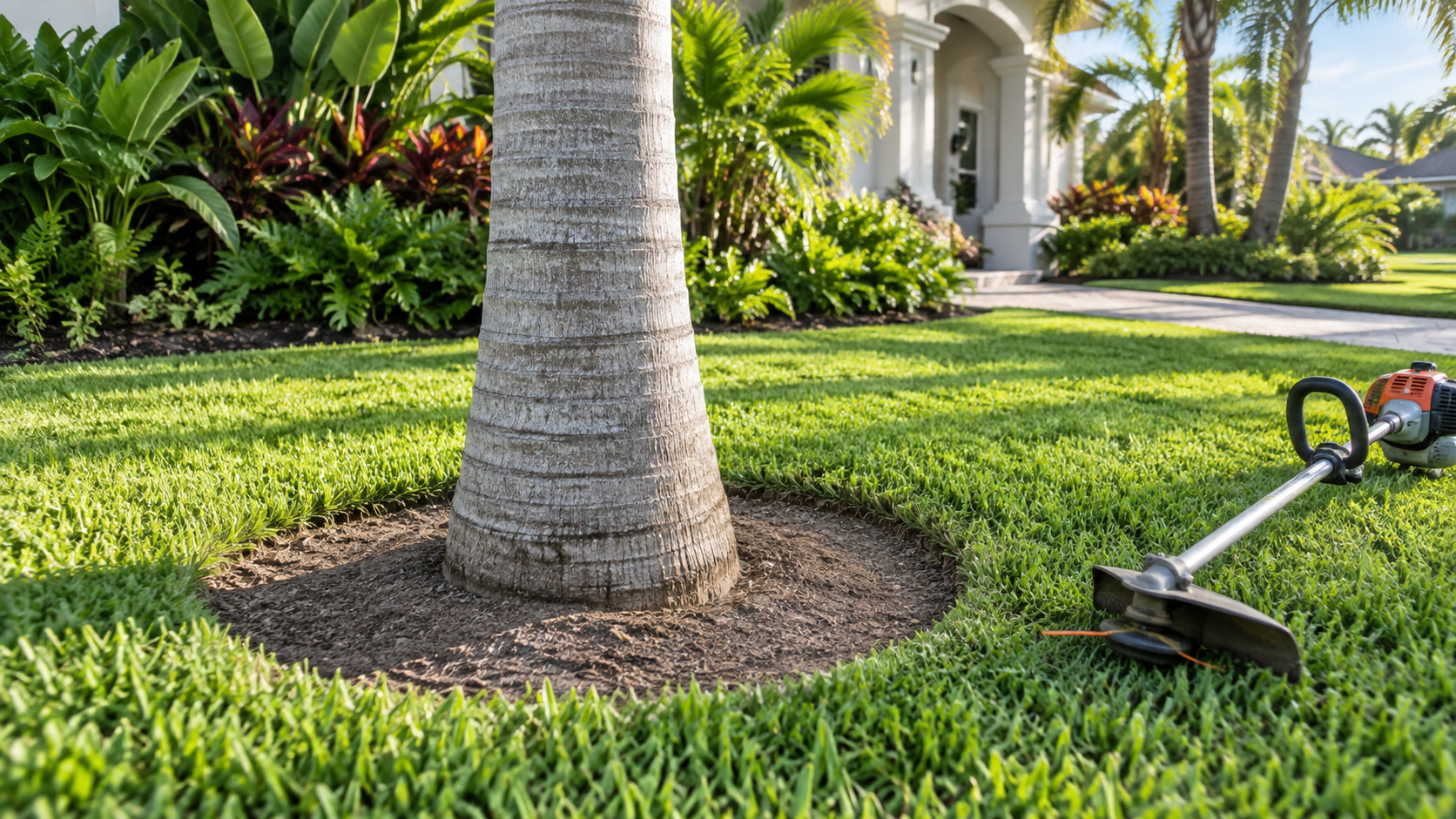
A string trimmer can cut through tender tissue at the base of a young palm in seconds. Repeated contact creates a ring of damage, opens entry points for decay, and weakens the trunk at the exact place carrying the plant’s weight. Palms do not produce the same type of protective wood growth as broadleaf trees. A permanent trunk wound remains visible and may affect strength or health long after the grass looks neatly trimmed.
Create a No-Trim Buffer
Remove turf from a small circle around the trunk so maintenance equipment never needs to touch it. Size the buffer for the palm, mowing equipment, and surrounding design. Cut the turf carefully by hand and avoid damaging shallow roots. Keep the soil at its existing grade. A clean turf-free ring separates the trunk from mower decks, string, edgers, and repeated foot traffic while making the base easier to inspect.
Use Mulch Correctly
Add a moderate mulch layer within the buffer to suppress turf and reduce soil moisture loss. Keep mulch several inches away from the trunk and never build a cone against it. Mulch piled on the base holds moisture, hides wounds, and creates an inviting space for pests. Maintain a defined edge so grass runners do not quickly cross the ring. Replace only the material needed to restore proper depth rather than adding a new layer every visit.
Control the Trimmer Around Palms
Approach the buffer with the cutting head aimed away from the trunk. Reduce speed near beds, irrigation heads, lighting fixtures, and exposed roots. Do not rely on a plastic guard mounted directly to the palm because tight guards trap moisture and hide damage. The safest method removes the need for contact. Train every crew member to stop and hand-pull an isolated runner instead of reaching the trunk with spinning line.
Inspect the Base Regularly
Look for fresh cuts, soft areas, dark staining, cavities, insects, loose fibers, and narrowing of the trunk near grade. Photograph any wound with a ruler or familiar object for scale. Check whether irrigation constantly sprays the injury or soil stays wet around the base. Do not carve, sand, paint, or seal the wound with household material. A qualified professional should review spreading decay, movement, or structural concern.
Avoid Related Maintenance Damage
Keep mower wheels, trailers, ladders, and landscape materials away from palm trunks. Do not fasten signs, lights, wire, or holiday decorations tightly around living tissue. Avoid cutting green fronds merely to reduce debris. Never remove trunk boots aggressively from a palm species that retains them. Small repeated injuries from routine work create more long-term risk than one properly planned maintenance visit.
Set a Property-Wide Standard
Inspect every palm base before mowing and after bed renovations. Restore missing buffers and record existing wounds so new damage is easy to identify. Ecoscape Outdoor Services trains South Tampa maintenance crews to protect trunks, roots, irrigation, lighting, and bed edges while completing the property. A clean result should never depend on placing equipment against a living plant. Preventing contact preserves the palm and the value of the landscape around it.
