Protect Poolside Plants From Splash and Backwash Damage
Read the Damage Pattern
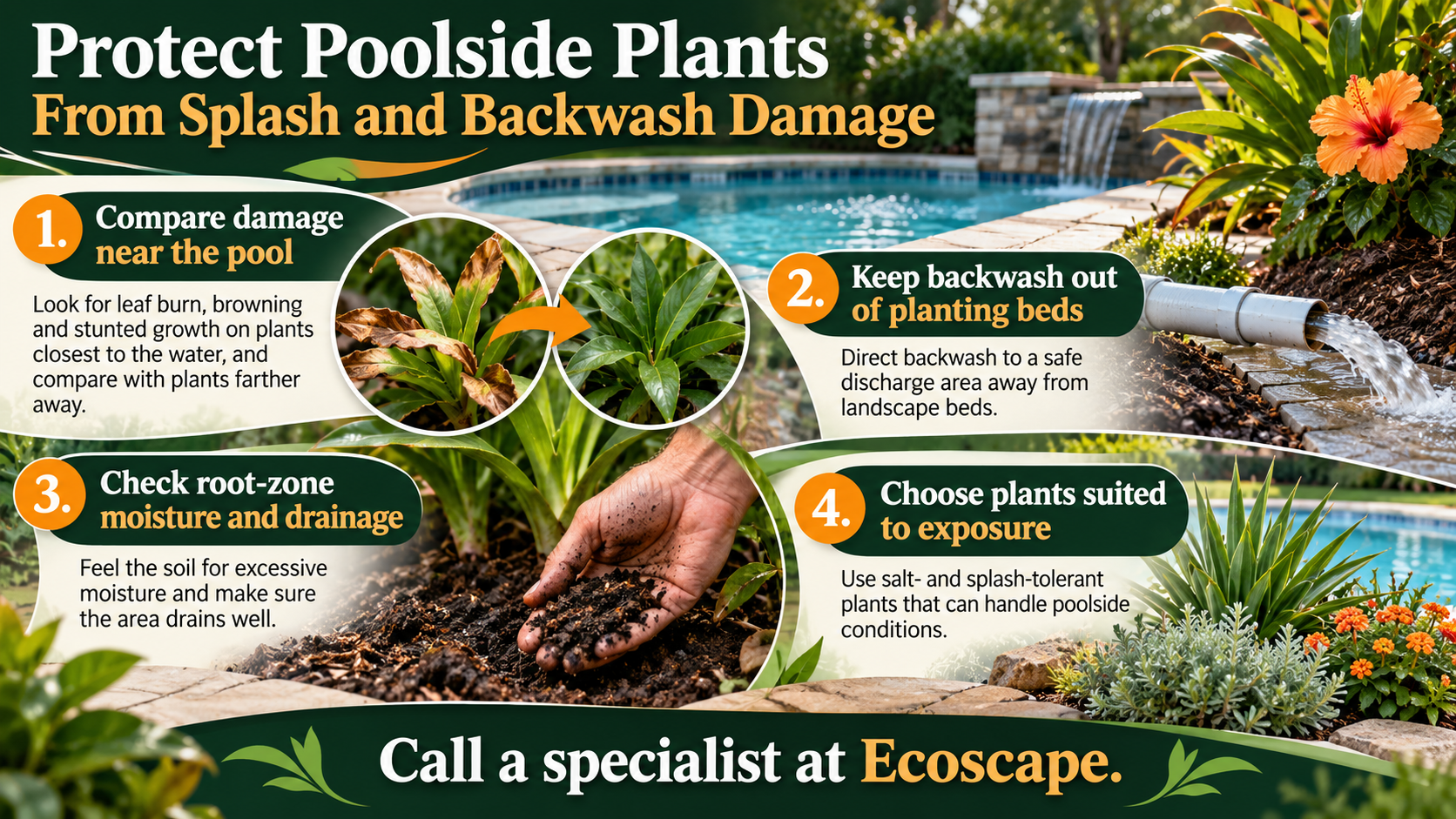
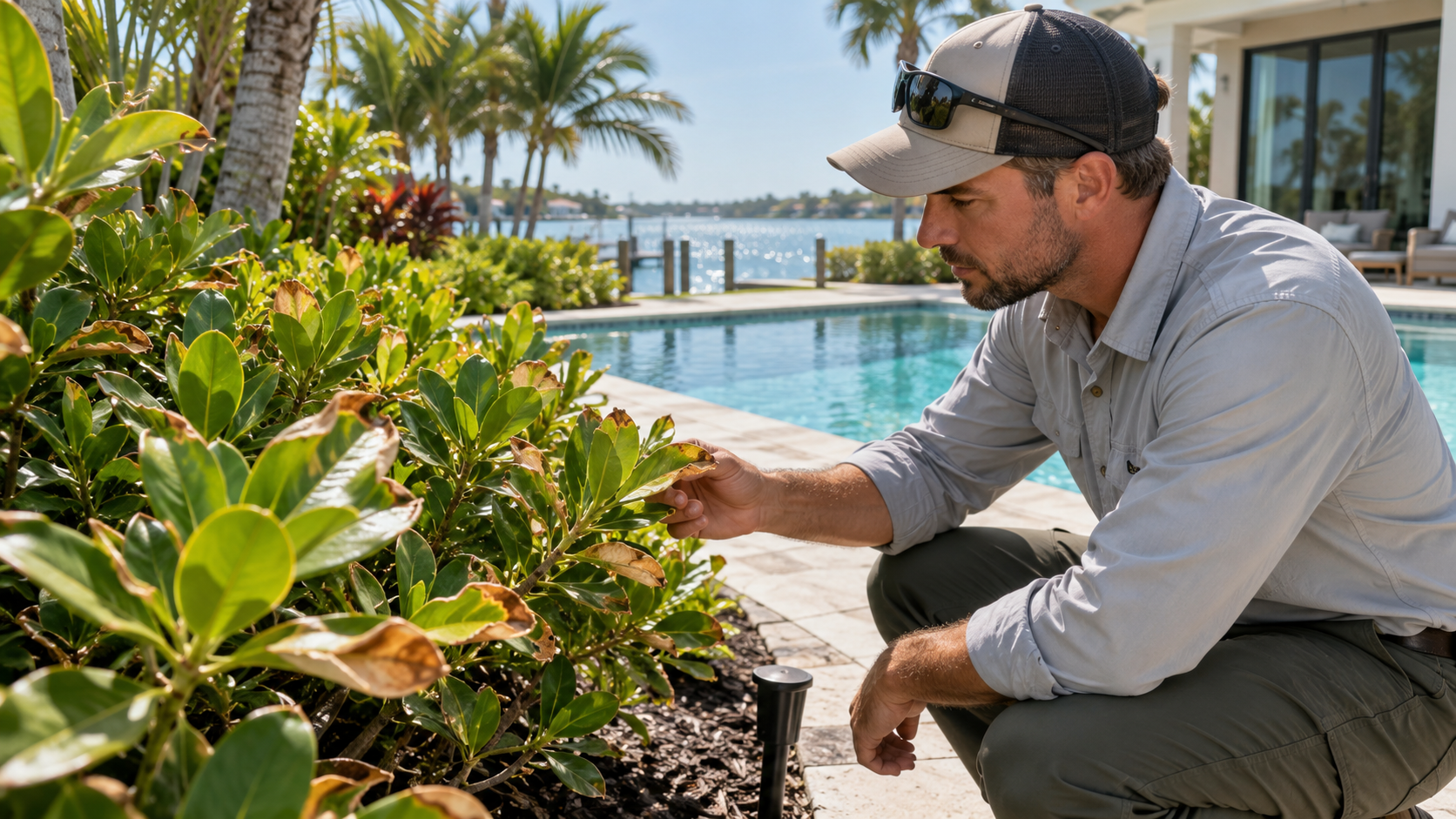
Poolside plants face reflected heat, restricted planting space, splash, and unusual water exposure. Brown leaf margins near a pool do not prove chemical injury. Drought, excess moisture, pests, and fertilizer salts produce overlapping symptoms. Compare the pool-facing foliage with sheltered leaves and similar plants farther away. Record when discoloration started and whether it followed heavy pool use, equipment maintenance, or a change in irrigation.
Separate Splash From Drainage
Small occasional splashes differ from repeated soaking or concentrated discharge. Saltwater pools contain dissolved salt, and recurring exposure warrants attention for sensitive plants. A bed receiving backwash or drained pool water also faces a drainage problem. Identify where equipment hoses and discharge lines terminate. Keep concentrated pool chemicals and maintenance waste out of planting beds. Ask your pool professional to arrange discharge in accordance with applicable local requirements.
Inspect the Root Zone
Check moisture beneath the mulch before adding water. Wet soil, poor drainage, buried stems, and irrigation overspray stress roots independently of the pool. A hot paved edge also dries a narrow bed faster than a shaded area. Photograph damaged leaves and inspect stems and leaf undersides. Review recent treatments and maintenance activity. When several causes remain possible, a soil or water test gives better direction than selecting a treatment from leaf color alone.
Reduce Repeated Exposure
Move chemical storage and mixing away from plants. Adjust irrigation so beds receive appropriate root-zone watering without adding chronic saturation. Review the location of splash-prone seating, play areas, and water features. Where practical, increase separation between delicate foliage and frequent splash. After incidental salt exposure, gentle fresh-water rinsing of foliage is useful. Root-zone flushing requires adequate drainage and an appropriate irrigation plan. Flooding an already saturated bed adds another source of stress.
Choose Plants for the Location
Evaluate light, mature size, salt tolerance, drainage, and maintenance access before replacing a declining shrub. Tolerance of airborne salt does not guarantee tolerance of concentrated discharge or permanently wet roots. Leave access to pool equipment and preserve walkway clearance. Avoid crowding the bed with plants requiring incompatible watering. A smaller number of suitable plants often performs better than a dense installation repeatedly exposed to splash and reflected heat.
Coordinate Pool and Landscape Maintenance
Tell both your pool service and landscape crew where water discharge and sensitive planting areas are located. Keep hoses from draining into the same bed each visit. Recheck after pool equipment repairs or changes to deck drainage. Photograph the bed from a fixed location so the pattern of injury is clear. Before installing replacement plants, address the exposure causing repeated decline. Choosing tougher plants without correcting concentrated discharge leaves the planting bed vulnerable to the same problem.
Monitor New Growth
Existing scorched leaves seldom regain their original appearance. Judge recovery by healthy new growth and stable root-zone moisture. Avoid heavy fertilization or drastic pruning while the cause remains uncertain. Keep dated photos and note whether injury continues after exposure changes. Ecoscape reviews poolside layout, irrigation, drainage, and plant selection together to plan a lasting correction. Call a specialist at Ecoscape.
Helpful Resource