
Protect Tree Health by Keeping the Root Flare Visible
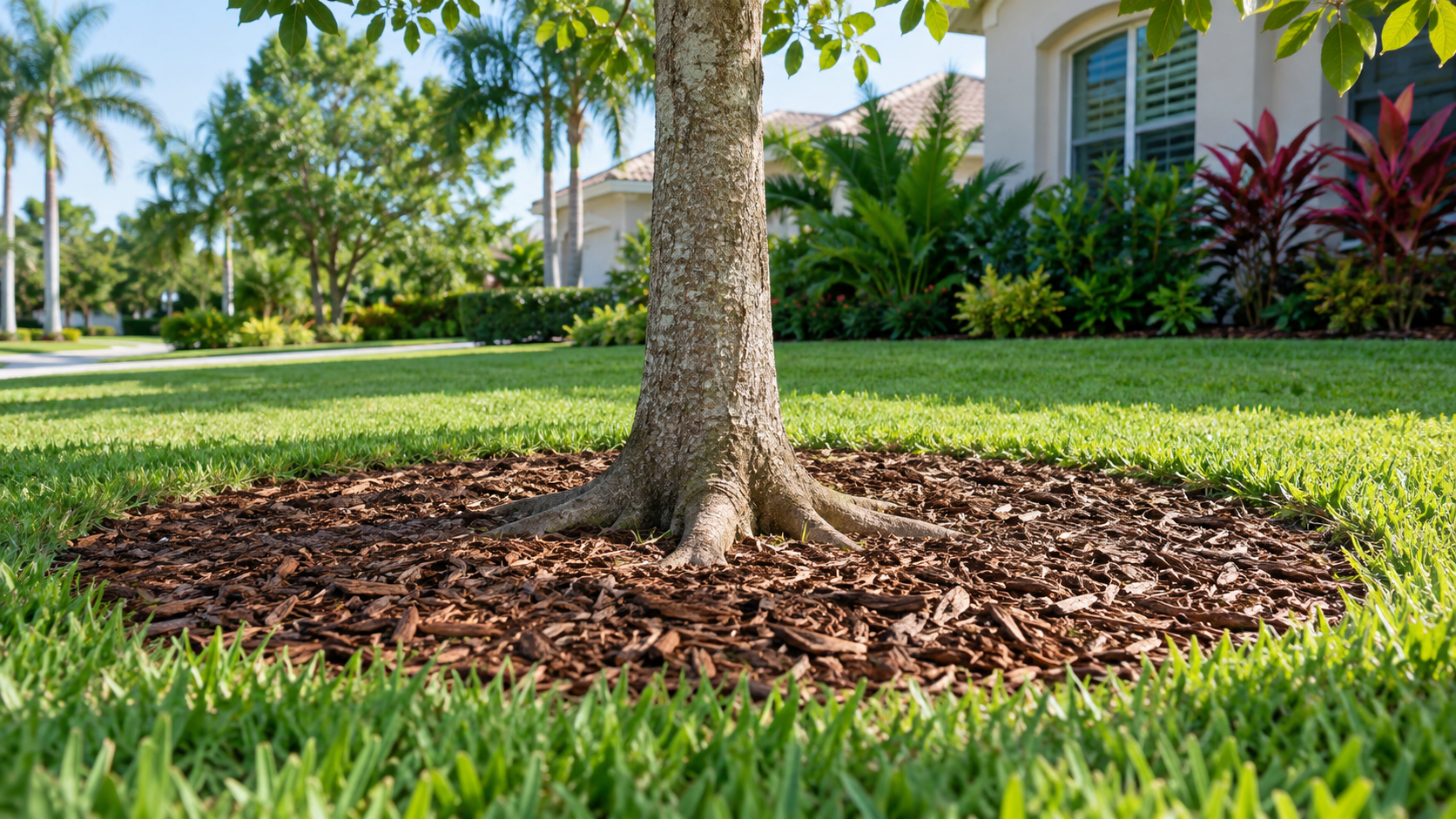
Find the Root Flare
A healthy tree trunk widens where it meets the main structural roots. This widened area is the root flare. It should remain visible at or slightly above the surrounding grade. When the trunk enters the soil like a straight pole, the tree might have been planted too deeply or buried by added soil and mulch. Locating the flare is the first step toward correcting the condition.
Why Buried Trunks Decline
Tree bark is built for air exposure, not constant contact with wet soil or mulch. Burial keeps the lower trunk damp, limits oxygen around roots, encourages decay, and invites roots to circle the trunk. Those roots can press against expanding tissue and restrict movement of water and nutrients. Decline develops slowly, so thinning foliage or poor growth might appear years after the original planting mistake.
Remove Excess Material Carefully
Pull mulch away by hand and expose the trunk gradually. If soil covers the flare, use care around fine and structural roots. Avoid chopping, scraping bark, or cutting large roots without professional guidance. Do not create a deep bowl that collects water. The finished grade should reveal the flare while moving rainfall away from the trunk. Severe burial might require an arborist’s root-collar excavation.
Build the Mulch Ring Correctly
Create a broad mulch ring two to three inches deep over the root zone, then taper it to nothing several inches before the trunk. Keep the ring level and open rather than piling mulch into a cone. A broad ring reduces mower and string-trimmer damage, moderates soil temperature, and conserves moisture. Add only enough fresh mulch to replace material that has decomposed.
Watch for Circling Roots
Inspect the exposed collar for roots wrapping around or crossing the trunk. Small problem roots sometimes receive corrective pruning, while large girdling roots require assessment because removal affects stability and water uptake. Never cut major roots based on appearance alone. Also check nursery containers before planting. Correct circling roots early and set the tree at the proper depth from the start.
Prevent the Problem From Returning
Landscape renovations often add soil, sod, rock, or mulch around established trees. Keep those materials away from the root flare. Do not build raised beds against trunks or place edging where it severs important roots. After heavy rain, confirm water does not pond around the collar. Recheck the mulch ring during each seasonal cleanup because crews might unintentionally push material back against the bark.
Protect the Tree as the Landscape Changes
Ecoscape Outdoor Services installs and maintains tree rings with attention to grade, irrigation, mowing clearance, and long-term root health. We help South Tampa property owners correct excessive mulch, protect trunks from equipment, and recognize conditions needing a certified arborist. Keeping the root flare visible is a small maintenance detail with a major effect on the tree’s stability, vigor, and useful life.
