
Protect Tree Roots During Patio and Driveway Work
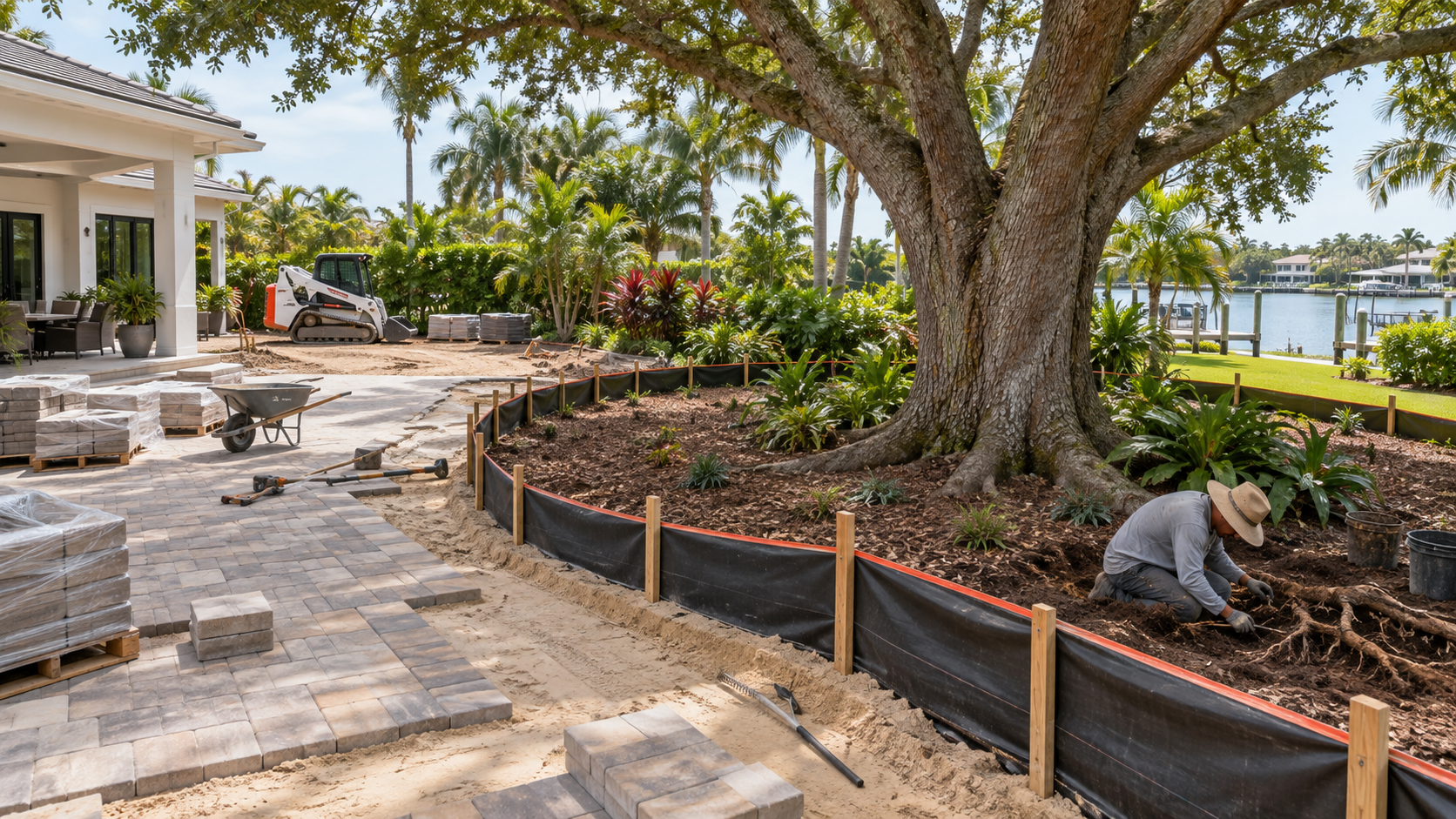
Roots Extend Beyond the Trunk
Most absorbing roots occupy the upper soil and spread well beyond the visible canopy. Patio, driveway, pool, walkway, and wall projects can cut those roots or compress the soil around them. Damage may not appear in the canopy for months. A mature tree that looks unchanged at project completion can decline through the next dry season or storm period. Root protection must begin during design, before equipment and materials reach the yard.
Map a Protection Zone
Measure the trunk and canopy, then mark the largest practical no-entry area around the tree. Use visible temporary fencing rather than a small ribbon beside the trunk. Include major surface roots and as much undisturbed soil as the project allows. Keep the barrier in place from demolition through final cleanup. An arborist may recommend a specific zone based on species, age, condition, trunk size, and the work proposed.
Plan Routes and Elevations
Choose equipment access, dumpster placement, material staging, and worker routes before construction begins. Keep vehicles and repeated foot traffic outside the protected soil. Confirm finished grades around the tree. Adding soil reduces oxygen to roots, while removing soil exposes and cuts them. Do not slope a new patio toward the trunk or trap water inside a raised border. Integrate drainage with the hardscape plan from the start.
Excavate Carefully Near Roots
Use hand tools or specialized low-impact excavation near the protection boundary. Expose roots cleanly before deciding how the design should respond. Do not tear roots with a trencher or excavator bucket. Route irrigation, drainage, lighting cable, and conduit around major roots whenever possible. If a root conflicts with essential work, obtain qualified guidance before cutting it. Root size, position, and contribution to stability all matter.
Keep Soil Open and Clean
Never store pavers, pallets, sand, soil, dumpsters, or fuel inside the root zone. Prevent concrete washout, paint, solvents, and construction debris from reaching the soil. Do not cover roots with an impermeable sheet for long periods. Maintain appropriate moisture during the project, especially in hot, dry weather, without saturating disturbed ground. Keep existing mulch at a proper depth and away from the trunk flare.
Watch for Delayed Stress
After construction, inspect leaf size, canopy density, early color change, branch dieback, soil moisture, and fungal growth. Compare photographs from before the project. Avoid heavy fertilizer intended to force recovery. Provide measured irrigation based on soil conditions and preserve remaining root space. New decline, cracking soil, root-plate movement, or large dead branches require professional evaluation. Continue monitoring across at least one wet and one dry season.
Coordinate the Entire Project
Ecoscape Outdoor Services helps South Tampa property owners plan planting, irrigation, drainage, lighting, edging, and material installation around established trees. We identify root conflicts early, protect work zones, and adjust layouts before unnecessary damage occurs. Large-tree stability and major root decisions deserve input from a qualified arborist. Coordinating landscape and hardscape work protects the tree, the new construction, and the client’s investment in both.
