
Prune Crape Myrtles Without Topping Them
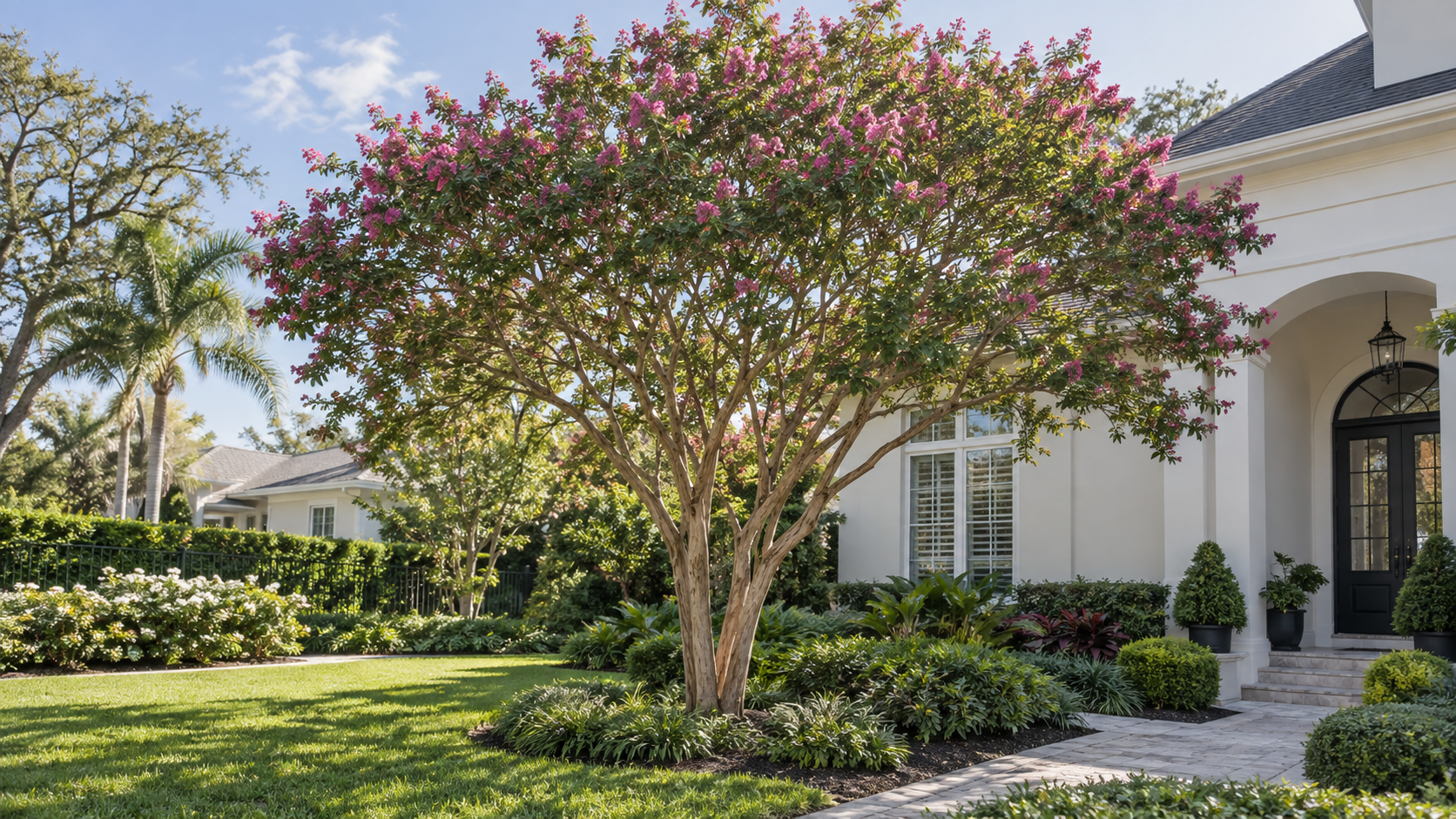
Topping Creates Long-Term Problems
Cutting every crape myrtle stem back to the same height leaves large stubs and removes the tree’s natural canopy. The response is a cluster of fast, weak shoots near each cut. Those shoots crowd one another, catch wind, and require repeated correction. Topping also creates large wounds and destroys the graceful branching structure people value. A healthy crape myrtle normally flowers without being reduced to bare poles each year.
Begin With a Clear Goal
Decide whether the tree needs clearance, removal of damaged wood, improved structure, or simple cleanup. Pruning should solve a defined problem. Step back and identify the main trunks and permanent scaffold branches before making a cut. Preserve the natural vase-shaped or spreading form of the cultivar. If the tree is too large for the site, continual severe pruning is not a lasting solution. Replacement with a smaller cultivar may produce a better result.
Choose the Right Branches
Remove dead, broken, rubbing, or inward-growing branches first. Thin selected crowded stems to improve structure without stripping the canopy. Remove basal suckers and small shoots growing directly from the trunk when they are not part of the intended form. Keep strong outward-growing branches. Do not remove every small twig. Fine branches support flowering and help the canopy retain a natural appearance.
Make Proper Cuts
Cut just outside the branch collar where the branch joins a trunk or larger limb. Do not leave a long stub and do not cut flush against the trunk. Use sharp bypass pruners for small wood, loppers for medium branches, and a pruning saw for larger cuts within safe reach. Support heavier branches and use a three-cut method to prevent bark tearing. Never use hedge shears to shape an entire crape myrtle canopy.
Work at a Safe Time and Height
Late winter often provides a clear view of branch structure before strong spring growth, but dead or hazardous wood deserves prompt attention. Avoid excessive pruning during active stress from drought, construction, or root damage. Keep both feet on the ground when possible. Do not work near power lines or climb with cutting tools. Large limbs, tall trees, and uncertain defects belong with a qualified tree professional.
Avoid Cosmetic Over-Pruning
Do not chase a perfectly symmetrical canopy. Trees grow around light, buildings, and earlier cuts. Avoid removing more live foliage than the goal requires. Heavy annual pruning weakens structure and increases maintenance. Do not apply wound paint to routine pruning cuts unless a qualified professional identifies a specific need. After pruning, keep mulch off the trunks and avoid heavy fertilizer intended to force rapid replacement growth.
Review New Growth
Inspect the tree after spring growth and again following strong summer weather. Watch for weak shoot clusters, bark tears, rubbing branches, and suckers. Ecoscape Outdoor Services helps South Tampa clients maintain small ornamental trees, improve clearance, and preserve attractive natural form. We focus on selective cuts and clean properties instead of routine topping. When height, power lines, or structural risk exceeds landscape-maintenance work, we recommend qualified tree-care support.
