Prune Tropical Hibiscus Without Delaying Its Next Bloom
Choose timing before making cuts
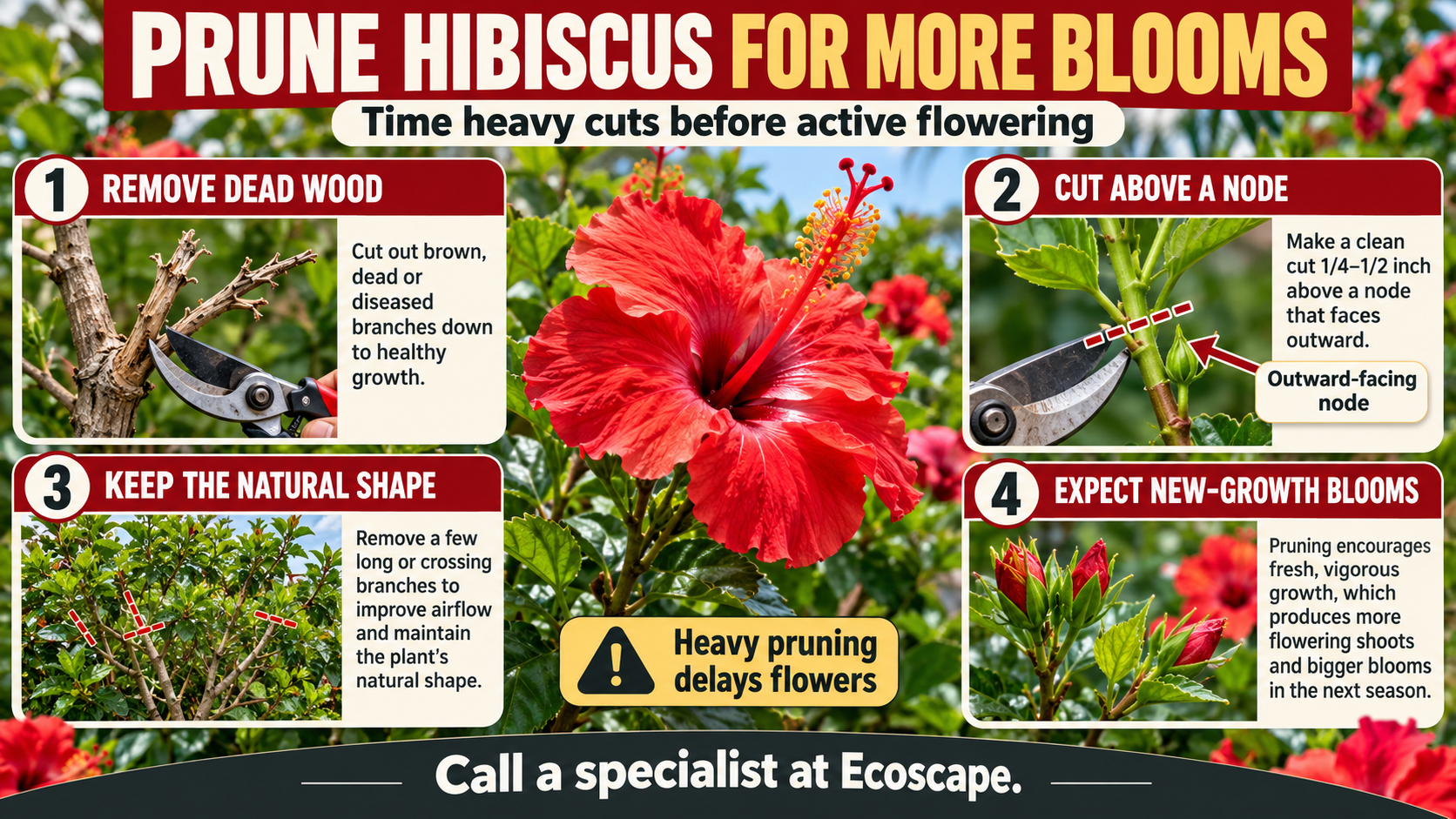
Prune Tropical Hibiscus Without Delaying Its Next Bloom by separating light maintenance from major size reduction. Tropical hibiscus produces flowers on fresh growth. Heavy pruning during an active bloom cycle removes buds and delays the next display while the shrub replaces stems and leaves. In South Tampa, schedule major shaping before the strongest growing and flowering period. Remove dead, broken, or diseased wood whenever found.
Inspect the shrub from every side
Stand back and identify the plant’s natural outline, longest branches, crowded center, crossing stems, and areas rubbing a wall or walkway. Decide which branches need shortening before cutting. A few selective cuts preserve more foliage and flowering wood than shearing the entire surface. Check for irrigation equipment, lighting cable, windows, and neighboring plants hidden beneath dense growth.
Use clean sharp bypass pruners
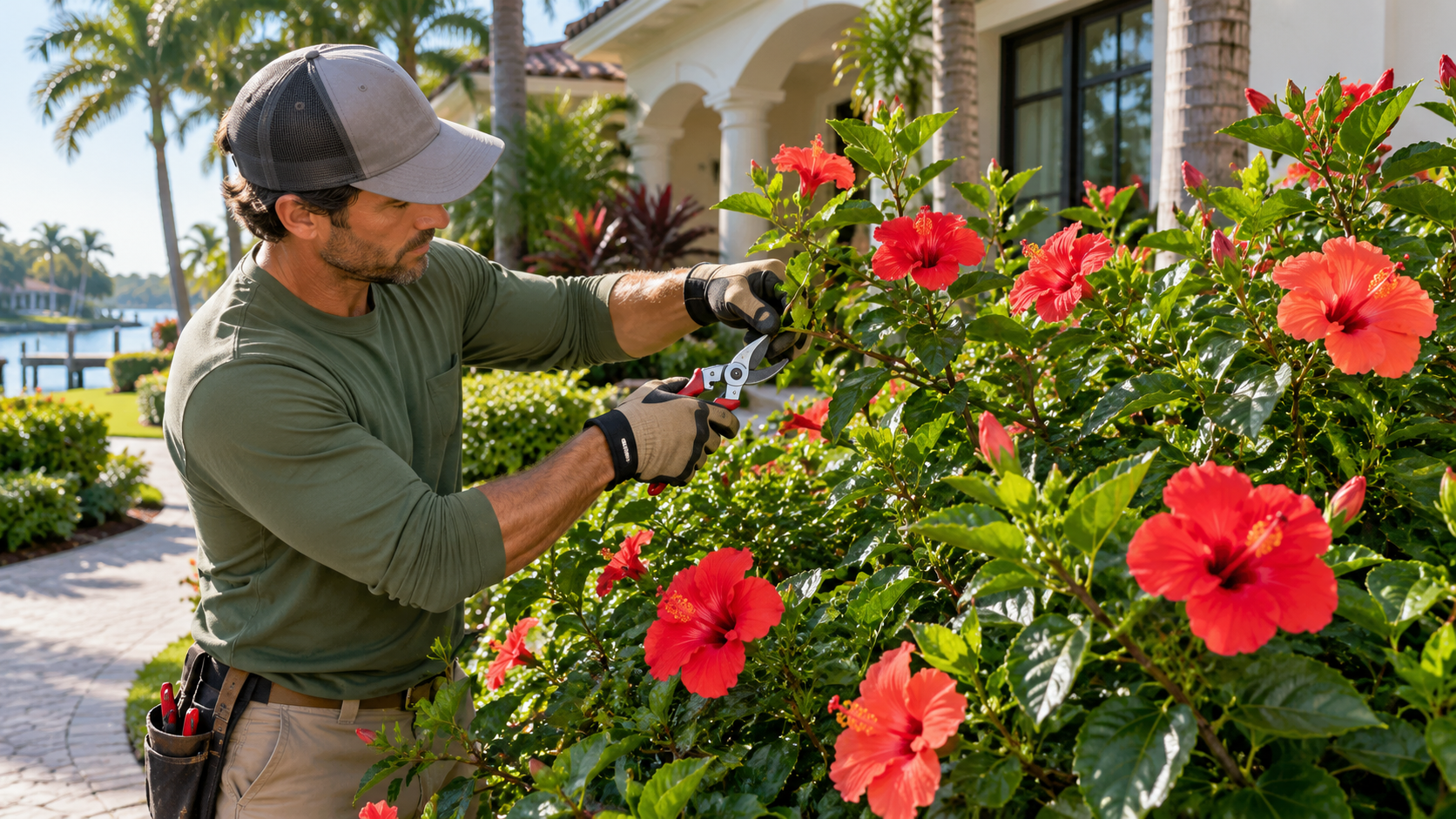
Sharp bypass pruners create a smooth cut without crushing soft hibiscus stems. Clean the blades before moving between shrubs, especially when leaf spots, stem dieback, or pests appear. Wear gloves and eye protection. Use loppers only for thicker branches within the tool’s rated capacity. A dull blade tears bark and leaves rough tissue near the cut.
Cut above an outward-facing node
Trace an unwanted stem back to a healthy side branch or outward-facing leaf node. Place the cut slightly above the node without leaving a long stub. New shoots usually develop below the cut, so node direction helps guide future growth. Remove crossing, inward-growing, damaged, and weak stems first. Shorten remaining long shoots at different heights to retain a natural layered form.
Avoid repeated surface shearing
Frequent shearing creates dense outer growth and a shaded interior with fewer leaves. The shrub slowly becomes wider at the edge while bare woody stems develop inside. Shearing also removes many developing buds at once. Use selective hand pruning for most routine hibiscus care. When a formal hedge shape is required, keep the top slightly narrower than the base so sunlight reaches lower foliage.
Support recovery without forcing growth
Water the root zone according to soil moisture and weather instead of adding extra water after pruning. Keep mulch off the main stems. Avoid a heavy fertilizer application intended to force instant recovery. Watch new shoots for aphids, whiteflies, scale, or distorted growth. Blooming resumes after the plant develops enough fresh flowering wood, so recovery time rises with pruning severity.
Schedule careful hibiscus pruning
Ecoscape Outdoor Services will assess plant size, bloom stage, access, branch structure, and nearby surfaces before pruning. Schedule service when hibiscus blocks windows, crowds walkways, develops a bare interior, or needs controlled reduction without a severe cutback. Helpful references: UF/IFAS tropical hibiscus guidance and UF/IFAS hibiscus pruning guidance.