
Read Palm Frond Yellowing Before You Prune
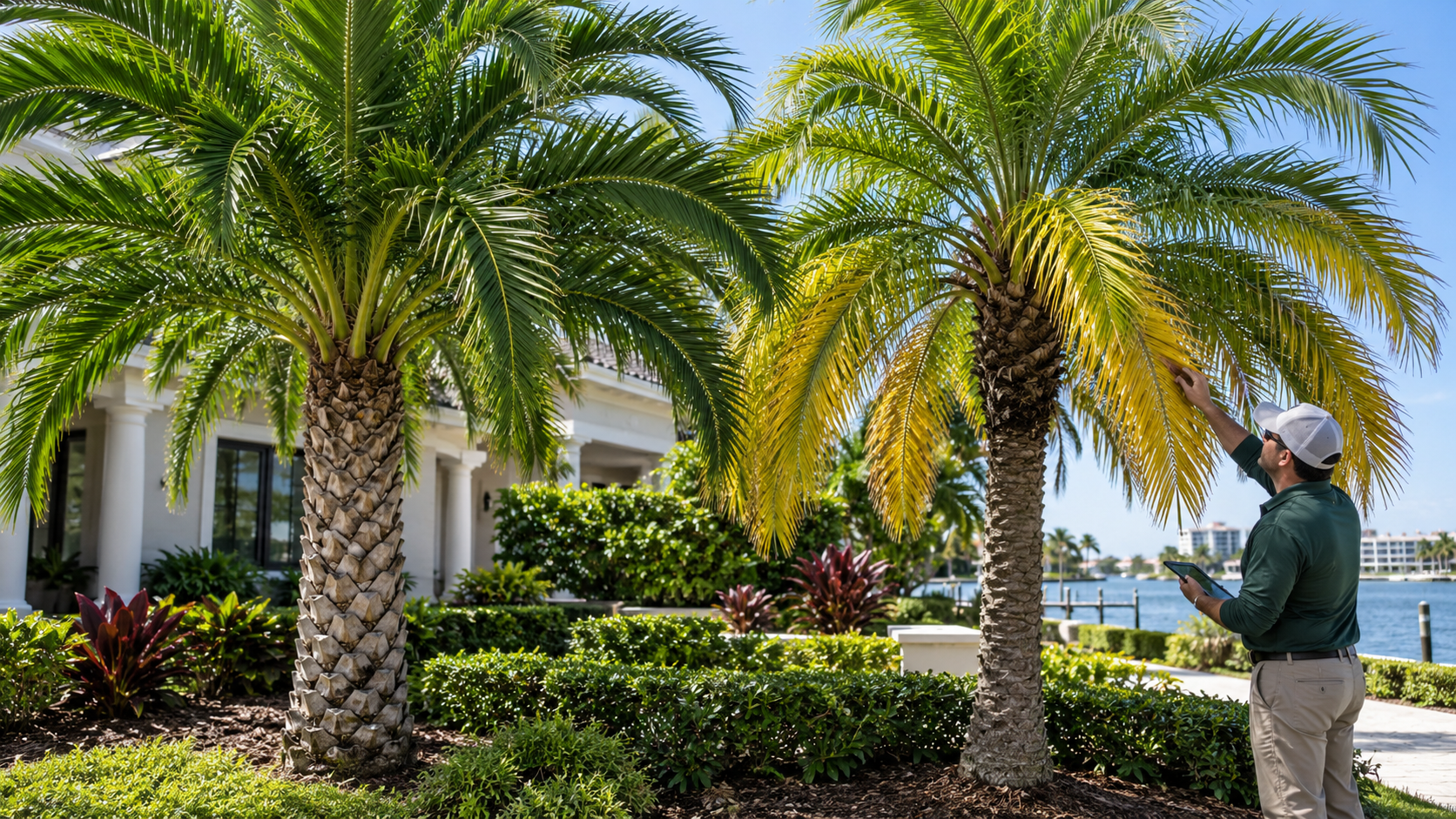
Yellow Fronds Tell a Story
Palm yellowing does not automatically mean the frond should be removed. Older lower leaves naturally decline, while yellow bands, spotting, frizzling, or color loss in newer growth point toward different stresses. Water, drainage, nutrient availability, planting depth, trunk injury, and disease all affect appearance. Read where symptoms begin and how they progress before pruning or choosing a treatment.
Inspect the Whole Palm
Stand back and compare the canopy on all sides. Note whether yellowing affects the oldest lower fronds, middle canopy, or newest spear. Examine leaflets, petioles, trunk, root zone, irrigation pattern, and nearby grade. Check whether mulch or soil covers the base. Photograph symptoms and mark the date. Pattern and progression provide better evidence than one isolated yellow leaf.
Protect Green Fronds
Green fronds manufacture energy and store mobile nutrients. Removing them to create a tight hurricane cut weakens the palm and narrows the canopy. Prune only dead, broken, or hazardous fronds unless a qualified diagnosis calls for another action. Keep cuts away from the trunk and never injure the bud. Sterilize tools between palms when disease concerns exist and use trained professionals for elevated work.
Consider Florida Site Conditions
South Tampa palms face sandy soils, irrigation differences, salt exposure, wind, construction disturbance, and heavy summer rain. Waterlogged roots and drought stress sometimes produce similar color loss. Check soil moisture below the surface before adding water. Confirm drainage and emitter placement. Nutrient symptoms need a palm-specific program managed within Florida licensing requirements rather than random household products.
Avoid Common Responses
Do not strip yellow fronds without identifying the cause. Avoid driving nails, climbing spikes, or equipment into living trunks. Never fill cavities, paint wounds, or bury the root initiation zone. Do not apply a quick fertilizer dose before checking irrigation and drainage. Keep lawn equipment away from the trunk. Repeated string-trimmer injury opens tissue and creates damage the palm cannot seal like a woody tree.
Track the New Growth
The newest leaves reveal whether conditions are improving. Existing yellow tissue rarely returns fully green, so judge progress through healthier emerging fronds and a stable spear. Reinspect monthly, using photos from the same angle. Escalate quickly if the spear loosens, the canopy collapses, the trunk leaks, or decline spreads rapidly. Remove hazardous palms only after a qualified evaluation.
How Ecoscape Outdoor Services Helps
Ecoscape Outdoor Services maintains palm areas with careful pruning, clean root zones, irrigation observation, and detailed property inspections. Our South Tampa crews avoid harmful overpruning and flag unusual yellowing before it becomes hidden by cosmetic cuts. We coordinate appropriate next steps when symptoms require a licensed treatment provider or tree specialist, while keeping surrounding beds, turf, lighting, and drainage orderly.
