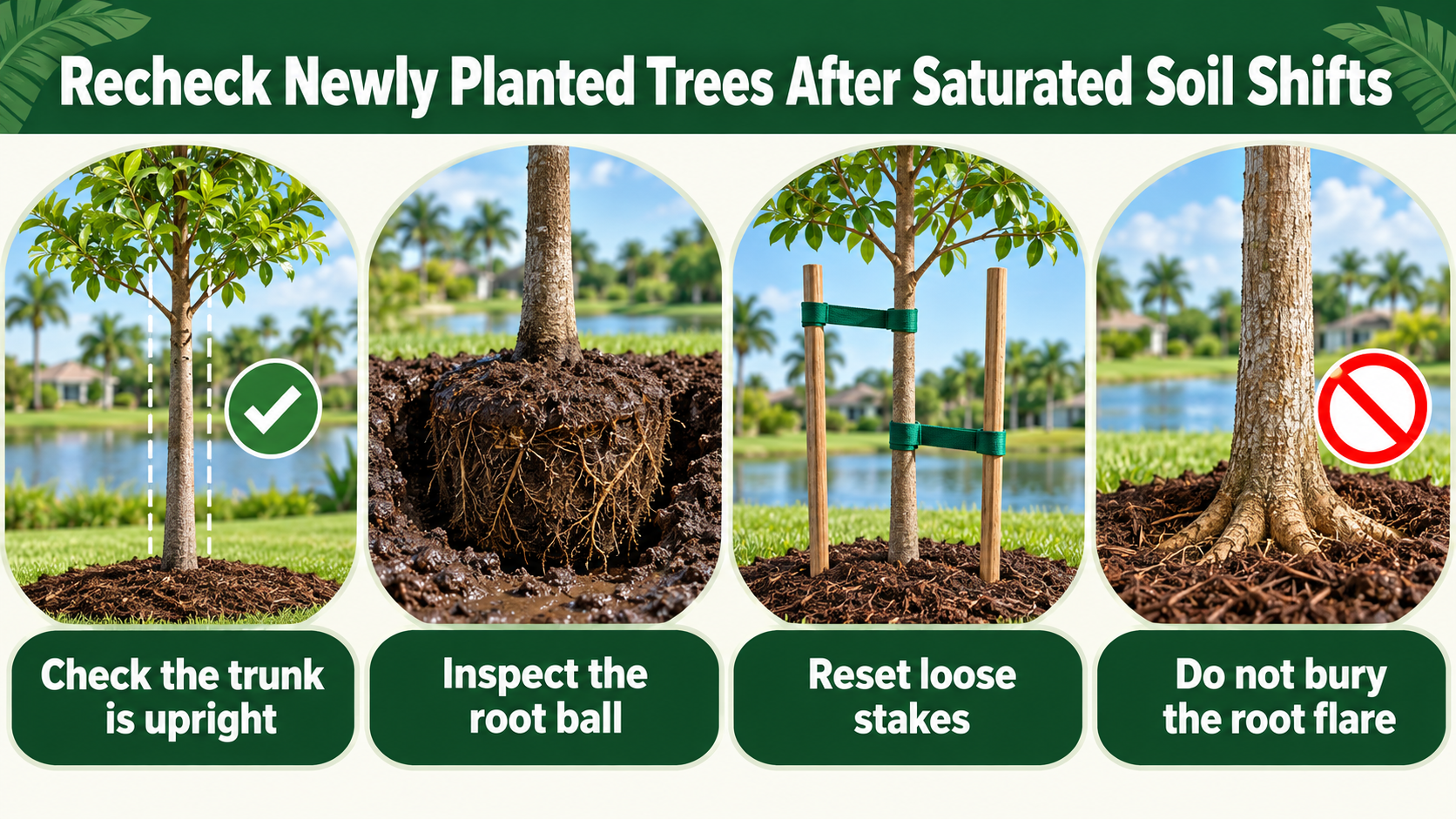
Recheck Newly Planted Trees After Saturated Soil Shifts
Soft Soil Changes Tree Stability
New trees rely on a limited root ball until roots grow into surrounding soil. Heavy Florida rain softens backfill and may create gaps, settlement, or movement around the root ball. Wind adds leverage against the canopy. A small lean caught early is easier to correct than a tree left to establish at the wrong angle.
Check the Trunk From Two Directions
Stand back and view the tree from the street and from the side. The trunk should appear upright even when natural branching is uneven. Do not use one branch as the reference point. Photograph the original position after installation, then compare it following strong rain or wind. Mark new movement instead of repeatedly adjusting a tree without evidence.
Inspect the Root Ball and Grade
Look for separation between the root ball and surrounding soil, exposed roots, sunken backfill, or water standing in the planting hole. The topmost major roots should remain near the soil surface. Do not solve settlement by piling soil or mulch against the trunk. If the entire root ball sank or rotated, careful resetting may be required before new roots extend.
Reset With Minimal Disturbance
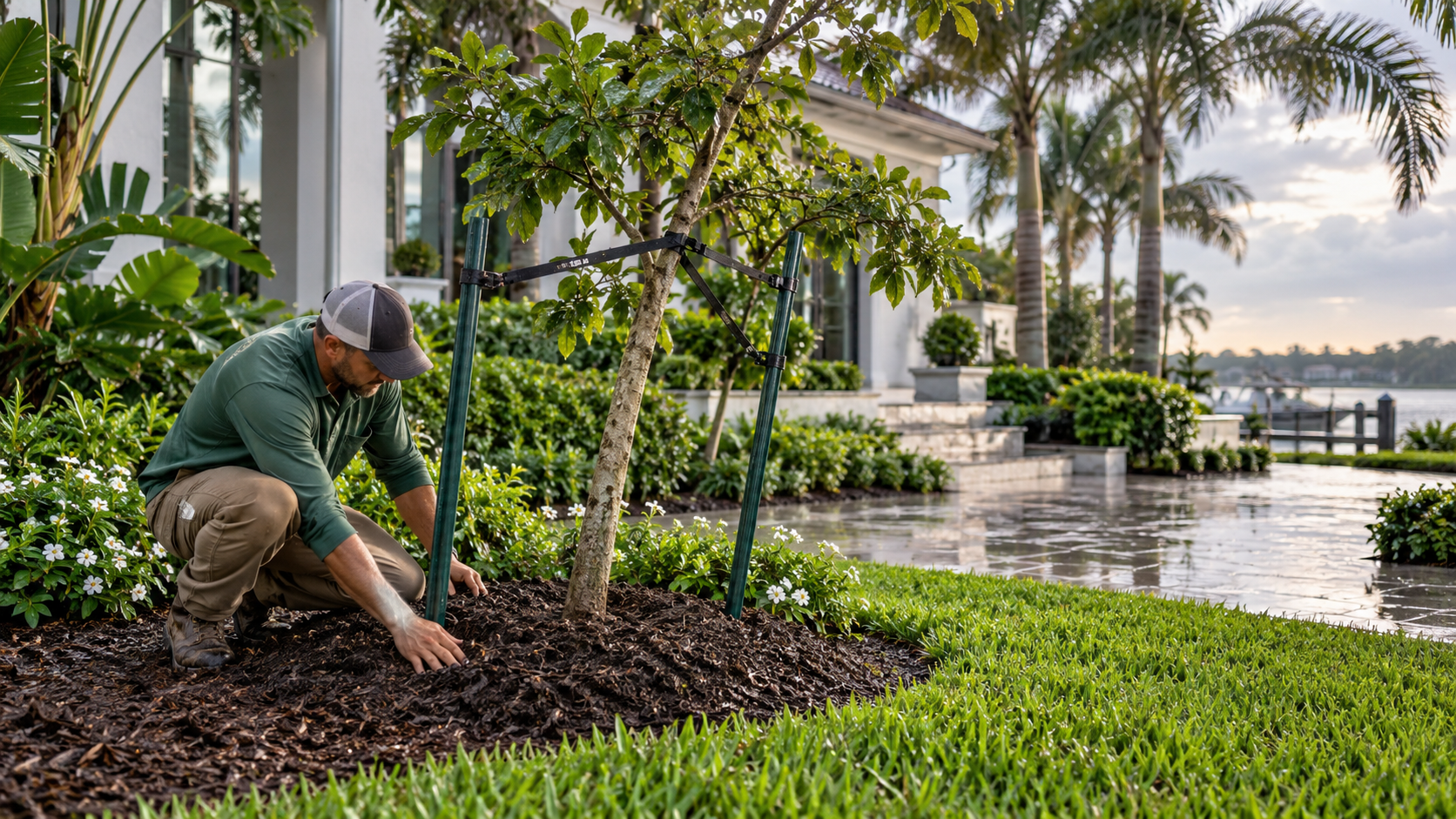
Correct the tree while soil is workable but not soupy. Support the root ball instead of pulling hard on the trunk. Reposition it gently, fill voids with the original suitable soil, and water enough to settle air pockets. Avoid stomping saturated soil tightly around the roots. Severe movement or a large tree requires professional equipment and judgment.
Adjust Stakes and Ties
Stakes should limit excessive root-ball movement while allowing slight trunk motion. Check ties for looseness, rubbing, and pressure against bark. Use broad flexible material, not wire or rope directly on the trunk. Reset stakes outside the root ball where possible. Remove support once the roots hold the tree firmly, based on establishment rather than a forgotten calendar date.
Protect the Root Flare
Keep mulch in a broad ring two to three inches deep and several inches away from the trunk. Remove soil or mulch deposited against the bark by runoff. A buried flare holds moisture against trunk tissue and hides girdling roots or decay. Recheck after landscape crews refresh beds because repeated small additions slowly raise the grade.
Monitor Every New Tree Through Rainy Season
Ecoscape Outdoor Services rechecks newly installed trees after major weather and adjusts planting details before problems become permanent. South Tampa storms test root-ball stability, drainage, and staking. An upright trunk, exposed root flare, stable grade, and flexible support give a new tree a far better start through its first wet season.
Source: UF/IFAS Gardening Solutions