Recognize Artillery Fungus Spots Near Mulched Beds
What Those Black Specks May Be
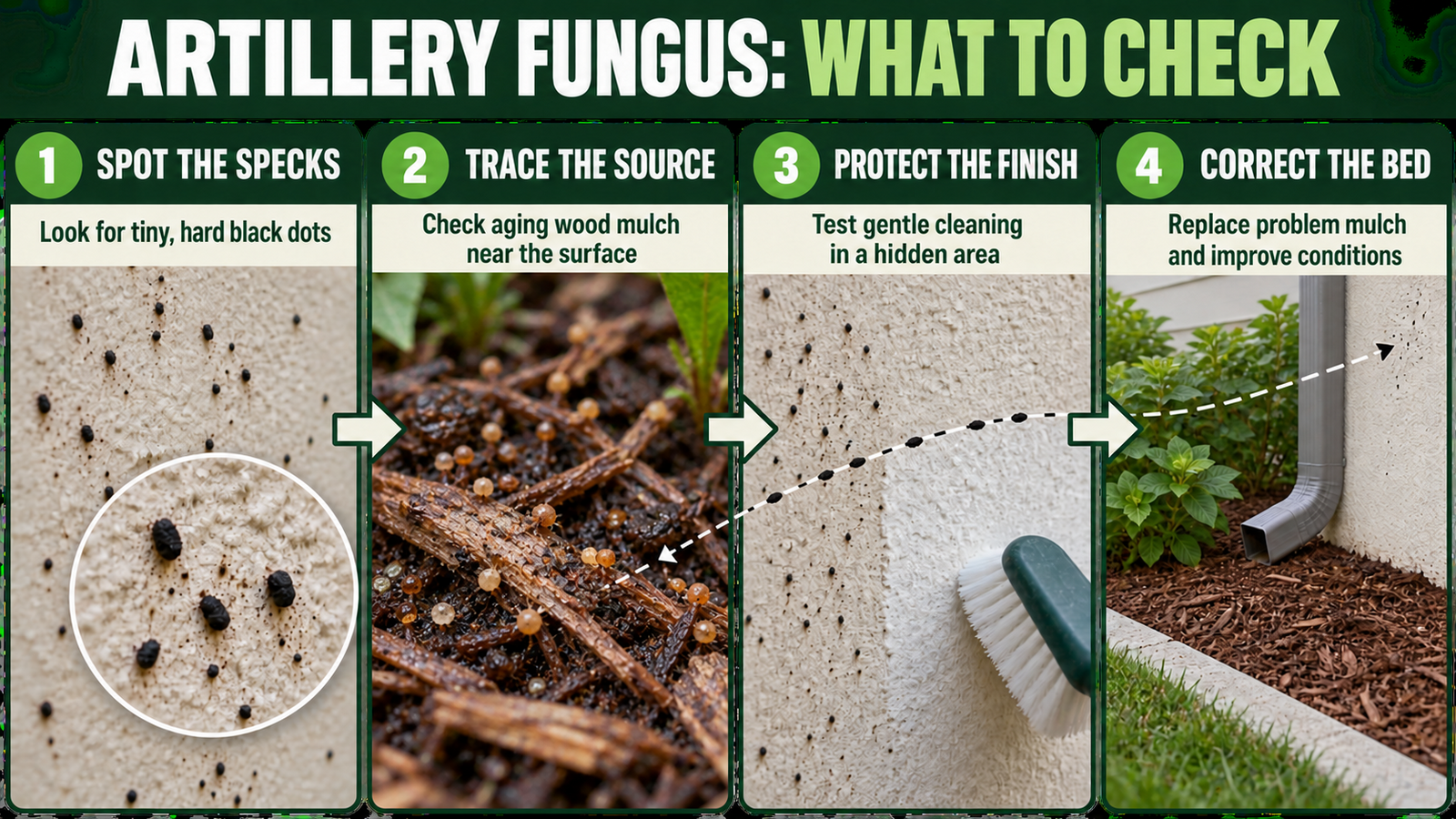
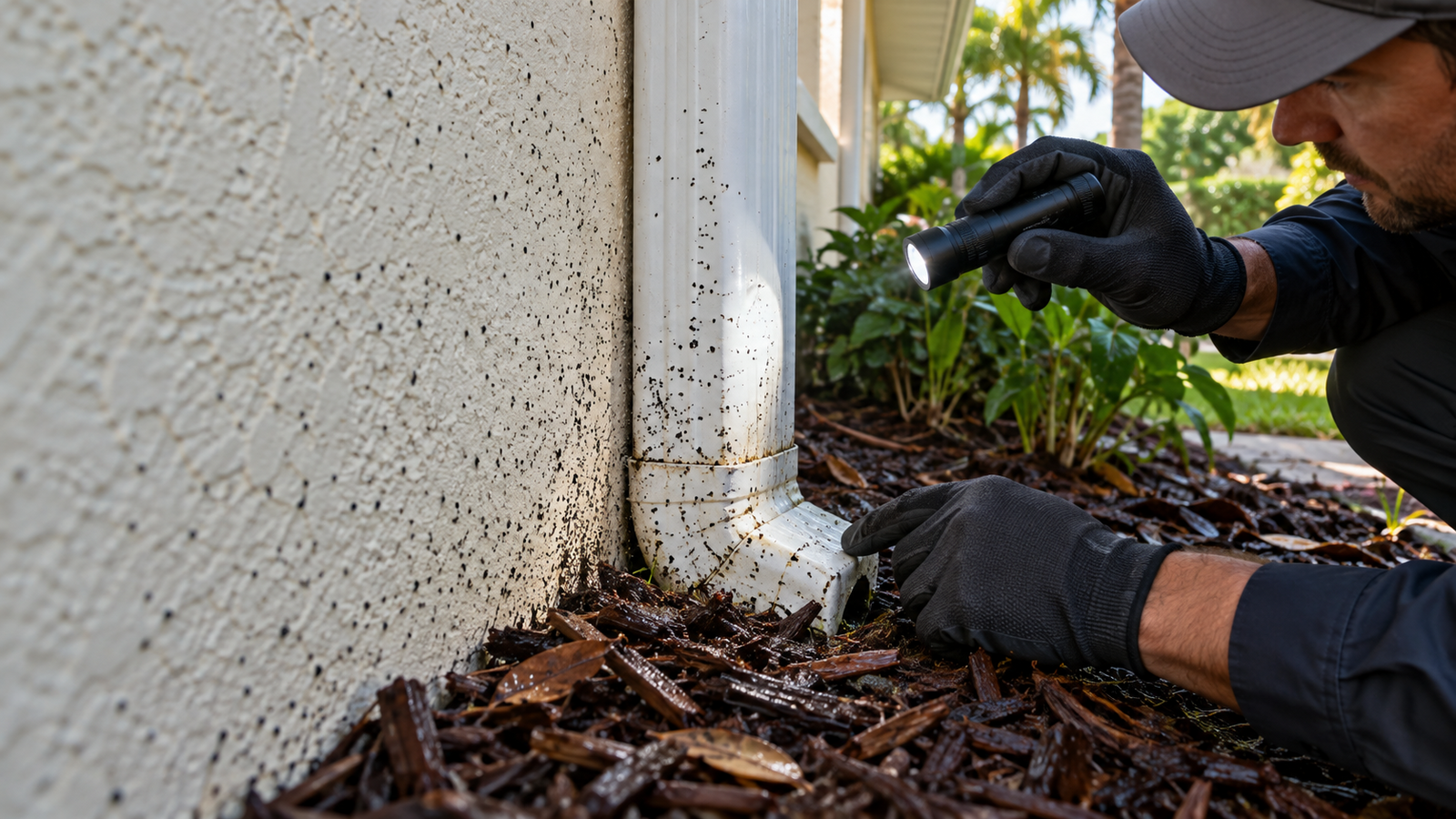
Artillery fungus is a small wood-decay fungus that can develop in damp organic mulch. Its fruiting bodies discharge sticky dark spore packets toward bright surfaces, where they resemble pepper, tar dots, or insect droppings. Spots often appear on light stucco, siding, windows, fences, and vehicles close to a mulched bed. The pattern is usually concentrated near the mulch and may reach surfaces several feet away. It is mainly a staining and maintenance problem, not a disease of the nearby lawn or ornamental plants.
How to Recognize the Pattern
Look for numerous tiny, round, dark brown or black dots that are firmly attached and difficult to wipe away. Check the direction and distance from the affected surface to damp wood mulch, especially on shaded sides of the property. In the bed, the fungus may appear as very small tan or orange-brown pinhead structures on decomposing wood. Similar marks can come from insects, roofing material, paint, or irrigation water, so do not identify the cause from one spot alone. Compare several surfaces and inspect the mulch carefully.
Why Florida Beds Can Support It
Warmth, humidity, shade, regular irrigation, and decomposing wood create favorable conditions. Beds that remain wet because of overspray, poor drainage, or thick matted mulch may be more likely to support fungal growth. Fresh mulch placed repeatedly over old material can create a deep, moist layer that breaks down unevenly. The fungus can occur in maintained landscapes without indicating neglect. The practical goal is to reduce persistently damp decaying wood near vulnerable surfaces, not to sterilize the bed or treat every harmless fungus as an emergency.
Clean a Small Test Area First
Fresh spots may be easier to remove than old ones, but the adhesive material can resist normal washing. Start with the gentlest method recommended for the surface, using water and a soft nonabrasive tool on a hidden test area. Avoid aggressive scraping, harsh chemicals, or high pressure that could damage paint, stucco, glass coatings, or seals. Follow the building-material manufacturer's care guidance when available. Older spots may leave stains even after the raised material is removed, so expectations should be realistic before treating a large visible area.
Correct the Mulch-Bed Conditions
Rake compacted mulch to improve drying and remove badly decomposed material when the layer has become deep or matted. Keep mulch at an appropriate depth and away from direct contact with walls, window frames, and plant stems. Adjust sprinkler arcs so the bed receives only the water its plants need. Correct standing water or runoff that keeps the area wet. In high-risk locations beside light walls or parked vehicles, consider a suitable non-wood surface treatment as part of a broader landscape design and drainage review.
Mistakes That Make the Problem Worse
Do not cover a wet, decaying layer with more wood mulch and assume the source is gone. Avoid soaking the bed daily to suppress dust or freshen its appearance. Fungicide applications are not a dependable substitute for correcting moisture and decomposing material. Do not aim pressure-washing equipment at delicate finishes or sealed openings. Finally, do not blame a lawn pest or plant disease based only on the word fungus. The useful clues are the sticky spot pattern, nearby organic mulch, and conditions that keep the bed damp.
When to Ask Ecoscape for Help
Monitor the area after cleaning and bed correction, especially through Florida's wet season. New spots indicate that the source conditions remain active or that affected material was not fully addressed. Ecoscape Outdoor Services can inspect the mulch depth, irrigation overspray, drainage, and layout near stained surfaces, then recommend practical bed changes. Book an Ecoscape on-site assessment if pepper-like spots keep returning, or schedule a free quote when you want to replace a problem mulch zone with a lower-maintenance landscape treatment.