Recognize Cycad Aulacaspis Scale Before Sago Fronds Turn White
Recognize Cycad Aulacaspis Scale Before Sago Fronds Turn White
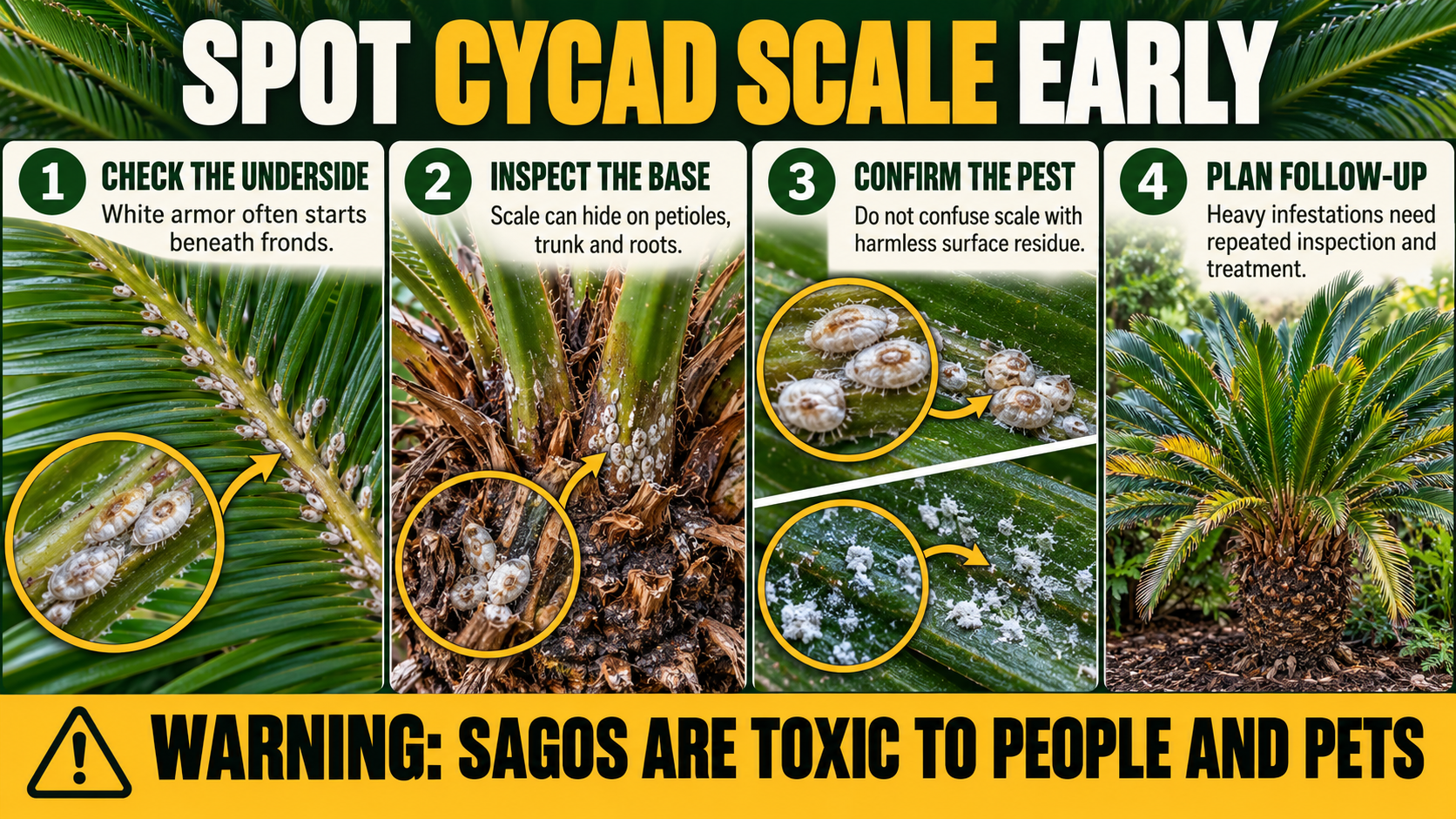
Cycad aulacaspis scale is an armored scale insect that attacks sagos and other cycads in Florida. Early colonies look like scattered white flecks, but a severe infestation forms a dense white crust over fronds, petioles, trunks, and sometimes roots. The insects remove plant sap and gradually weaken the cycad. Waiting until the entire crown looks white makes recovery slower and more expensive.
Start on the underside
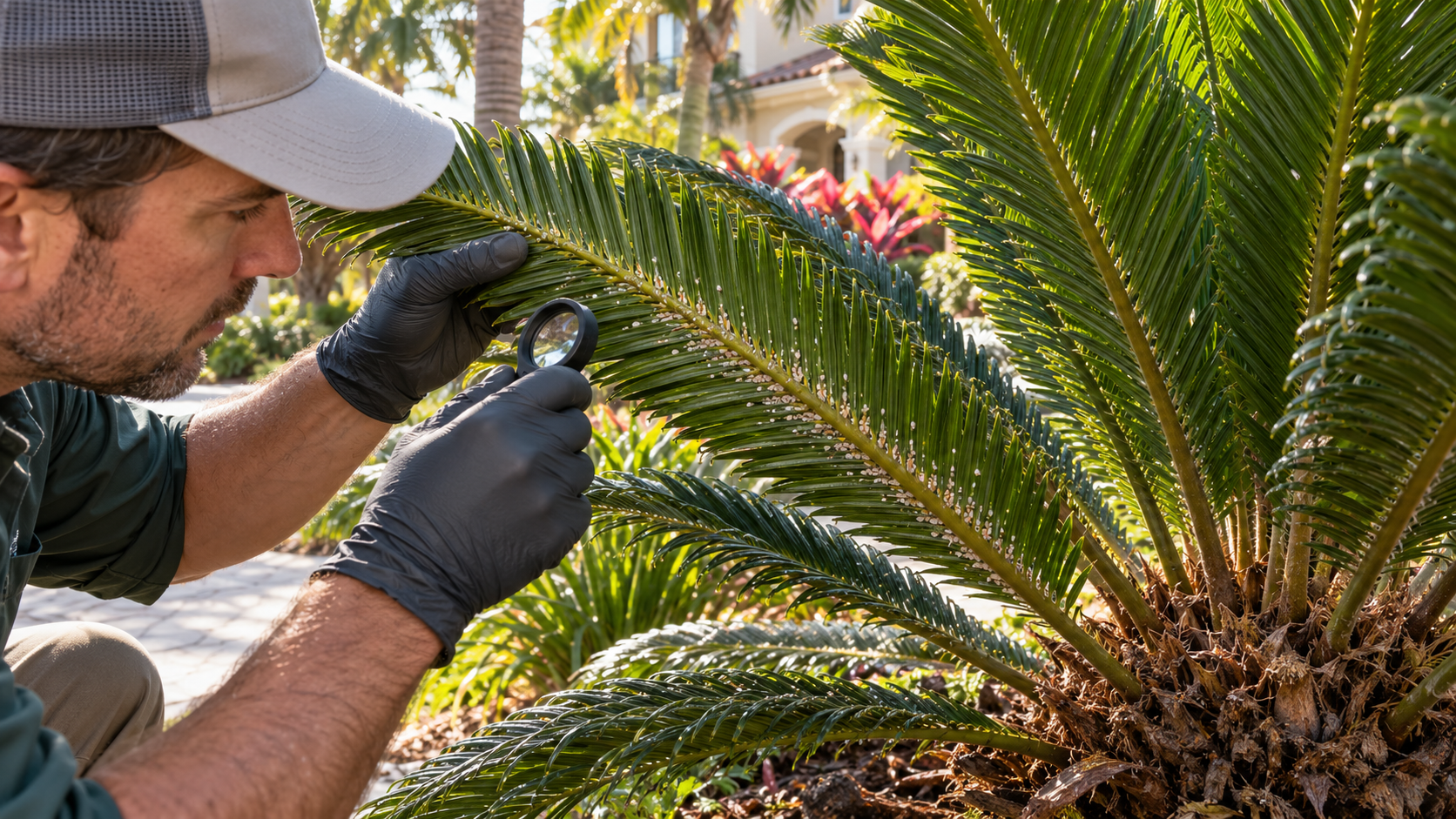
Inspect the undersides of older fronds first. Use bright light and a hand lens to look for tiny oval or elongated covers clustered along leaflets and the central stalk. Check several fronds because early populations are uneven. White residue alone does not prove an active infestation. Scale covers feel fixed to the plant, while mineral deposits or loose debris often wipe away more easily.
Inspect hidden areas
Look where leaf bases meet the trunk, around offsets, beneath old petiole stubs, and near the soil line. Cycad scale survives in protected crevices and on roots, so cleaning only the visible upper leaf surface rarely solves a heavy problem. Keep fallen infested material away from healthy cycads. Bag removed material instead of moving it through the landscape.
Protect useful foliage
Do not strip every green frond from an affected sago. The plant needs functioning leaves to rebuild energy. Remove dead, badly damaged, or heavily encrusted foliage with sanitized tools, then preserve sound growth whenever practical. Clean pruning tools before moving to another cycad. Wear gloves, long sleeves, and eye protection because sago palms are toxic to people and pets.
Plan repeated follow-up
Armored scale is difficult to manage because the waxy cover protects settled insects. Effective programs often combine careful inspection, targeted horticultural oil or another properly labeled product, and repeat treatment timed to vulnerable crawler stages. Follow every label direction. Avoid treating heat-stressed plants or spraying during conditions prohibited by the label. Recheck the crown, trunk, and nearby cycads rather than assuming one application finished the job.
Support plant recovery
Keep irrigation even without leaving the root zone saturated. Maintain appropriate mulch depth and keep mulch away from the trunk. Avoid excessive nitrogen, which promotes soft growth without correcting pest pressure. New fronds should emerge clean and hold healthy color. Continued white buildup, yellowing, or declining new growth signals active pressure or another root and nutrition problem that deserves closer diagnosis.
Schedule a focused assessment
Ecoscape Outdoor Services will inspect the full plant, separate likely scale from harmless residue, remove damaged growth correctly, and build a practical recovery plan for your South Tampa landscape. Schedule an assessment before the crown loses most of its useful foliage.