Recognize Fairy Ring Patterns in Florida Lawns
What a Fairy Ring Looks Like
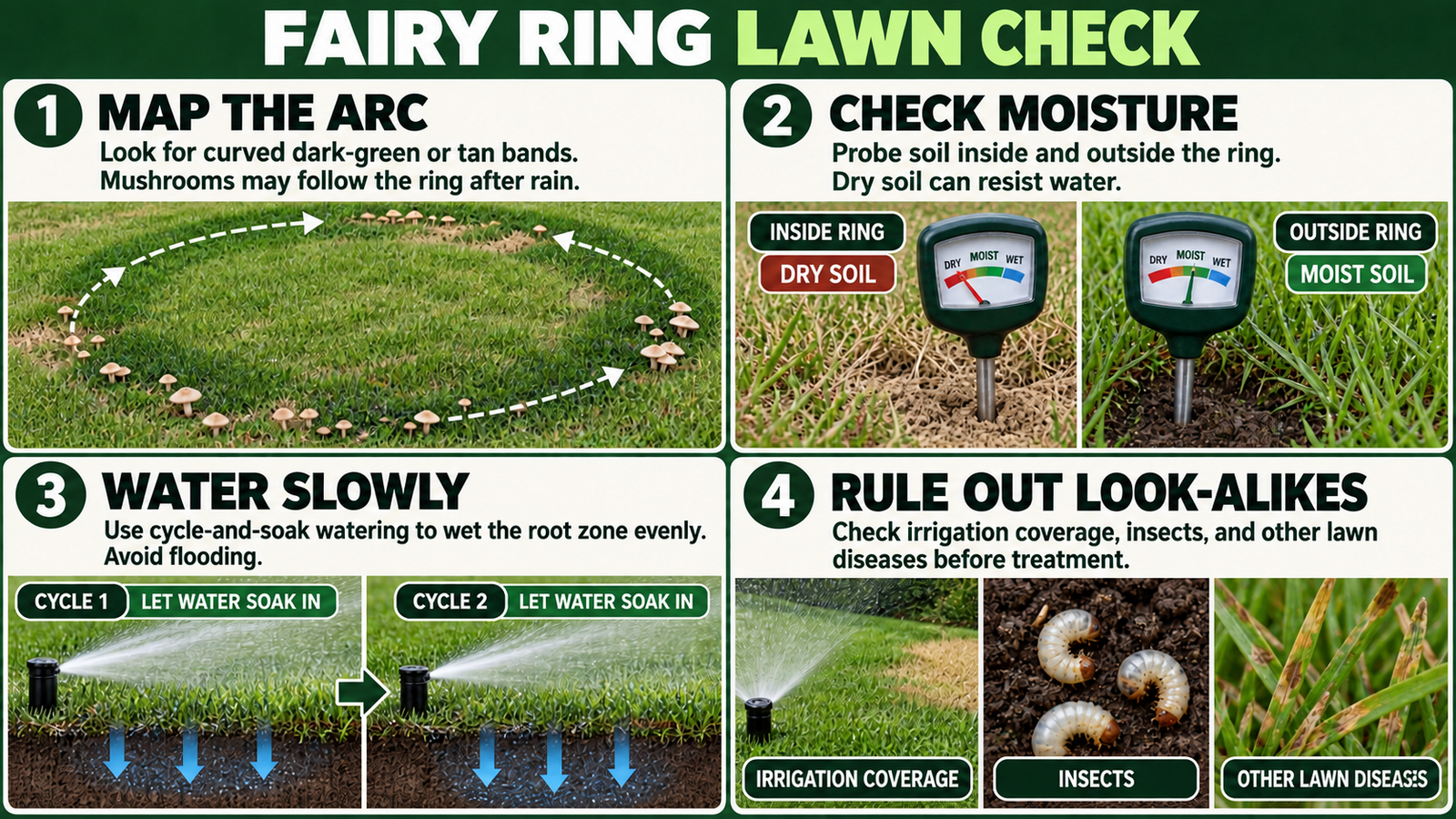
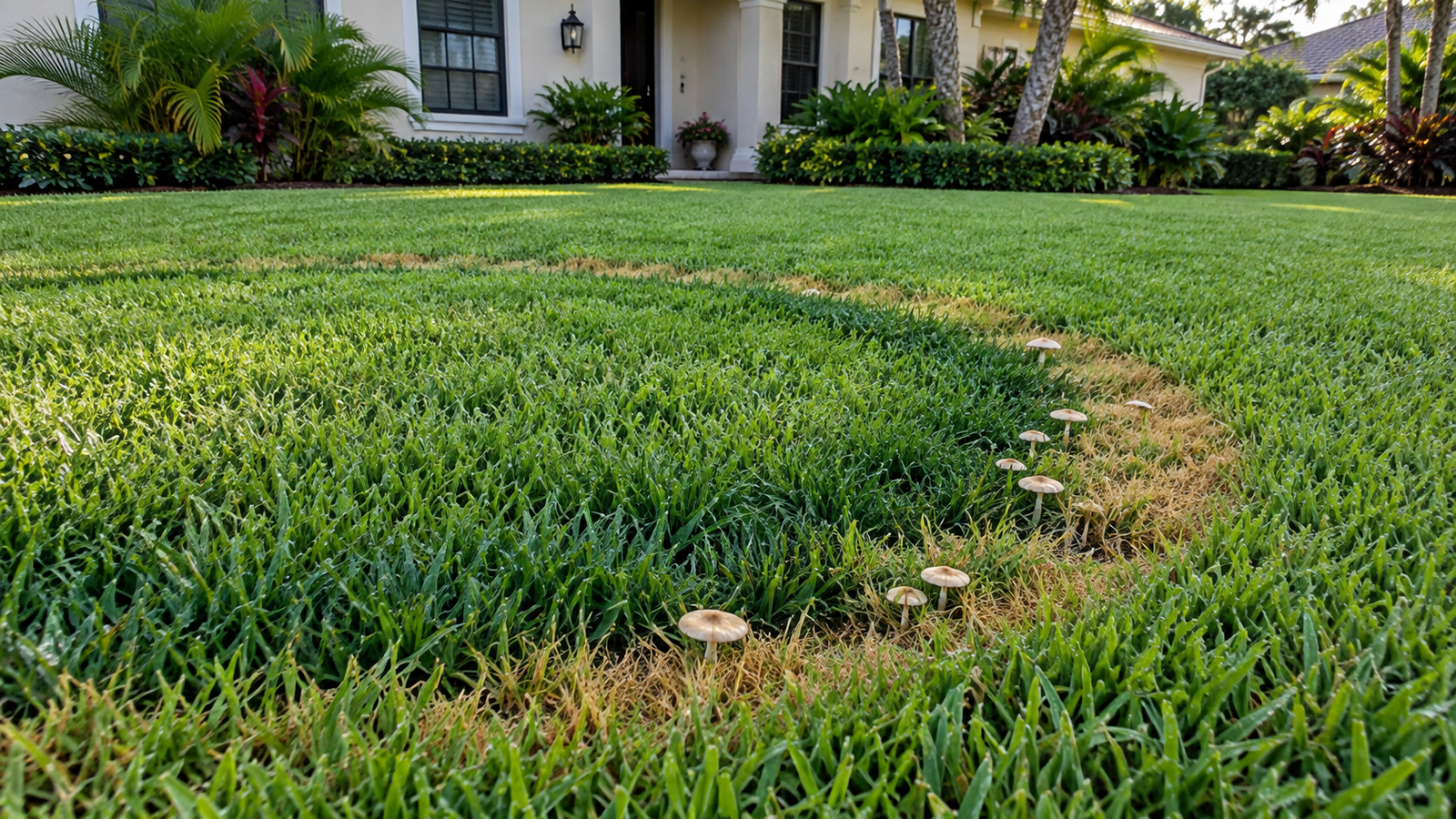
Fairy rings are created by fungi growing through soil and decomposing buried organic material. In a Florida lawn, the visible pattern may be a curved or complete band of unusually dark-green grass, a tan or dead arc, mushrooms arranged along a circle, or a combination of these signs. The ring can expand as the fungus grows outward. Mushrooms often appear during rainy weather, but their absence does not rule out fairy ring. A color change that follows a smooth arc is more meaningful than one isolated mushroom.
Why the Turf Changes Color
Some fairy ring fungi release nutrients as organic matter breaks down, producing a dark-green band that looks more vigorous than the surrounding lawn. Other rings damage turf indirectly by coating soil particles and making the soil resist water. That localized dry zone can turn grass tan even while soil a few inches away remains moist. Heat, wind, and Florida's sandy soils can intensify the stress. The mushrooms are only the visible fruiting bodies. The active fungal network and the moisture problem are below the surface.
Map the Pattern Before Acting
Photograph the lawn from the same position and mark the edge of the arc with small flags. Recheck it after rain and during a dry afternoon. Probe the soil inside the ring, directly beneath the discolored band, and outside the pattern. Compare moisture at the same depth. Also run the irrigation zone and watch for blocked spray, low pressure, or poor overlap that could create a curved dry area. Examine leaf blades and roots for symptoms of other diseases, insects, scalping, or chemical injury before naming the problem.
Respond to Dry, Water-Repellent Soil
If the soil beneath the damaged band is dry while nearby soil is moist, the ring may be repelling water. Carefully opening the affected soil with appropriate aeration can help water enter, but avoid tearing up healthy St. Augustinegrass. Apply water slowly in repeated cycles, allowing each application to soak before the next. Confirm that moisture reaches the root zone instead of running around the ring. A soil-wetting product may be useful in some cases, but it must be selected and applied for the exact turf and site conditions.
Handle Mushrooms Safely
Do not eat mushrooms from the lawn or assume they are harmless because wildlife ignores them. Some mushrooms associated with fairy rings can be poisonous. Remove or destroy them when children or pets may reach the area, using gloves and disposing of collected material in the trash. Mowing can knock them down, but collect them when access risk is a concern. Mushroom removal improves safety and appearance, but it does not remove the underground fungus or correct water-repellent soil. Continue monitoring the turf pattern after the mushrooms disappear.
Avoid Quick-Fix Mistakes
Do not apply extra fertilizer simply to make the surrounding lawn match a dark-green ring. Excess nitrogen can create other turf problems and may violate seasonal fertilizer restrictions. Do not flood the entire yard to treat one dry arc. Avoid choosing a fungicide from appearance alone, because products suppress fungal growth but do not automatically repair dry soil or restore damaged grass. Fairy rings can persist or fade slowly, and excavation may not solve the problem when buried organic material remains. Accurate diagnosis should come before treatment.
When to Book an Ecoscape Assessment
Book an on-site assessment with Ecoscape Outdoor Services when a ring is expanding, turf is dying, soil stays dry beneath the pattern, or irrigation coverage is uncertain. Ecoscape can inspect the lawn, compare moisture, check sprinkler performance, and recommend practical cultural corrections based on the actual site. Follow the ring over time so any change is measurable rather than guessed. For additional background, see the UF/IFAS fairy ring guide. Contact Ecoscape first for help diagnosing the pattern on your property.