Recognize Frizzle Top in Palms Before New Growth Fails
Start with the newest palm leaves
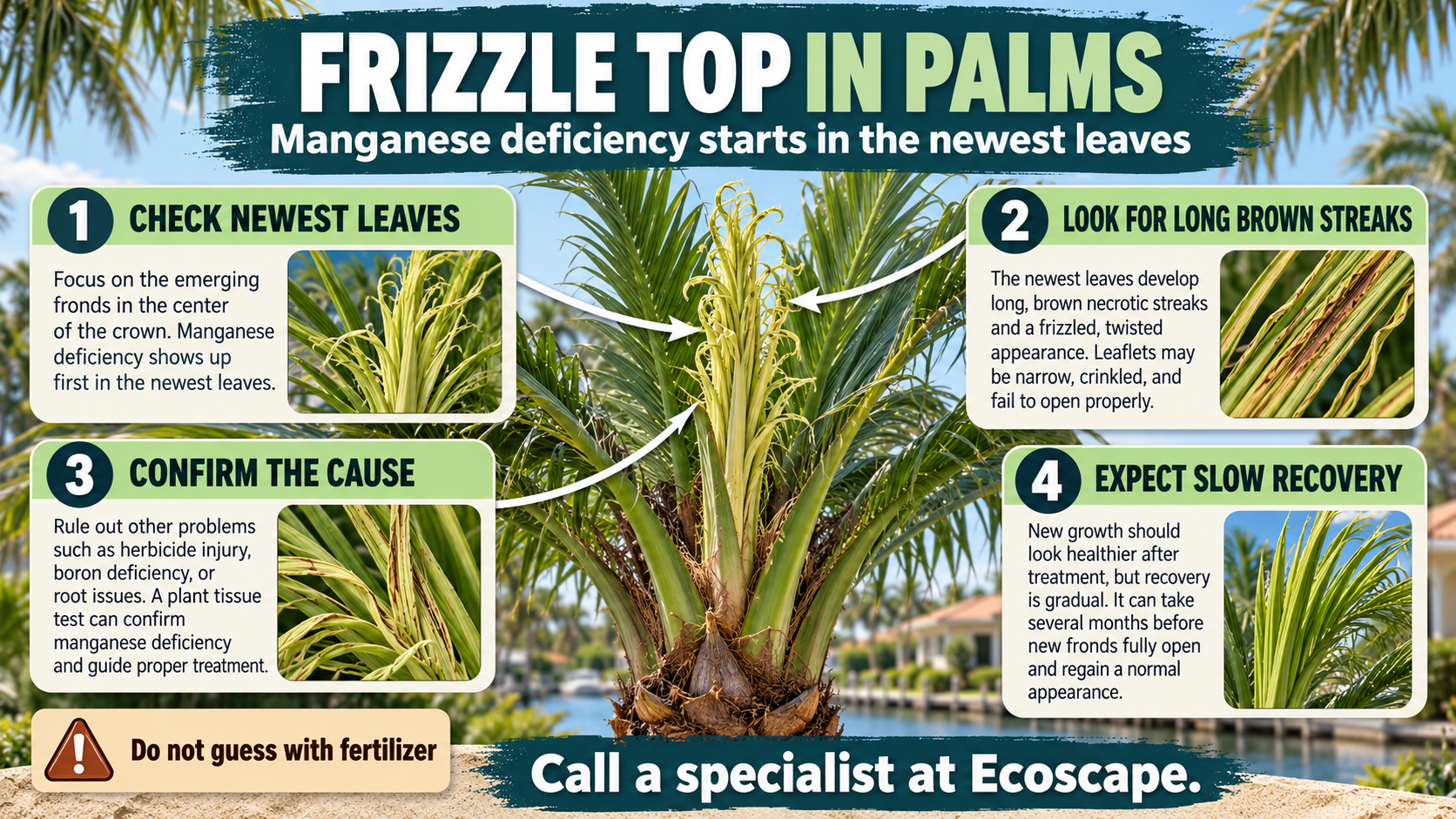
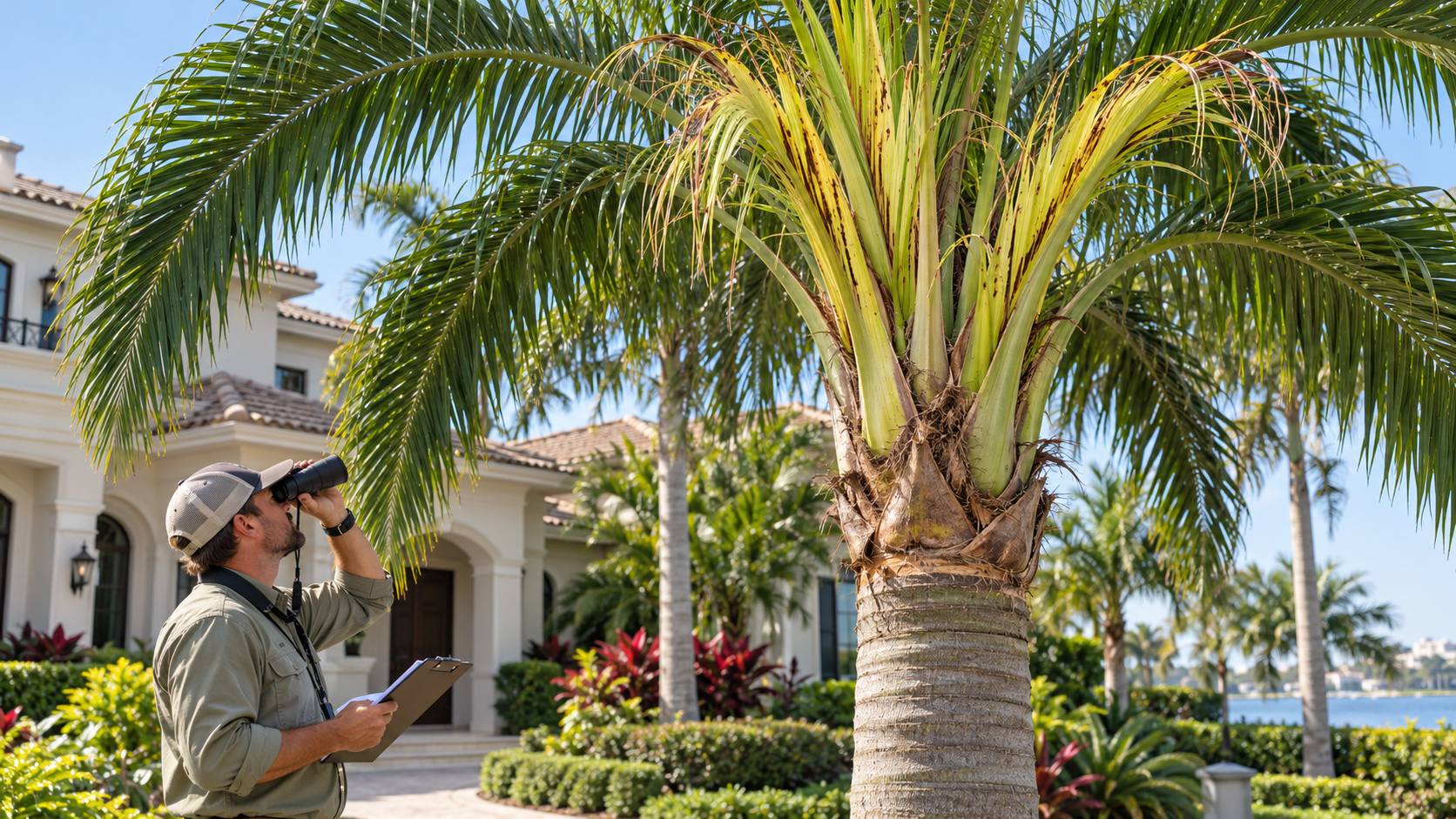
Recognize Frizzle Top in Palms Before New Growth Fails by examining the center of the crown first. Manganese deficiency appears on newly expanding leaves, not the oldest lower fronds. Early signs include pale new growth and narrow brown streaks running lengthwise through leaflets. As the problem advances, new leaflets look withered, curled, or singed while older leaves remain closer to normal size.
Read the symptom pattern closely
The location of damage helps separate frizzle top from other palm problems. Manganese deficiency often produces the worst injury near the base of a new leaf, with less injury toward the tip. Boron deficiency and late potassium deficiency sometimes look similar from a distance. Crown disease, herbicide injury, cold stress, and root trouble also distort emerging leaves. Avoid diagnosing from one yellow frond.
Look for conditions behind the deficiency
High soil pH reduces manganese availability even when the soil contains the nutrient. Poor drainage, damaged roots, cool soil, and recent transplant stress also interfere with uptake. Queen palms, royal palms, paurotis palms, pygmy date palms, and coconut palms show particular susceptibility in Florida. Review irrigation, drainage, recent soil amendments, and nearby construction before selecting a treatment.
Confirm the cause before fertilizing
A tissue analysis from the youngest fully expanded leaf helps distinguish manganese deficiency from similar disorders. Random fertilizer use risks masking the pattern or creating a second imbalance. Excess manganese sometimes induces iron deficiency. Soil test results alone provide limited guidance for palm nutrition because visible palm symptoms do not always match a soil nutrient report. A trained inspection should guide product choice and rate.
Use a measured treatment plan
UF/IFAS recommends water-soluble manganese sources where deficiency is confirmed. Soil-applied manganese sulfate supports longer-term correction. A properly prepared foliar treatment produces a faster, shorter response and supplements soil treatment rather than replacing it. Rates vary widely with palm size, soil type, and severity. Keep composted sewage sludge and manure products away from palms because these materials bind manganese.
Judge recovery by future growth
Damaged leaf tissue will not turn healthy again. Watch the next leaves for wider leaflets, better color, and fewer necrotic streaks. Visible improvement often takes three to six months after treatment. Keep irrigation even without saturating the root zone. Do not remove partly green fronds simply to improve appearance. Those leaves still support the palm while the crown produces healthier growth.
Schedule a professional palm diagnosis
Severe frizzle top eventually stops crown growth and threatens the palm. Ecoscape Outdoor Services will inspect new leaves, site drainage, soil conditions, and the full nutrition pattern before recommending treatment. Request a palm assessment when the emerging spear looks short, streaked, or curled. Helpful reference: UF/IFAS manganese deficiency in palms.